Kratzer TB, Bandi P, Freedman ND, Smith RA, Travis WD, Jemal A, et al. Lung cancer statistics, 2023. Cancer. 2024;130(8):1330–48.
Article
Google Scholar
Ferlay J, Ervik M, Lam F, Colombet M, Mery L, Piñeros M, et al. Global cancer observatory: cancer today. International Agency for Research on Cancer. https://gco.iarc.fr/today.
Sung H, Ferlay J, Siegel RL, Laversanne M, Soerjomataram I, Jemal A, et al. Global cancer statistics 2020: GLOBOCAN estimates of incidence and mortality worldwide for 36 cancers in 185 countries. CA: A Cancer J Clin. 2021;71(3):209–49. https://onlinelibrary.wiley.com/doi/pdf/10.3322/caac.21660. https://doi.org/10.3322/caac.21660.
Bray F, Laversanne M, Sung H, Ferlay J, Siegel RL, Soerjomataram I, et al. Global cancer statistics 2022: GLOBOCAN estimates of incidence and mortality worldwide for 36 cancers in 185 countries. CA: A Cancer J Clinicians. 2024;74(3):229–63.
Google Scholar
Zhu Y, Yip R, Zhang J, Cai Q, Sun Q, Li P, et al. Radiologic features of nodules attached to the mediastinal or diaphragmatic pleura at low-dose CT for lung cancer screening. Radiology. 2024;310(1):e231219.
Article
Google Scholar
Hosseini SH, Monsefi R, Shadroo S. Deep learning applications for lung cancer diagnosis: a systematic review. Multimed Tools Appl. 2024;83(5):14305–35.
Article
MATH
Google Scholar
Martín A, Vargas VM, Gutiérrez PA, Camacho D, Hervás-Martínez C. Optimising convolutional neural networks using a hybrid statistically-driven coral reef optimisation algorithm. Appl Soft Comput. 2020;90:106144. https://doi.org/10.1016/j.asoc.2020.106144.
Article
Google Scholar
Archana R, Jeevaraj PE. Deep learning models for digital image processing: a review. Artif Intell Rev. 2024;57(1):11.
Article
MATH
Google Scholar
LeCun Y, Bengio Y, Hinton G. Deep learning. Nature. 2015;521(7553):436–44. Nature Publishing Group. https://doi.org/10.1038/nature14539.
Shwartz-Ziv R, Goldblum M, Bansal A, Bruss CB, LeCun Y, Wilson AG. Just how flexible are neural networks in practice? 2024. arXiv preprint arXiv:2406.11463.
Lee B, Lee J, Lee JO, Hwang Y, Bahn HK, Park I, et al. Breath analysis system with convolutional neural network (CNN) for early detection of lung cancer. Sens Actuators B Chem. 2024;409:135578.
Article
MATH
Google Scholar
Sirazitdinov I, Kholiavchenko M, Mustafaev T, Yixuan Y, Kuleev R, Ibragimov B. Deep neural network ensemble for pneumonia localization from a large-scale chest X-ray database. Comput Electr Eng. 2019;78:388–99. https://doi.org/10.1016/j.compeleceng.2019.08.004.
Article
Google Scholar
Litjens G, Sánchez CI, Timofeeva N, Hermsen M, Nagtegaal I, Kovacs I, et al. Deep learning as a tool for increased accuracy and efficiency of histopathological diagnosis. Sci Rep. 2016;6(1):26286. Nature Publishing Group. https://doi.org/10.1038/srep26286.
Jain A, Mandal SK, Abrol M. Exploring the potential of recurrent neural networks for medical image segmentation. In: 2024 International Conference on Optimization Computing and Wireless Communication (ICOCWC). IEEE; 2024. p. 1–6.
Li H, Lin Z, Shen X, Brandt J, Hua G. A convolutional neural network cascade for face detection. In: 2015 IEEE Conference on Computer Vision and Pattern Recognition (CVPR); 2015. p. 5325–34. ISSN: 1063-6919. https://ieeexplore.ieee.org/document/7299170.
Simonyan K, Zisserman A. Very deep convolutional networks for large-scale image recognition. In: 3rd International Conference on Learning Representations (ICLR 2015). Computational and Biological Learning Society; 2015. p. 1–14. https://arxiv.org/abs/1409.1556.
Djenouri Y, Belhadi A, Yazidi A, Srivastava G, Lin JCW. Artificial intelligence of medical things for disease detection using ensemble deep learning and attention mechanism. Expert Syst. 2024;41(6):e13093.
Article
MATH
Google Scholar
Minetto R, Pamplona Segundo M, Sarkar S. Hydra: an ensemble of convolutional neural networks for geospatial land classification. IEEE Trans Geosci Remote Sens. 2019;57(9):6530–41. https://doi.org/10.1109/TGRS.2019.2906883.
Article
Google Scholar
Mian Z, Deng X, Dong X, Tian Y, Cao T, Chen K, et al. A literature review of fault diagnosis based on ensemble learning. Eng Appl Artif Intell. 2024;127:107357.
Article
Google Scholar
Ullah F, Ullah I, Khan RU, Khan S, Khan K, Pau G. Conventional to deep ensemble methods for hyperspectral image classification: a comprehensive survey. IEEE J Sel Top Appl Earth Obs Remote Sens. 2024.
Guidotti R, Monreale A, Ruggieri S, Turini F, Giannotti F, Pedreschi D. A survey of methods for explaining black box models. ACM Comput Surv. 2018;51(5):93:1-42. https://doi.org/10.1145/3236009.
Article
MATH
Google Scholar
Petch J, Bortesi JPT, Nelson W, Di S, Mamdani MH. Should I trust this model? Explainability and the black box of artificial intelligence in medicine. In: Artificial Intelligence for medicine. Elsevier; 2024. p. 265–73.
Marcus E, Teuwen J. Artificial intelligence and explanation: how, why, and when to explain black boxes. European J Radiology. 2024. p. 111393.
Holzinger A, Biemann C, Pattichis CS, Kell DB. What do we need to build explainable AI systems for the medical domain? 2017. arXiv:1712.09923. https://doi.org/10.48550/arXiv.1712.09923.
Barredo Arrieta A, Díaz-Rodríguez N, Del Ser J, Bennetot A, Tabik S, Barbado A, et al. Explainable Artificial Intelligence (XAI): concepts, taxonomies, opportunities and challenges toward responsible AI. Inf Fusion. 2020;58:82–115. https://doi.org/10.1016/j.inffus.2019.12.012.
Article
Google Scholar
Fong R, Vedaldi A. Interpretable explanations of black boxes by meaningful perturbation. In: 2017 IEEE International Conference on Computer Vision (ICCV); 2017. p. 3449–57. http://arxiv.org/abs/1704.03296.
Mahomed N, van Ginneken B, Philipsen RHHM, Melendez J, Moore DP, Moodley H, et al. Computer-aided diagnosis for World Health Organization-defined chest radiograph primary-endpoint pneumonia in children. Pediatr Radiol. 2020;50(4):482–91. https://doi.org/10.1007/s00247-019-04593-0.
Article
Google Scholar
Samek W, Wiegand T, Müller KR. Explainable artificial intelligence: understanding, visualizing and interpreting deep learning models. 2017. arXiv:1708.08296. https://doi.org/10.48550/arXiv.1708.08296.
Domínguez-Rodríguez S, Liz-López H, Panizo-LLedot A, Ballesteros Á, Dagan R, Greenberg D, et al. Testing the performance, adequacy, and applicability of an artificial intelligence model for pediatric pneumonia diagnosis. Comput Methods Programs Biomed. 2023;242:107765.
Article
Google Scholar
Razzak MI, Naz S, Zaib A. Deep learning for medical image processing: overview, challenges and future. 2017. arXiv:1704.06825. https://doi.org/10.48550/arXiv.1704.06825.
Liu B, Chi W, Li X, Li P, Liang W, Liu H, et al. Evolving the pulmonary nodules diagnosis from classical approaches to deep learning-aided decision support: three decades’ development course and future prospect. J Cancer Res Clin Oncol. 2020;146:153–85. https://doi.org/10.1007/s00432-019-03098-5.
Jassim MM, Jaber MM. Systematic review for lung cancer detection and lung nodule classification: taxonomy, challenges, and recommendation future works. J Intell Syst. 2022;31(1):944–64. Num Pages: 21 Place: Warsaw Publisher: De Gruyter Poland Sp Z O O Web of Science ID: WOS:000838249300001. https://doi.org/10.1515/jisys-2022-0062.
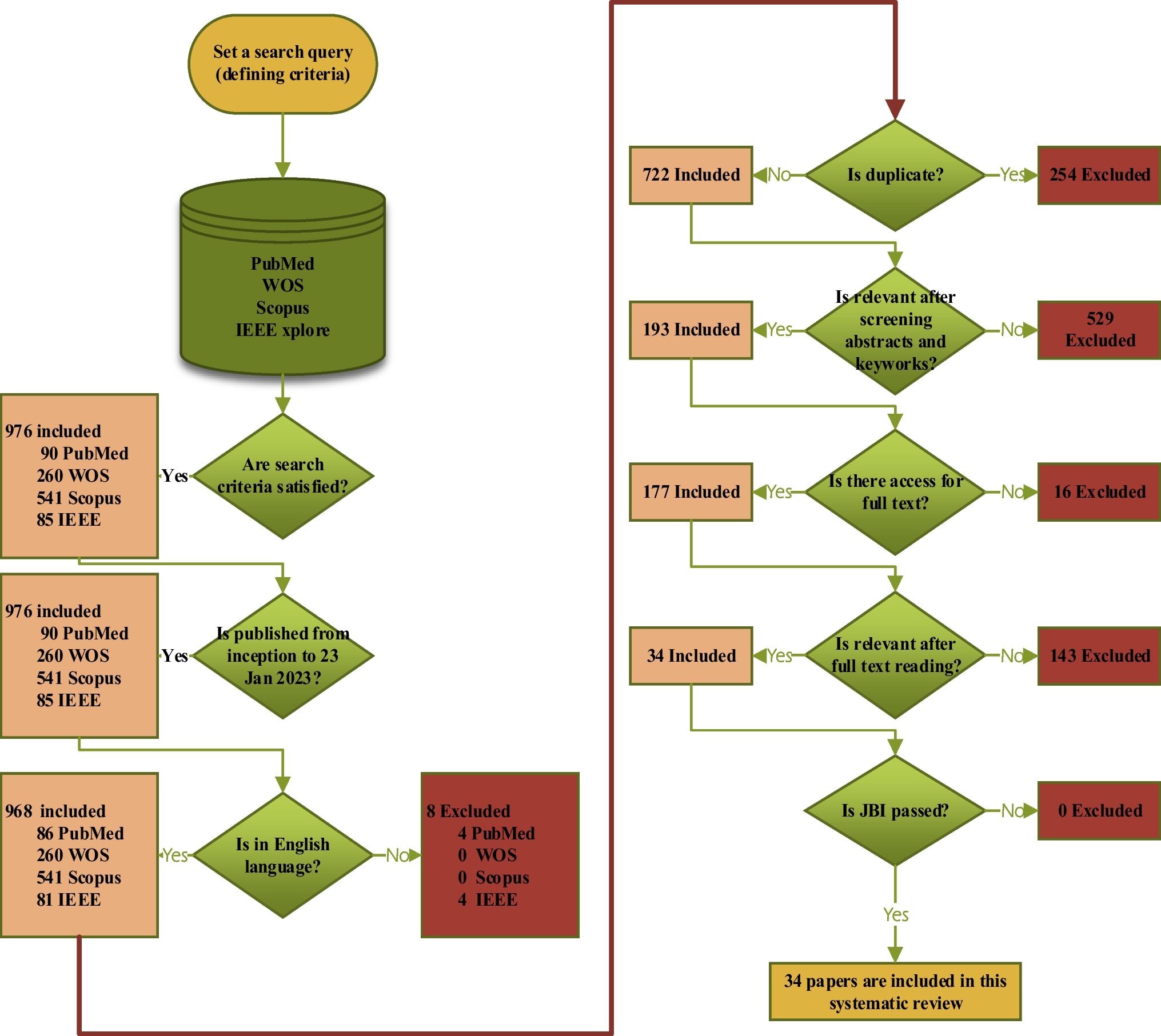
Page MJ, McKenzie JE, Bossuyt PM, Boutron I, Hoffmann TC, Mulrow CD, The PRISMA, et al. statement: an updated guideline for reporting systematic reviews. BMJ. 2020;2021:372. https://doi.org/10.1136/bmj.n71.
Article
Google Scholar
Hosseini SH, Monsefi R, Shadroo S. Deep learning applications for lung cancer diagnosis: a systematic review. Multimed Tools Appl. 2023;Num Pages: 31 Place: Dordrecht Publisher: Springer Web of Science ID: WOS:001023992100005. https://doi.org/10.1007/s11042-023-16046-w.
Räz T, Beisbart C. The importance of understanding deep learning. Erkenntnis. 2024;89(5):1823–40.
Article
MathSciNet
MATH
Google Scholar
Damaševičius R, Jagatheesaperumal SK, Kandala RN, Hussain S, Alizadehsani R, Gorriz JM. Deep learning for personalized health monitoring and prediction: a review. Comput Intell. 2024;40(3):e12682.
Article
Google Scholar
Jones C, Castro DC, De Sousa Ribeiro F, Oktay O, McCradden M, Glocker B. A causal perspective on dataset bias in machine learning for medical imaging. Nat Mach Intell. 2024;6(2):138–46.
Article
Google Scholar
Lambert B, Forbes F, Doyle S, Dehaene H, Dojat M. Trustworthy clinical AI solutions: a unified review of uncertainty quantification in deep learning models for medical image analysis. Artif Intell Med. 2024. p. 102830.
Setio AAA, Traverso A, De Bel T, Berens MS, Van Den Bogaard C, Cerello P, et al. Validation, comparison, and combination of algorithms for automatic detection of pulmonary nodules in computed tomography images: the LUNA16 challenge. Med Image Anal. 2017;42:1–13.
Article
Google Scholar
Borkowski AA, Bui MM, Thomas LB, Wilson CP, DeLand LA, Mastorides SM. Lung and colon cancer histopathological image dataset (LC25000). 2019. arXiv preprint arXiv:1912.12142.
The Cancer Imaging Archive (TCIA). Data from the Lung Image Database Consortium (LIDC) and Image Database Resource Initiative (IDRI): a completed reference database of lung nodules on CT scans (LIDC-IDRI). https://wiki.cancerimagingarchive.net/pages/viewpage.action?pageId=1966254.
Petrick N, Akbar S, Cha KH, Nofech-Mozes S, Sahiner B, Gavrielides MA, et al. SPIE-AAPM-NCI BreastPathQ Challenge: an image analysis challenge for quantitative tumor cellularity assessment in breast cancer histology images following neoadjuvant treatment. J Med Imaging. 2021;8(3):034501–034501. https://doi.org/10.1117/1.JMI.8.3.034501.
Article
Google Scholar
Clark K, Vendt B, Smith K, Freymann J, Kirby J, Koppel P, et al. The Cancer Imaging Archive (TCIA): maintaining and operating a public information repository. J Digit Imaging. 2013;26:1045–57. https://doi.org/10.1007/s10278-013-9622-7.
Article
Google Scholar
Zhao B, Schwartz LH, Kris MG. Data from RIDER lung CT. The Cancer Imaging Archive. https://www.cancerimagingarchive.net/collection/rider-lung-ct/.
Albertina B, Watson M, Holback C, Jarosz R, Kirk S, Lee Y, et al. The cancer genome atlas lung adenocarcinoma collection (TCGA-LUAD). The Cancer Imaging Archive. https://www.cancerimagingarchive.net/collection/tcga-luad/.
National Cancer Institute Clinical Proteomic Tumor Analysis Consortium (CPTAC). The Clinical Proteomic Tumor Analysis Consortium Lung Squamous Cell Carcinoma Collection (CPTAC-LSCC). The Cancer Imaging Archive. https://www.cancerimagingarchive.net/collection/cptac-lscc/.
Shiraishi J, Katsuragawa S, Ikezoe J, Matsumoto T, Kobayashi T, Komatsu K, et al. Development of a digital image database for chest radiographs with and without a lung nodule: receiver operating characteristic analysis of radiologists’ detection of pulmonary nodules. Am J Roentgenology. 2000;174(1):71–4. https://doi.org/10.2214/ajr.174.1.1740071.
Article
Google Scholar
Yan K, Wang X, Lu L, Summers RM. DeepLesion: automated mining of large-scale lesion annotations and universal lesion detection with deep learning. J Med Imaging. 2018;5(3):036501–036501.
Article
Google Scholar
Pedrosa J, Aresta G, Ferreira C, Rodrigues M, Leitão P, Carvalho AS, et al. LNDb: a lung nodule database on computed tomography. 2019. arXiv preprint arXiv:1911.08434.
Van Ginneken B, Armato III SG, de Hoop B, van Amelsvoort-van de Vorst S, Duindam T, Niemeijer M, et al. Comparing and combining algorithms for computer-aided detection of pulmonary nodules in computed tomography scans: the ANODE09 study. Med Image Anal. 2010;14(6):707–22. https://doi.org/10.1016/j.media.2010.05.005.
Han Y, Qi H, Wang L, Chen C, Miao J, Xu H, et al. Pulmonary nodules detection assistant platform: an effective computer aided system for early pulmonary nodules detection in physical examination. Comput Methods Programs Biomed. 2022;217:106680. https://doi.org/10.1016/j.cmpb.2022.106680.
Article
Google Scholar
National Lung Screening Trial Research Team, Aberle DR, Berg CD, Black WC, Church TR, Fagerstrom RM, et al. The national lung screening trial: overview and study design. Radiology. 2011;258(1):243–53. https://doi.org/10.1148/radiol.10091808.
AJBuckeye, Kriss J, BoozAllen J, Sullivan J, O’Connell M, Nilofer, et al. Data science bowl 2017. Kaggle. https://kaggle.com/competitions/data-science-bowl-2017.
Many M. Chest CT-Scan images dataset. https://www.kaggle.com/datasets/mohamedhanyyy/chest-ctscan-images/data.
EL-Bana S, Al-Kabbany A, Sharkas M. A two-stage framework for automated malignant pulmonary nodule detection in CT scans. Diagnostics. 2020;10(3):131. https://doi.org/10.3390/diagnostics10030131
Shakeel PM, Burhanuddin MA, Desa MI. Automatic lung cancer detection from CT image using improved deep neural network and ensemble classifier. Neural Comput Appl. 2022;34(12):9579–92. https://doi.org/10.1007/s00521-020-04842-6.
Article
MATH
Google Scholar
Bhat MA. Lung cancer. The data is collected from the website online lung cancer prediction system. 2024. https://www.kaggle.com/datasets/mysarahmadbhat/lung-cancer.
Yue Y, Li Z. Medmamba: vision mamba for medical image classification. 2024. arXiv preprint arXiv:2403.03849.
Helaly HA, Badawy M, Haikal AY. A review of deep learning approaches in clinical and healthcare systems based on medical image analysis. Multimed Tools Appl. 2024;83(12):36039–80.
Article

Comments (0)