
Remember me

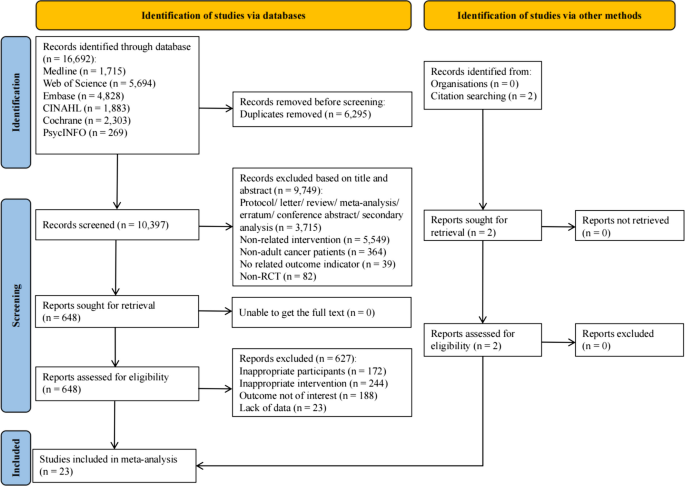


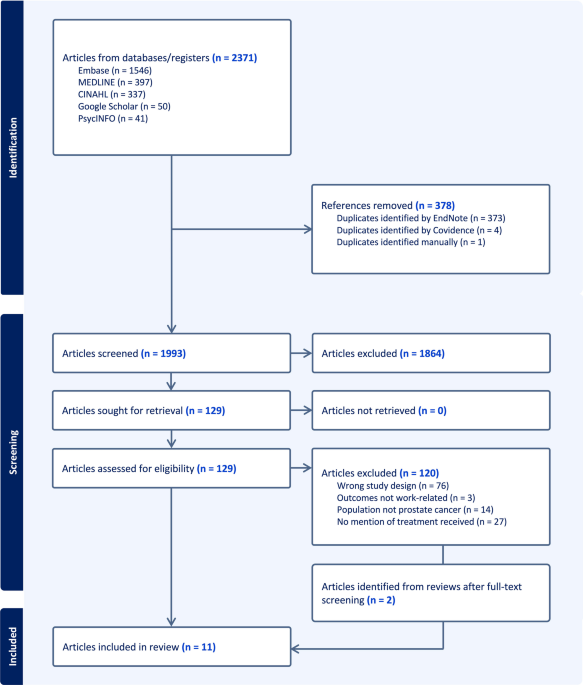
The database search identified 10,907 records, with no additional records identified through other sources. After duplicate removal, 6,908 records were screened by title and abstract, and 6,876 were excluded. Thirty-two full-text articles were assessed for eligibility, of which 12 were excluded: conference proceedings (n = 7), study protocols (n = 2), and studies not meeting the inclusion criteria (n = 3). Finally, 20 studies met the eligibility criteria and were included in the qualitative synthesis, whereas 9 studies were included in the quantitative synthesis. The studies excluded from quantitative synthesis and the corresponding reasons for exclusion are presented in supplementary material 3. The study selection process is presented in Fig. 1.
Fig. 1 Study characteristics
The 20 included studies included 1,032 patients with MM (mean age: 60.1 ± 5.2 years). Of these, 613 participants were allocated to intervention groups and 419 to control groups. Overall, interventions were primarily based on aerobic and resistance exercise modalities, although substantial variability existed in programme duration, frequency, supervision, and implementation characteristics. Participant counts refer to baseline enrolled/randomized participants unless otherwise specified.
Regarding study design, 14 studies were randomized controlled trials [31,32,33,34,35,36,37,38,39,40,41], including 3 pilot randomized controlled trials [42,43,44], whereas the remaining studies consisted of feasibility and pilot designs, including 2 prospective feasibility studies [45, 46], 1 pilot feasibility study [47], 1 single-arm pilot study [48], 1 single-group pre–post feasibility study [49], and 1 controlled prospective intervention study [50].
Nine studies were included in the quantitative synthesis, comprising 576 participants at baseline. Of these, 302 participants were allocated to intervention groups (mean age: 59.5 ± 6.4 years; 41.9 ± 10.2% women), of whom 239 completed the intervention period (mean study-level attrition: 19.4 ± 13.7%), with a mean sample size of 26.6 ± 21.8 participants per study. In the control groups, 274 participants were included (mean age: 59.0 ± 5.7 years; 38.0 ± 14.5% women), of whom 199 completed the study (mean study-level attrition: 26.0 ± 28.4%), with a mean sample size of 22.3 ± 17.9 participants per study.
Overall, exercise programmes were structured and mainly supervised, with the aim of improving clinically relevant and functional outcomes in patients with MM. The main sources of heterogeneity across studies were related to exercise modality, programme duration, and implementation characteristics. Among studies reporting intervention characteristics, the mean intervention duration was 14.4 ± 8.3 weeks, with an average frequency of 3.3 ± 1.6 sessions per week and a mean session length of 56.8 ± 13.4 min. Most interventions combined aerobic and resistance exercise modalities [31,32,33,34,35, 37, 41, 43,44,45,46, 48, 49], whereas one study evaluated comprehensive free-living physical activity [42], one evaluated resistance training alone [47], four studies evaluated Nordic walking interventions [36, 38,39,40], and one evaluated impact-loading exercise [50]. Control conditions varied across studies and included both passive and active comparators. Active comparator conditions included prescribed walking [33, 44], active lifestyle recommendations [32, 37, 42], behavioural interventions using wearable fitness trackers [47], and comparisons between different exercise modalities [51], whereas the remaining studies provided usual care without structured exercise intervention.
The main study variables evaluated included aerobic capacity [32,33,34,35, 37, 39, 41, 43,44,45,46,47,48,49,50], body composition [34, 39, 40, 44, 47, 48], fatigue [31, 33, 34, 42,43,44, 48, 49], muscle strength [31, 32, 34, 37, 41,42,43,44, 47,48,49], physical function and performance [32, 37, 42, 43, 46, 47, 49], physical activity [34, 37, 42, 43, 45], quality of life [31, 32, 34, 37,
Comments (0)