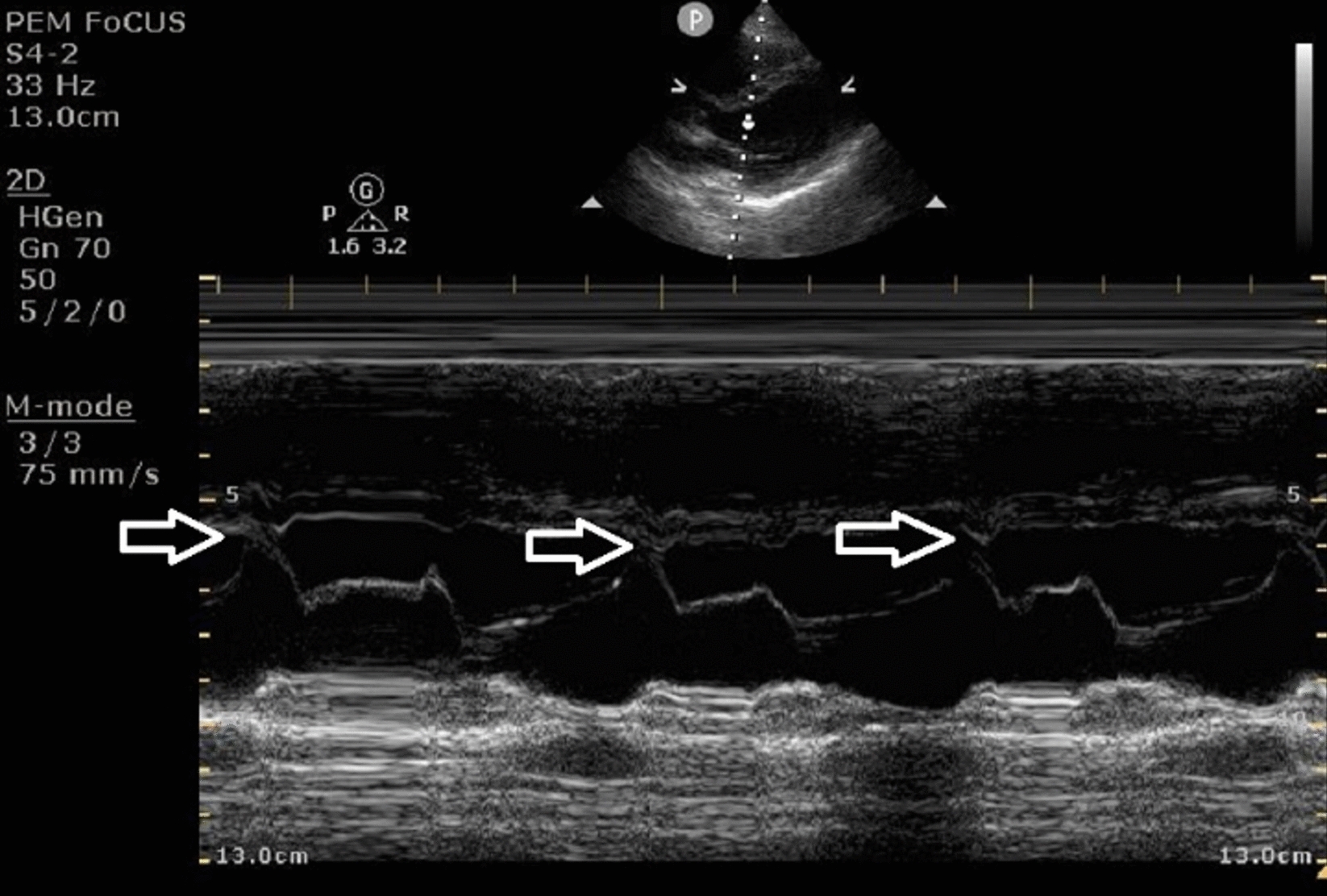
This pilot study demonstrates the feasibility of obtaining EPSS and TAPSE values in healthy adolescents using POCUS. The measurements closely aligned with established pediatric echocardiography reference ranges. One study of 84 subjects less than 20 years of age reported a mean EPSS of 3.0 mm (95% CI: 0.4–5.6 mm) and a 0 mm distance visualized 24% of the time [9]. Another study of 105 subjects aged 1 day to 15 years reported a mean EPSS of 2.5 mm (95% CI: of 0.8–4.2 mm), with an upper limit of 6 mm [10]. For TAPSE, a study of 122 subjects between 13–18 years has reported a mean of 2.6 cm (95% CI: 2.2–3.0 cm).
Quantitative POCUS measurements such as EPSS and TAPSE offer an adjunct to traditional qualitative assessments of cardiac function. These measures could enhance diagnostic precision for critical conditions such as heart failure and pulmonary embolism. Importantly, we did not observe any overlap with established measurements in adult patients when severe left ventricular systolic dysfunction (EPSS > 7 mm) or cutoff values shown to be associated with clinically important pulmonary embolus (TAPSE ≤ 1.5 cm, ≤ 1.6 cm, and < 1.8 cm) [8, 11].
The absence of strong correlations between TAPSE and anthropometric data observed in this study contrasts with previous reports of strong associations between valve motion measurements and anthropometric factors. For instance, prior studies have shown positive correlations between EPSS and both height (r = 0.57) and weight (r = 0.60) in broader pediatric age groups [9]. Similarly, TAPSE has been reported to correlate strongly with height and weight (r > 0.8) in large cohorts of children aged 0–18 years [12]. These discrepancies may be attributed to the narrower age range of our study population.
Several limitations warrant consideration. First, the study focused exclusively on healthy adolescents aged 12–17 years, limiting the generalizability of findings to younger children or those with active cardiopulmonary conditions. Additionally, height was self-reported, potentially introducing measurement error. The small sample size precludes definitive conclusions regarding anthropometric correlations and limits the statistical power to detect subtle differences in valve motion measurements. Finally, the evaluations were performed by experienced POCUS faculty, raising questions about the reproducibility of these measurements by less experienced providers. Current recommendations for cardiac POCUS in pediatrics emphasize the importance of training and oversight for qualitative assessments only to evaluate left ventricular systolic dysfunction [13].
While M-mode measurements offer the advantage of reproducible metrics that can track changes over time or be compared to established norms, their reliability may be limited in certain clinical scenarios. Caution should be exercised when conduction delays (e.g., left bundle branch block), structural abnormalities, arrhythmias, or altered hemodynamic states (e.g., severe dehydration) are present, which can alter septal or valve motion. Additionally, obtaining M-mode measurements can add complexity for novice sonologists and may not always be necessary when qualitative assessments provide sufficient information to guide clinical decision-making. Therefore, M-mode measurements should be regarded as an adjunctive tool in pediatric cardiopulmonary assessments, complementing but not replacing broader qualitative evaluations.
Future research should investigate the utility of EPSS and TAPSE in younger pediatric populations and during active disease states such as myocarditis, pulmonary embolism, or asthma exacerbations. Studies should also evaluate the feasibility of teaching these quantitative techniques to trainees and examine inter-observer reliability. Further exploration of the role of quantitative measures by POCUS in differentiating mild versus severe ventricular dysfunction is reasonable. As training and technology evolve, quantitative POCUS measurements have the potential to enhance diagnostic accuracy, reduce reliance on ionizing radiation, and improve outcomes for pediatric patients.


Comments (0)