
Remember me




Hearing voices (auditory verbal hallucinations) is a phenomenon occurring in the general population, across various disorders, and commonly associated with psychosis or schizophrenia spectrum disorder diagnoses [-]. Voices may be highly distressing [], especially due to appraisals of the meaning and intent of voices [] and negative content [,].
Within psychosis, an estimated 1 in 3 individuals have a suboptimal pharmacological treatment response [,] with side effects being common []. Cognitive behavioral therapy for psychosis (CBTp) is recommended as a first-line psychological treatment in several national guidelines [e.g., ] and shows a small-to-moderate effect on hallucinations []. However, CBTp has traditionally focused on psychosis more broadly rather than hearing voices specifically, limiting its sensitivity [].
More targeted approaches have evolved that focus on voices more specifically [-]. Relational therapies are a promising approach for hearing voices, aiming to modify the interaction patterns and dynamics between the hearer and the voice through experiential dialogue with voice-related identities []. These include Avatar Therapy (AT) [,], Relating Therapy (RT) [-], and Talking with Voices (TwV) [-]. AT engages an individual in computer-assisted on-screen dialogues with a digital avatar representing the most distressing voice. In the AVATAR trial, therapists alternated between real-time voice transformation to role-play the avatar and speaking in their own voice, targeting therapeutic goals such as power, control, experiential disengagement, and compassion []. The AVATAR2 trial demonstrated that both brief (Avatar brief version, AV-BRF) and extended (Avatar extended version, AV-EXT) AT effectively reduced voice severity and distress []. AV-BRF focused on exposure, assertiveness, and self-esteem. AV-EXT emphasized understanding voices within the context of the individual’s life history [] and allowed greater scope to address broader treatment targets, including trauma [,]. In an early value assessment, the use of AT has been recommended to collect real-world evidence and cost-effectiveness [].
Virtual reality (VR) offers a promising avenue for improving treatment outcomes in mental health [] and psychosis []. In VR, the central concept of immersion refers to the extent to which users feel mentally and emotionally absorbed within virtual environments, and key influencing factors include an immersive system, a sense of presence, and ecological validity []. The immersive system—the technical aspects of the VR equipment and software—can influence sense of presence (henceforth presence) []—the subjective feeling of “being there” in a virtual environment []. Despite terminological ambiguity [],presence may enhance therapeutic responses [,], when delivered optimally []. In nonimmersive AT, the concept of presence has been adapted to “sense of voice presence” (henceforth voice presence) to more accurately capture the subjective experience of dialoguing with the voice []. Voice presence was consistently observed during AVATAR sessions, with an interaction between reduced anxiety and strong presence being implicated in outcomes []. As presence is stronger in VR than nonimmersive formats [], adding VR to AT may optimize outcomes. Thus, a variant of AT using VR and a separate software called virtual reality–assisted therapy (VRT) for distressing voices has been developed and shown promising results []. The recent Challenge trial demonstrated VRT’s efficacy in reducing voice severity posttreatment [], with impact of avatar features and “sense of spatial presence” (henceforth spatial presence; how real it felt to be in the virtual room with the avatar) on treatment outcomes reported elsewhere []. A modified VRT version has been explored in a Challenge substudy (K Rasmussen, unpublished data, 2025).
VRT avatar dialogues can evoke a range of emotional responses [], with findings suggesting that negative emotions decrease while positive emotions increase as sessions progress []. These emotional shifts may be driven by changes in relational dynamics, as reflected in evolving discourse patterns []. Anxiety levels are initially high [,], with early sessions often perceived as stressful []. The initial phase is confrontational, and withdrawal and dropout rates are higher initially than in later phases [,]. Although adverse emotional responses are expected, too intense anxiety or distress may reduce tolerability. Indeed, for 29% of the Challenge trial participants, adjustments were made to the pace or duration of exposures in response to reports of anxiety []. Assessing unwanted events—such as therapy prolongation or symptom exacerbation—is essential for ensuring that therapies remain safe [-].
Digital mental health interventions risk a research-to-practice gap [,], making evaluation of implementation outcomes crucial for translation into routine care [,]. AT studies have reported acceptability [,] and feasibility [,], and a VRT study has addressed both []. However, uptake in routine care remains uncertain, as clinical and implementation research differ []. While dedicated implementation studies are needed, qualitative research within clinical trials can prove an initial window into lived experience and stakeholder perspectives [], informing future implementation efforts [-]. Incorporating service-user perspectives is particularly valuable for optimizing therapy [-]. Implementation science outcomes, particularly acceptability, appropriateness, and feasibility [], may provide a useful basis for interpreting experiences of VRT and identifying key considerations for implementation.
Participants’ experiences of AT have been explored qualitatively in AVATAR1 and AVATAR2. The former found AT acceptable and beneficial, though some participants reported strong emotional reactions and trauma-related memories that did not disrupt therapy []. The latter, currently being prepared for publication, examined direct early work with verbatim voice content and the role of the therapeutic alliance []. In contrast, no equivalent studies have explored the experiences of VRT participants.
Therapists’ experiences have not yet been explored in either AT or VRT. Considering dissemination and implementation, it is crucial to account for the perspectives of clinicians delivering these therapies []. This is especially important for VR-based interventions, where mental health professionals have raised concerns regarding technological limitations, potential side effects, and increased time and workload demands []. Furthermore, as demonstrated in both AT [,] and VRT [], conducting avatar dialogues requires a nontraditional therapeutic skill set, particularly the “actor-like” components that pose unique challenges.
This study aimed to explore the experiences of trial participants and therapists with VRT in the Challenge trial and to interpret the findings through the lens of implementation outcomes.
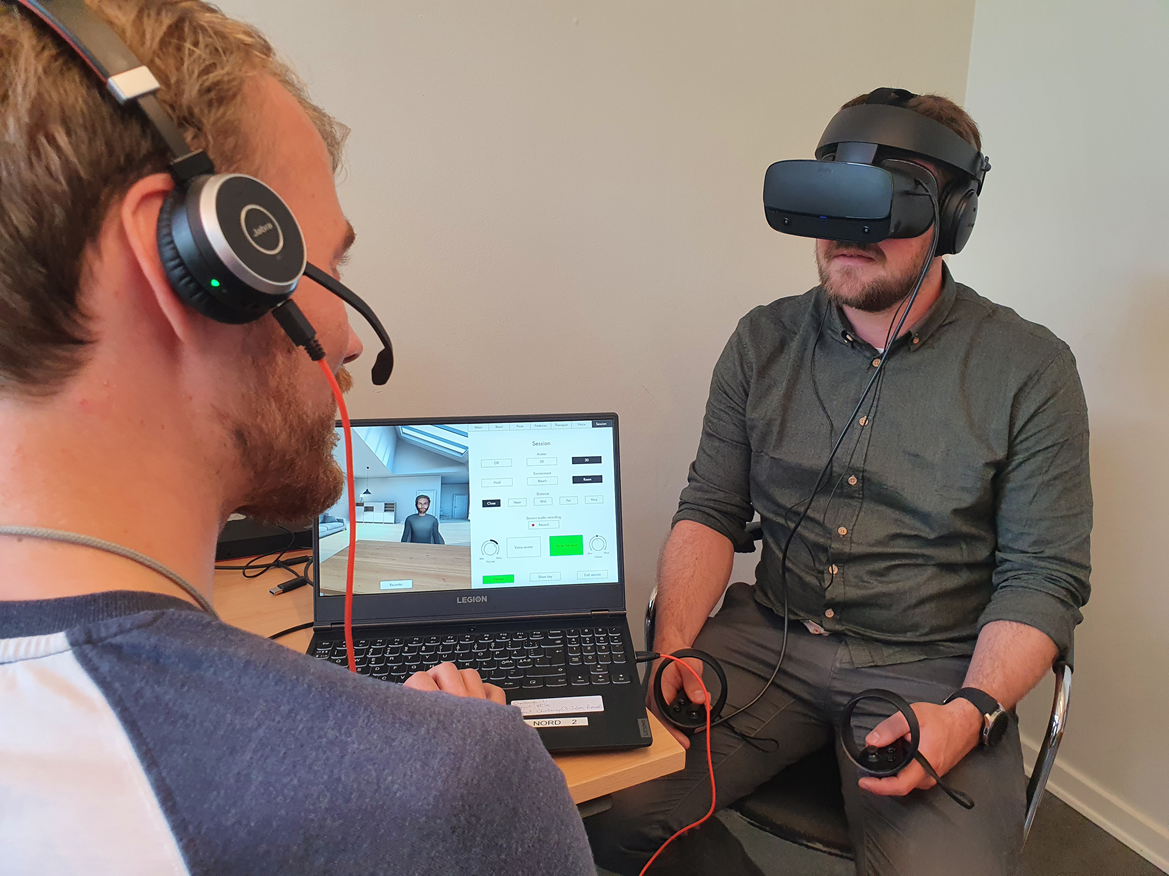
This qualitative study was part of Challenge, a Danish multicenter randomized controlled trial (RCT) on VRT for distressing voices (November 2020–June 2024). The VRT intervention comprised 7 sessions over 12 weeks (1 design session and 6 avatar dialogue sessions), inspired by the original AT protocol [,], with 2 booster sessions between weeks 12 and 24. Avatar dialogues were delivered using a head-mounted display (HMD), with participant and therapist present in the same location. A panic button allowed participants to remove the avatar. Elsewhere, more details are reported on Challenge’s methodology [] and outcomes []. Secondary analyses of trial participants’ childhood trauma configurations and their relationships with voice-related distress are reported in a separate study [].
Methodologically oriented toward pragmatism [-], this study adopted a practical and flexible approach to explore participants’ and therapists’ experiences. Semistructured interviews [] were conducted at the 3 trial sites: a research unit in Copenhagen and 2 outpatient clinics in Aalborg and Esbjerg offering Early Intervention Services (OPUS) [] or Flexible-Assertive Community Treatment (F-ACT) []. Reporting adheres to the standards for reporting qualitative research (SPQR) [].
Trial Participant SelectionIn this study, both voice-hearing individuals (trial participants) and therapists are considered participants. To differentiate, “trial participants” refers specifically to those receiving VRT. A multistage, purposeful sampling strategy [] was used to ensure variation in voice-hearing duration and site representation, with interviews conducted within a year of therapy completion (mean 7.55 months from baseline). Participants were contacted by phone and therapists by email.
Sample size was guided by the concept of information power [] and balanced with practical constraints. Information power was appraised throughout the interview process, leading to the conclusion of recruitment after interviewing 10 trial participants and 8 therapists. At this point, authors MJC and MPR judged the sample to hold sufficient information to elucidate the study’s aims. There is no minimum sample size for thematic analysis []. However, a model of data saturation has recently been proposed [], published only after the current study’s interview phase. Although saturation was not a guiding principle due to debates about its compatibility with reflexive thematic analysis [], the study’s sample falls within the range estimated to be sufficient for achieving saturation [].
Of the 21 trial participants invited, 10 were included, while the remaining were unavailable (n=5), unreachable (n=3), excluded due to acute psychosis (n=1), or declined without explanation (n=3). All trial participants met the Challenge trial’s inclusion criteria, including ages 18 years and older, a schizophrenia spectrum disorder diagnosis (excluding schizophrenia simplex and schizotypal disorder; International Classification of Diseases-10), persistent auditory hallucinations (≥3 months, Scale for the Assessment of Positive Symptoms [SAPS] score ≥3), in Danish psychiatric care, able to consent, stable antipsychotic regimen ≥4 weeks, insufficient response to current or ≥2 past antipsychotics if no current antipsychotic regimen []. Of the 11 eligible therapists, 8 still active in the trial agreed to participate; 3 were no longer involved or unreachable.
Individual Interview and Data CollectionTrial participants were interviewed individually, while therapists were interviewed in site-based groups, with 2‐3 in each. Interview guides were developed in mid-2022 based on (1) a lived experience focus group with trial participants (n=4) not involved in the current qualitative interviews and (2) two focus groups with therapists (n=6) from two trial sites. After feedback from research members (3 of 6 responded) and external VR experts (1 of 3 responded), a pilot trial participant interview was conducted and later included among the final 10. While the guides were continuously revised, only minor changes were made to improve clarity, ensuring consistency across interviews (see and for English versions).
Trial participants could bring a peer or case manager, resulting in one interview being with the presence of nonparticipants. Interviews were audio-recorded and transcribed with GoodTape AI []. Author MPR proofread, anonymized, and verified the transcripts for accuracy. Trial participant interviews (March 2023-October 2023) lasted 51:34-112:46 minutes (mean 86:03 min), and therapist group interviews (April 2023-February 2024) lasted 140:21–148:06 minutes (mean 145:11 min).
Background information on trial participants was obtained from the main trial records and supplemented during the interview, while therapist information was collected during the interviews and through follow-up email correspondence.
Research Team and ReflexivityThe research team had clinical and, in most cases, research experience with psychotic disorders, with backgrounds in nursing, clinical psychology, or medicine. Most were involved in the Challenge trial or employed at participating mental health organizations. Data collection was conducted by team members experienced in clinical interviews, though with varying qualitative research experience. The first author led the analysis, supervised by author RJ, a qualitative research specialist. Reflexivity was an ongoing process, addressing how previous relationships, roles, and disciplinary backgrounds might shape interpretation. RJ, who was not involved in the trial, provided independent oversight to strengthen the reflexive approach and to prevent trial-involved team members from making interpretations not fully supported by the data. A total of 2 authors who were also therapist interviewees did not participate in analysis. Some interviewers were professionally acquainted with participants. Notable dependent relationships included: (1) the first author having conducted a research assessment of a trial participant as part of the Challenge RCT; (2) the last author being both a therapist interviewee and manager of the authors MJC, MPR, and CDN; and (3) interviewers being colleagues—near or distant—of interviewed therapists. These relationships and associated hierarchical dynamics were openly discussed regarding their impact on data collection and analysis. Reflexivity was supported through notes, memos, collaborative coding, and critical discussions of diverging interpretations, enabling a reflective and iterative analytic process.
Data AnalysisData were analyzed thematically, informed by reflexive thematic analysis [-], as it emphasizes researcher reflexivity and treats subjectivity as a resource. A critical realist position was adopted to locate and make sense of trial participants’ and therapists’ descriptions of their experiences of VRT. Critical realism theorizes an independent truth as possible but unreachable due to each individual’s different locatedness and perspectives []. Coding and theme development were inductive to remain grounded in participants’ accounts, while recognizing that it was inevitably shaped by underlying theoretical assumptions [], including (but not limited to) the research team’s optimism about VRT’s efficacy [] and intention to interpret themes in relation to implementation outcomes []. The 6-stage analysis progressed from data familiarization, open coding, and initial theme identification (stages 1‐3) to theme refinement and presentation (stages 4‐6). In stages 1‐2, authors MJC, MPR, and CDN familiarized themselves with the data and coded transcripts, with participant interviews coded by authors MJC and CDN, and therapist interviews by MJC and MPR. Stage 3 involved developing initial themes separately for trial participant (authors MJC and CDN) and therapist (authors MJC and MPR) transcripts. Stage 4 involved the reinvestigation and refinement of initial separate themes. Stages 3‐4 were repeated across the entire material, integrating trial participant and therapist materials (authors MJC and MPR). Information power was deemed sufficient as no new insights were generated in the final trial participant interview, and all available therapists had been interviewed. Coding was managed using Nvivo (version 14; Lumivero), and codes were collapsed into themes using online whiteboard Miro. Stage 5 involved clearly defining and naming the final themes. The processes in stages 3‐5 involved ongoing discussions among authors MJC, MPR, and CDN, supervised by RJ. Stage 6 involved writing up the analysis, with participant quotes used for illustration (see the Thematic Analysis subsection in the Results section ). For theme validation, all Challenge experiment group participants from one trial site (n=44) were invited to a workshop to discuss the findings (see ).
Ethical ConsiderationsThe Challenge RCT was approved by the Committee on Health Research Ethics of the Capital Region of Denmark and the Danish Data Protection Agency (Project ID: H-19086621). This study adhered to the Declaration of Helsinki, with no additional approval required. All participants received written information and provided written informed consent. Confidentiality was maintained; however, participants were informed that any disclosure of significant risks during interviews would be shared with their care teams. All interview data were anonymized before analysis to protect participant privacy. No compensation was provided.
The sample included 10 trial participants (Participants 1-10) who had completed six (n=1) or all seven (n=9) VRT sessions, and eight therapists (Therapists 1-8) from the Challenge trial across sites (see ).
Table 1. Background information of interviewed Challenge-virtual reality–assisted therapy (VRT) trial participants (demographic, clinical, and trial-related characteristics) and therapists (demographic and professional characteristics).Characteristicsn (%)Mean (SD)ParticipantsAge (years)—34.5 (13.6)GenderMen3 (30)—Women6 (60)—Other1 (10)—EthnicityWhite10 (100)—Black or mixed Black0 (0)—South Asian or mixed South Asian0 (0)—Diagnosis (ICD-10)DF20.0 Paranoid schizophrenia5 (50)—DF20.3 Undifferentiated schizophrenia2 (20)—DF20.9 Schizophrenia, unspecified1 (10)—DF22.8 Other persistent delusional disorders1 (10)—DF28 Other nonorganic psychotic disorders1 (10)—Recruitment siteCapital Region of Denmark4 (40)—North Denmark Region4 (40)—Region of Southern Denmark2 (20)—Level of educationPrimary school4 (40)—Secondary2 (20)—Vocational2 (20)—Further education (<2.5 y)2 (20)—Higher education (>2.5 y)0 (0)—EmploymentFull time or part time0 (0)—Student1 (10)—On sick leave1 (10)—Disability retirement (or retired)5 (50)—Unemployed3 (30)—Duration of voice-hearing (years)—16.7 (10.43)Number of voices14 (40)—2‐54 (40)—>52 (20)—Self-reported experience with VR (range 1‐7; with 1=“beginner” and 7=“expert”)—1.3 (1.9)Months from trial baseline assessment to qualitative interview—7.55 (2.73)PSYRATS-AH-Total (baseline)—33.9 (2.84)TherapistsAge (years)—46.3 (9.3)Gender—Women8 (100)—EthnicityWhite8 (100)—EducationPsychologist5 (62.5)—Nurse2 (25)—Medical doctor1 (12.5)—Recruitment siteCapital Region of Denmark2 (25)—North Denmark Region3 (37.5)—Region of Southern Denmark3 (37.5)—Years of professional experience before trial entryWorking within one’s profession—17.1 (9.2)Working in psychiatry—15.1 (7.6)Working with psychotic disorders—13.9 (8.3)Conducting therapy—13.3 (6.9)Number of challenge therapies commenced—13.6 (6.3)aNot applicable.
bICD- 10: International Classification of Diseases.
cVoice-hearing durations used for sampling were based on percentiles from the Challenge trial: 0.05%=1.75 years (n=0), 0.1%=4 years (n=2), 0.25%=7.5 years (n=2), 0.5%=14 years (n=1), 0.75%=20 years (n=2), 0.9%=30 years (n=2), 0.95%=35.5 years (n=1). No trial participants had <2 yrs of AVH (0.05 percentile) and completed their last therapy session within a year, making it impossible to sample from this percentile.
dVR: virtual reality.
ePSYRATS-AH-Total: Psychotic Symptom Rating Scales-Auditory Hallucinations-Total.
Thematic AnalysisThematic analysis resulted in five overarching themes: (1) a different approach to voice-hearing and treatment, (2) using technology to meet the voice, (3) on a tight schedule, (4) a toolbox for transformation, and (5) a price to pay. Within each theme, subthemes were separated out (see ) with illustrative quotes provided for each (see ).
 Figure 1. Thematic map illustrating themes and their associated subthemes generated through the thematic analysis of Challenge virtual reality–assisted therapy (VRT) trial participant and therapist interviews. Table 2. Outputs of the thematic analysis, showing themes and subthemes derived from Challenge-virtual reality–assisted therapy (VRT) trial participant and therapist interviews, with illustrative quotes for each.Theme and subthemesIllustrative quote—trial participantsIllustrative quote—therapistsUsing technology to meet the voiceTechnology facilitates insights into subjective realityYou got a bit more of a tangible experience of it [in VR], than if we had just sat and talked face to face (…) because it was his voice, his image. And I spoke directly to him [the voice] while looking at him. (…) It felt a bit more realistic. [Participant 6]You’ve got that aspect of observing the dynamic between the patient and the avatar and experiencing it live [in VR]. (…) You definitely get a lot of information that you wouldn’t if we were just sitting across from each other at a desk, looking each other in the eyes. [Therapist 5]A special room for interactionIt’s strange. For many years, I’ve been unaccustomed to having a dialogue with my voices. But the last two times [in VR], I’ve sat and talked with the voice, with him. I haven’t been able to do so for 20 years. [Participant 8]I’m well aware that I’m not wearing a VR headset. Still, I feel like I’m in the room. I can follow along on my screen, and I can see what the patient sees. I’m there as the avatar and as myself (…). I have a sense - and often talk with the patients about it - that I’m going in there with them. [Therapist 5]A different approach to voice-hearing and treatmentTherapeutic efforts and rewardsYou’re working with someone who is actively trying to support you, but at the same time (…) is supposed to sabotage you. It’s kind of strange because the therapist has to be both hero and villain. [Participant 10]The biggest challenge is figuring out how we can create a change in the [voice] relationship (…). Even though we have a manual, we end up thinking very individually about each person’s history. There are many things to consider. [Therapist 4]Alliance[The therapist] is skilled. At putting herself in my shoes. Really listening. Giving input. I have really been able to use it for a lot. Even if it had just been conversations with her, I would still have been able to benefit greatly. But it has just become even better because there was an avatar. [Participant 6]We were in this together very quickly. (…) We met in a shared work environment, in a shared work project, and it [the alliance] was very easy to establish with the patients. It didn’t take long. [Therapist 1]Differentiation from other treatmentsYou just need to take some medication for that, right?\' That’s kind of what it [previous treatment] has been like. (…) I’ve talked about what they [the voices] say and so on. But not talked about what I could do to make it better. I think that’s what I’ve gotten here, right? [Participant 6]Quite a few spontaneously say: ‘It’s nice that there’s someone who wants to listen to it’, or ‘who is so open in asking about the experience’, because it can be something that’s hard to make space for elsewhere. [Therapist 5]On a tight scheduleTechnological limitations and malfunctionsI think it [reaction to technology problems] depends a lot on how it’s handled. In general, [the therapist] is extremely professional and super sweet. We just continued talking while she tried to get it up and running and she made a joke and such. So, it wasn’t like you got annoyed or angry. It was just delayed a bit. [Participant 2](…) There was a glitch in her headset. She could hear what she had said herself, playing on a loop. (…) It probably took 10‐15 seconds before I realized something was wrong. It worsened her voices for a short period after the session: She heard both the voice and herself in a loop. Unfortunately, the next two times, the equipment still didn’t work properly. Not the same issue, but we couldn’t get started at all. [Therapist 7]Adaptations madeWe just had to stop a few times and do some breathing exercises and take off our shoes and get grounded and things like that because it was really, really hard. [Participant 5]I’ve had a couple of times where it was clear that we couldn’t do it today. Instead, I had to help them with something else. And then schedule a new appointment. There were a few times where I thought it would have been unethical if I had just said, \'You can talk to your case manager about that next week, now we’re putting on the VR headset. [Therapist 8]A toolbox for transformationThe significant potentialWhen he [the voice] says things like: ‘If you don’t swallow a pen’, or ‘if you don’t cut yourself’, or ‘if you don’t overdose, your family will die.’ Then, I go in and say: ‘Isn’t it really you who’s afraid of what might happen to my family?’ ‘Yes, that’s it.’ ‘But are you sure my family will die?’ No, he wasn’t sure about that. In that way, it has helped. [Participant 8]It [the voice] was her enemy before because it always talked condescendingly, and she had perceived it as if it didn’t want anything good for her. But then it came to her indirectly - what its actual function was - and then she could begin to see it differently and view it as a friend instead. It just needed to express things in a different way. [Therapist 2]Empowerment, assertiveness, and self-worthI think a lot of it is having the tools to sort of set them [the voices] straight. I’m not exactly sure if they can understand it, but it’s about the fact that it’s also given me better self-esteem because now I have all these tools for it. [Participant 9]They [the participants] realize: ‘We’re sitting here openly talking about the voice, the voice doesn’t like it, but nothing happens.’ In some way, the voice’s power diminishes because it becomes less threatening - they realize that the voice can’t do everything it claimed it would. [Therapist 7]Enabling dialogues and new understandingsIt is less aggressive. It has its periods where it can really escalate if it thinks something very dangerous is about to happen. Now, I can almost tell them to calm down. Then, it’s as if it tries to speak a bit more decently. [Participant 4]When you have that approach that the voice is actually there to help you - it’s just been doing it in the wrong way. That’s something that has made them [the participants] start thinking differently about the voice: ‘Okay, it might always have been discouraging, but it actually did it with good intentions. It just came out the wrong way.’ [Therapist 2]Voice frequency and contentIt’s not so much with insults anymore. Now, we can have a regular dialogue. (...) Instead of calling me ’a big fat idiot’, then ’that might not have been so well done’ or ’you need to do this differently.\' It doesn’t have those negative words in it. (…) I can feel that I’m less negative myself as well, so it has a positive effect on me that my voice is less negative. [Participant 3]It [the voice] has started giving compliments instead, or it has just turned into something like: ‘Remember your glasses when you go out the door’, or ‘you just spoke wrong when you were crocheting’. From being completely critical to suddenly being an extra attention reminder. [Therapist 8]Existing and missing cornerstonesUnless you’re deeply psychotic, you know that you’re sitting in a hospital and have a therapist sitting right there (…). I mean, she [the therapist] doesn’t stop existing just because I can’t see her. I think, no matter what, you have to accept the premise that this is something we’re playing. [Participant 4]You are missing a cornerstone in the treatment if you cannot get the patient to buy into the premise. We’ve had someone who said: \'I know that this isn’t real. But if I’m going to get something out of this, I also know that I must pretend that it’s real’. And he benefited greatly from it. It’s fair enough if they say they know it’s not reality. [Therapist 1]A price to payAnxiety and fearIt was very anxiety-provoking at first. I almost had a panic attack because it was very intense. Or not intense, but it was very overwhelming. To see him [the voice]. [Participant 8]Patients could be very anxious at the beginning. More than we might have expected. Also about entering VR. We must spend a bit more time at the beginning to go at a pace that people can keep up with. Some are very afraid of their voices. Consequently, we cannot proceed as quickly as in the manual. [Therapist 4]Voice oppositionIt got worse. A lot. Mainly because he [the voice] asked me to stop attending, and I chose to keep talking. I talked to [the therapist] about it and my [regular] therapist in psychiatry, and eventually, I decided to keep going. It definitely affected my daily life quite a bit for a while because it got really bad, and I was hospitalized. [Participant 2]Well, I have also encountered voices that resort to screaming when they can’t get through with criticizing and make them [participants] stop the therapy (…). We’ve worked with this in VR (…): \'I’ll scream until you stop this therapy. Until you do what I say. [Therapist 4]Confrontation, exhaustion, and deteriorationI could have some slightly worse days because it could be quite draining, energy-wise, to participate. It could lead to a few negative days. Those are aftereffects of having worked with my voices. The voices could be very negative and macabre. (…) It happens when I’m under pressure. [Participant 3]She [the participant] experienced that her father [the voice] was holding her in a vice. Literally, and it went on for three weeks. The supervisor and I thought we should stop (…). I didn’t dare to continue, but she wanted to go on. And it ended with the voice disappearing. A fantastic process, but it was definitely intense. [Therapist 3]Theme 1: Using Technology to Meet the Voice
VR enabled participants to share the typically private experience of voice-hearing and offered a new way to interact with the voice(s) through the avatar.
Technology Facilitates Insights Into Subjective RealitySeveral trial participants described giving the voice a face and a body as an essential element of the therapy:
I desperately wanted something different than a silhouette. Because, I have no control over a silhouette. A face is easier to control. It’s easier to have a conversation with a face than just something floating around.Some had a clear idea of how the voice(s) looked, while others did not. A few were guided by the voice(s) in designing the avatar, but most experienced that the voice(s) would interfere with the process. For one trial participant, this raised a dilemma: whether to create the avatar based on their own perception or to let the voice dictate its appearance:
Very quickly I came to terms with the fact that the avatar should be made the way I saw the voice, not the way the voice saw itself.A high degree of resemblance between the voice and avatar was generally reported, though complete convergence was rare. Most trial participants found some level of similarity essential:
That makes the premise easier to accept. I wouldn’t be able to accept it at all if it were, like, a little girl sitting there and I was supposed to accept it as my voice. I hear an older man, so it’s not, like, a little baby. That would be completely ridiculous. So, I think it’s extremely important that you’re allowed to design it yourself.However, some trial participants felt that a less exact match made them feel safer:
If it resembles too much, then I would just start hearing the voice instead of what [the therapist] says. It would be a bit hard to know who’s speaking, if it were completely accurate. So, I felt it was actually a bit comforting that it wasn’t completely accurate during those first times I spoke. But it could have been more accurate in the later sessions.Achieving insights into what the voice looked like and merely seeing it in front of them was described as helpful or facilitating relief by some trial participants, with one participant mentioning that visualizing it provided a point in space to direct their attention. In some cases, the avatar was found to resemble a known persona from the trial participant’s life, as noted by a therapist:
I could clearly see who this avatar resembled. Luckily, she [the trial participant] also realized it herself at one point and said, ‘Oh, it’s me. This is a part of me, isn’t it?’ Already at that moment, something shifted for her. It was interesting to witness because I don’t think we would have necessarily reached that realization if we hadn’t been working together on shaping this avatar.Through VR, therapists gained insights into the subjective world of voice-hearing, experiencing firsthand how intense, human-like, and overwhelming the voices could feel. It was as if they were granted access to a private, intimate space, allowing them to witness the unfolding dynamics and participants’ real-time reactions—informing their therapeutic approach:
They are there with their voice, even though they know it’s VR. You get a completely different insight into the subjective world of living with a voice compared to just asking about it.Some therapists noted that collaboratively designing the avatar helped trial participants articulate their perceptions, acting as a shortcut to establishing shared understanding. Most trial participants echoed that the VR encounter facilitated a dialogue that was not obtainable in real-world settings:
It [VR] meant that we could somehow get around that therapist-patient barrier, which I think is very clear in psychiatry. Because [the therapist] had to take on the role of the voice. This way, she was kind of invited into a world that I would otherwise have a hard time giving her access to. You would never have that kind of dynamic conversation if you were talking about your symptoms. She kind of got to experience them.Audio recordings allowed trial participants to revisit their responses and progress, with some finding them helpful for reflection. Others shared recordings or avatar images with relatives, peers, or professionals. While this could provoke anxiety about others’ reactions, it also served as a new tool to communicate and explain the inner experience of voice-hearing, fostering shared understanding:
It’s not just inside my head anymore. It’s kind of out in the open. My loved ones have been let in on what I struggle with.VR was seen as creating a distinct therapeutic space, where interacting with the voice through the avatar helped focus attention and reduce distractions. Both trial participants and therapists valued this immersive environment, which offered opportunities for deeper engagement while also presenting challenges:
It was transgressive [being in VR], because suddenly you’re in another place - even though your brain knows you’re sitting in a treatment room that doesn’t look like that. It’s also about giving up control – about not knowing what’s going on around you.Highlighting the unique experience of creating and interacting with a visual representation of the voice, some trial participants described how the avatar’s tangibility, presence, and direct gaze brought the voice “to life”—as if it were a real person in VR:
It just became so real. I usually spend a lot of energy thinking, 'No, it’s not real, it’s just in your head.' But then it suddenly felt even more real when it was right there. (…) It feels much more real in VR.Most trial participants did not distinguish between the avatar and the voice. Instead, as reflected in emotional and physical impulses like wanting to hit or confront the avatar, most experienced the interaction as a direct encounter with the voice:
Due to me being inside this ‘zone bubble’ it was as if we, in fact, sat in front of each other and talked.However, while some trial participants became fully immersed, forgetting time and surroundings, others remained highly aware of being in the therapist’s office rather than a different world, for example, due to VR graphics:
It is so different that it feels a bit unreal (…). You’re made of flesh and blood… And when you’re wearing the glasses [HMD], it’s like you’re in a cartoon.On one hand, VR graphics enhanced concentration for some and reassured others that it was not reality, making it less frightening:
It actually made me feel safe. Because I knew that if something went wrong, it could just be taken away. Click the [panic] button if it gets too much. Just take off the glasses [HMD].On the other hand, some trial participants had to actively “accept the terms,” as the setup or the realism of the interaction did not come naturally to them. Consequently, some approached the intervention with ambivalence:
When you know it’s not real… but you have to pretend… that it is real, you have to try to… trick your own body. I know that the conversation with the voice is actually just the psychologist. So, I kind of have to try to convince myself that it’s not the psychologist.Potentially, having to pretend could hinder immersion, yet the awareness that VR was not real also offered reassurance:
The feeling I get when I can’t distinguish between reality and non-reality - then I get really scared. I didn’t feel that in the same way with this [VR], because I could already sense that it wasn’t real.The mix of structured and unstructured role-play was challenging for some. While lack of scripted lines was anxiety-provoking for a few, others found open dialogue more authentic. VR helped some participants engage more fully, even those initially skeptical, as noted by a therapist:
That he had to put on the VR glasses [HMD] and engage with what he saw, it just made him go along with the game. Then it was just a completely different dialogue we had.This theme highlighted therapists’ efforts and rewards in delivering VRT, the strong therapeutic alliance fostered, and participants’ appreciation for explicitly acknowledging and addressing voice hearing.
Therapeutic Efforts and RewardsTherapists were thoughtful in delivering high-quality VRT, striving to portray authentic avatars, carefully timing VR exposure for optimal impact, and tailoring interventions by connecting symptoms to life experiences—all while upholding high personal expectations of their performance:
Having to go in and play a role also requires that you can clearly remember what exactly you said last time – where the dialogue ended. So, on days when it wasn’t possible for me to go back and either listen to or read what I had written, I wasn’t entirely satisfied.Therapists described VRT’s delivery as a steep learning curve needing thorough training and supervision. Managing avatar dialogue improvisation, monitoring exposure and reactions through the HMD, and adhering to the manual simultaneously was a demanding task. Particularly, reproducing negative voice content in avatar dialogues could be uncomfortable:
I also found that really difficult at first, because it’s just miles away from how I usually speak to the patients. You would never say those kinds of things to patients in a regular setting. But that’s what it takes for the dialogue to be relevant and believable.Remembering the intention of accurately reproducing voice content helped therapists step into the avatar role, though it remained challenging. Direct engagement with the content connected therapists to the reality of the voice, and thereby to the person:
The harshest voices could cross some of my own boundaries, in terms of what I had to say. Having to say: 'You whore child.' That didn’t roll easily off my tongue, but that was what the voice said. It’s about finding the language that the voice uses. There’s no exposure to it if it’s some kind of light-version. That part hasn’t necessarily gotten any easier. (…) But it is a role you’re playing, after all.Therapists could feel vigilant and nervous delivering VR dialogues, aware of the intensity and potential risks involved:
You want to deliver something… really good.Conversely, therapists were inspired to continue by witnessing participants’ breakthroughs, experiencing a sense of accomplishment and motivation from positive outcomes:
That’s such empowerment, right? To witness it in the patients is truly fantastic. Once you've experienced it a few times, you get a bit of a taste for it. And think, it’s okay [reproducing negative voice content].All therapists reported that delivering VRT demanded extra effort—not only to effectively integrate VR into therapy but also to handle the technology and its malfunctions:
I think we did it 200 percent and it has worn me out. I also took on a lot of responsibility for the technical aspects as well.Most trial participants and therapists felt the therapeutic alliance formed faster than in usual treatment. Therapists highlighted VR’s unique role in creating a shared experience by referring to the concept of “the common third.” This concept from social pedagogy refers to “an activity or an experience they have together which feels unique in a positive way” [] or “an arena for equal sharing and participation” []:
It’s a common third: ‘Now we go in here and do this together. Then we go out and talk about the experience.Most trial participants echoed the value of the shared activity and collaborative approach in VR, particularly during avatar creation, which was often a powerful experience:
The way you collaborate, that’s what works for me-doing it together. If I had made the avatar myself, I’m not sure I would have gotten as far.Therapists were key in enabling shared experiences, with their role-shifting, guidance, and support during avatar dialogues seen as essential to therapeutic collaboration. While some trial participants felt self-conscious speaking to an avatar controlled by a nearby therapist, others found the therapist’s dual role comforting but odd:
The fact that she [the therapist] was both there as a challenger and a support, was strange, but in a way reassuring to know that the person who is challenging me right now is also one of my biggest supporters throughout this process.While participants valued common therapeutic factors like the therapist’s qualities, VR appeared to add a distinct dimension to the alliance. It fostered a deeper, shared understanding between therapist and participant—beyond what could be attributed to therapist skill or receiving a novel talk therapy alone:
It [using VR] meant a lot. That she [the therapist] kind of got to have a bit more of a real image… a dynamic image… of the world that I carry with me. That it wasn’t just me sitting there, having to talk about what had happened since last time, but that we could, in a way, create what was happening together.The combination of VRT’s shared experiences and common therapeutic factors made trial participants feel safe and confident in the therapist—marking a notable contrast to some participants’ prior experiences with psychiatric care:
There was just some kind of respect and understanding that I haven’t had elsewhere. I’ve had treatment providers with 25 years of experience, but they had no idea how it was like [hearing voices].For trial participants, the main motivation for joining the Challenge trial was the desire for an alternative to medication—driven by past experiences of limited effectiveness, intolerable side effects, or a preference for gaining tools to manage voices rather than focusing solely on “symptom treatment.” Most trial participants felt they worked alongside the therapist to understand and manage the voice(s), valuing being treated as more than “just a number.” One therapist recalled a participant finding the participatory and active nature of VRT helpful:
It’s not just about adjusting medication. That’s more something others do to him [the trial participant]. But if he gets something he can use and work with himself, then he gains a sense of control.Unlike previous experiences, trial participants appreciated the explicit focus on voice-hearing and found avatar dialogues to be a novel, tangible way to engage with the voice(s). By externalizing a voice, participants and therapists were able to engage with it collaboratively, in contrast to earlier treatments positioning the voice(s) as a problem within the individual. Many valued that the voice(s) were treated as real experiences rather than merely symptoms to eliminate:
For the first time ever, it [the voice] has been treated as if it were real. Psychiatry is really go
Comments (0)