
Remember me

Thirteen patients (ages 53–73) participated in two focus group sessions, including five women and eight men (Tab. 1). Educational backgrounds (classified using the International Standard Classification of Education (ISCED) [16]) varied, though the majority had completed higher education. On average, participants used five different medicines. During the introductory rounds, participants expressed varying basic attitudes toward healthcare, ranging from highly positive to negative. Several participants said they joined this study to give back as an appreciation for care they had received.
Table 1 Participant characteristicsParticipants shared experiences with recalls involving histamine H2-receptor antagonists, antihypertensives, and epinephrine auto-injectors. These drugs were recalled due to various drug defects, including the presence of carcinogenic impurities and device malfunctions. One participant (R4, FG1) learned during the session that he had not actually been affected by a recall, and therefore did not meet the eligibility criteria. After group discussion, the patient continued participation while reflecting hypothetically.
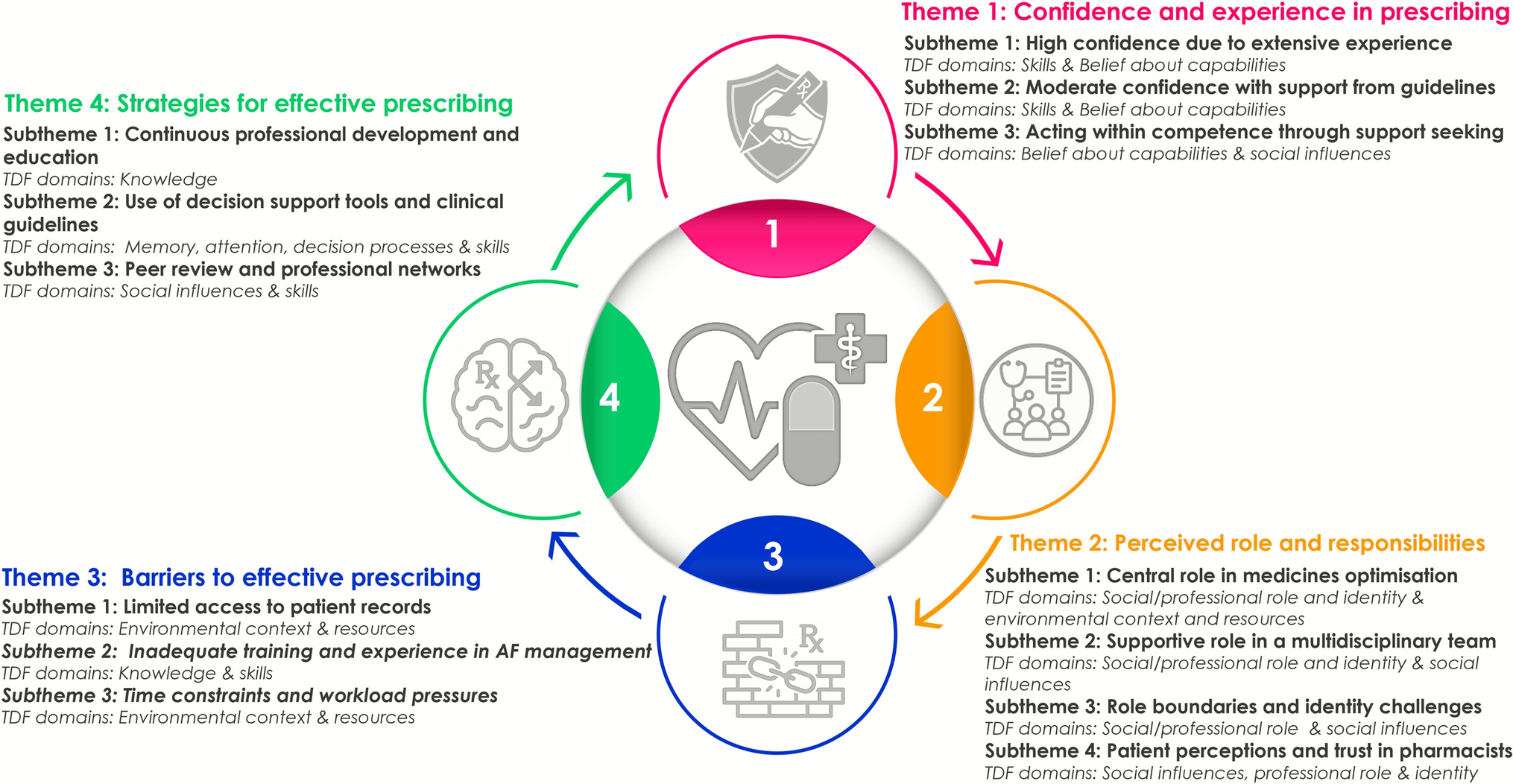
Themes and subthemesThematic analysis yielded five main themes: Familiarity with Drug Recall Definition, Patient Experiences, Risk Perception, Drug Recall Impact, and Preferences in Drug Recall Handling, each with corresponding subthemes (Fig. 1). The following sections address each (sub)theme, supported by relevant quotes.
Fig. 1
Overview of the themes and their subthemes derived from the focus group discussions
Familiarity with definition of drug recallParticipants were generally unfamiliar with recall procedures and unaware of who is responsible for initiating a recall, and the roles of governmental bodies, manufacturers, and healthcare professionals. Some participants confused drug recalls with medication changes due to drug shortages, even after clarification from the moderator.
‘I agree with the lady. That you can also consider that [a change in medication due to a drug shortage] as a recall.’ (R1, FG1)
Most participants had experienced non-recall-related medication switches, which many viewed negatively due to side effects or reduced effectiveness.
Patient experiencesNotification methods varied: some participants were contacted directly by their pharmacy via letter, email, or telephone, while others first heard through media (television, internet or newspapers). The latter often initiated contact with their healthcare providers for guidance. Pharmacies asked patients to return their medication for batch verification and provided a new batch or therapeutic alternative if needed.
Many participants found the communication vague or incomplete, causing uncertainty about urgency and required actions.
‘And if I could come along with the medication, because then they could see from the lot number, again, I don't know what lot means, but they could see from the number whether it was from that batch.’ (R6, FG1)
Participants often did not understand the reason for the recall, in particular in cases involving drug contamination. Whether the contamination referred to the drug, the packaging, or some other aspect of the product. As a result, several participants referred to and sought clarification regarding the recall’s significance and associated health risks from healthcare-professional acquaintances.
Risk perceptionParticipants often struggled to interpret recall-related risks. Several felt uncapable to interpret the implications of an impurity themselves and entirely relied on healthcare professionals. Others compared the issue with familiar risks, such as lifestyle or environmental exposures, but these analogies (also used by Dutch authorities) did not resonate with all participants.
‘Yeah, well, like you would eat burnt meat or something. I said: well I don't eat that […] I don't barbecue anyway. But uh, I don't like that [comparison].’ (R2, FG2)
Other participants weighed the theoretical risk of harm against the perceived therapeutic necessity of the drug.
‘But you are less concerned about the risk of cancer, I understand, because it [the medication] is so important to you to, well, prevent that stroke?’ – ‘Yes, to not end up in a wheelchair… Exactly.’ (R2, FG2)
Risk perception was found to be context-dependent. Participants' views varied based on multiple factors, including medication purpose (e.g., chronic vs. as-needed use), availability of alternatives, and nature of the defect. The perceived importance and therapeutic role of the drug shaped how the risk was tolerated.
‘Isn't it sometimes also a risk to recall everything? I mean: what if a medicine is no longer available? I know that there was a period when there were too few EpiPen’s. Then I think: then you die sooner because you no longer have an EpiPen, then if you use a pen that is perhaps a bit contaminated, or that you need a few more because it doesn't work properly. And that is probably the case with a lot of medicines.’ (R1, FG2)
Drug recall impactThe impact of drug recalls varied among participants. Some reported minimal disruption; others became more vigilant, researching their medication use or keeping recall letters as a safeguard in case future issues emerged.
The emotional impact was substantial for several participants: Learning about possible carcinogenic impurity in their medication caused considerable distress, fear, and uncertainty. Moreover, participants emphasized that the anxiety may have been disproportionate to the actual risk, yet no less impactful.
‘Because I think that a lot of people are scared to death, while there is relatively little going on. And that is of course also super annoying. Because if you get really scared of something, it can perhaps have a bigger impact than if you keep taking that medicine.’ (R4, FG2)
Despite these concerns, some participants were satisfied with the recall handling. They appreciated direct contact from the pharmacist and felt reassured that the issue had been detected, even after many tablets had already been consumed.
‘Yes, I thought it was good that they called me. […] Yes, then you know it right away. Because imagine that you get a letter, then I think: yes, how long is that letter on the way? Why… why don't they tell you right away?’ (R2, FG2)
Acceptance of proposed medication changes differed. Some viewed the recall as an isolated incident, others were reluctant to accept changes to their medication. One participant preferred to continue using the recalled product due to its effectiveness, while others questioned the pharmacist’s advice or insisted that their physician be involved in therapeutic decisions.
The impact on patient confidence in medication in general was heterogeneous. For some, the recall had little to no effect, while for others, it led to diminished or even complete loss of trust in medicines. The degree of impact appeared to depend on the specific cause of the recall and whether the recall was an isolated incident or would occur repeatedly with the same manufacturer.
‘And then you don't trust it all that much anymore. So, for me that recall was, yes, not nice. And I also became more suspicious of other medicines. Like: if that is contaminated, that can be too. […] It didn't increase trust. It rather fueled suspicion.’ (R6, FG1)
Most respondents indicated that the recall did not alter their medication use, but became more vigilant and critical of their medicines. For some, the drug’s perceived necessity, outweighed recall-related concerns, supporting continued adherence. In contrast, one participant stopped taking the medication due to concerns about a minor cancer risk, despite enduring persistent pain.
‘Well, I finally said and then I was in a lot of pain myself, you know. But I didn't go back to the GP for replacement tablets. Because I thought: well, I'm just not going to do that.’ (R5, FG2)
Overall, participants reported a strong baseline level of trust in their pharmacists, GPs, and medical specialists. Most stated that the drug recall had not affected their relationship with these professionals, as they did not blame them. One participant, however, reported reduced trust due to poor communication.
‘I'm still really angry about that. And also, about the lack of communication. I just wanted openness, like: tell me what's going on, then I'll understand. But make no mistake, I'm not a stickler. So, it definitely had an impact on my relationship with the pharmacist.’ (R6, FG1)
Participants views regarding the impact on trust in governmental authorities varied. Some appreciated the oversight of drug quality and felt that recalls reinforced their trust in regulatory systems. Others reported no change or continued distrust, citing concerns about influence from the pharmaceutical industry and broader political dissatisfaction extending beyond healthcare.
Patients’ preferences regarding future recall communication and handlingParticipants consistently highlighted personalized communication during drug recalls as most important, identifying pharmacists as the most important and trusted source. For large-scale recalls or those with widespread impact they also valued media involvement to ensure broad public awareness. Several participants found it difficult to interpret health implications and highlighted the need for additional resources such as helplines or dedicated websites.
Preferred communication modes (telephone, email, letter) depended on the importance of medication and urgency of the recall. Life-saving drugs, such as epinephrine auto-injectors, warranted rapid and direct contact, while recalls of preventive medication could be communicated through slower channels. Moreover, for recalls involving potentially serious consequences, such as a cancer risk, participants found impersonal communication unacceptable and stressed the need for in-person explanation.
‘If I am indeed prescribed something by a professional, and that professional has, so to speak, recommended it to me, and I take it, and it turns out to be contaminated, with a possible risk of cancer, then I want it to be explained to me properly, what that risk is. And not by receiving a letter on my doormat.’ (R5, FG2)
Participants furthermore stressed the need for follow-up to ensure that all patients received and understood recall information. They viewed letters and emails as unreliable for some groups, particularly older adults or those less engaged with mail or digital communication.
‘[…] Well, I have a mother-in-law, who is a few years older than me. But she doesn't empty the mailbox every day, right? […] And she doesn't read emails either. So, she just gets that information… yes, coincidentally, when I ask her that, right? […] So, I don't really think sending a letter is [laughs] entirely sufficient.’ (R2, FG1)
Beyond immediate recall actions, participants wanted updates following the initial recall process on whether recalled medication would eventually become safe to use again.
Regarding content, participants emphasized clarity, transparency, and contextualization. Communications should describe the nature of the defect, associated risks, and how risks compared with the therapeutic benefits of the drug in a manner that supports informed decision-making. When substitution was necessary, they wanted explicit information on whether the alternative was pharmaceutically equivalent.
‘And of course, in simple language, so that I understand it, I am not a pharmacist. So just be clear.’ (R6, FG1)
The degree to which participants wished to engage in shared decision making varied. Some deferred entirely to healthcare professionals, whereas others wanted to be actively involved and fully informed, enabling them to make well-informed decisions about discontinuing the affected medication or accepting an alternative.
‘Yes, definitely. I think it's just really easy when you know what it's about, that you can make that choice yourself. But then the trust is also greater, because then your pharmacist has explained why. And then it's also a bit easier to talk. And then it’s also easier to make a choice.’ (R1, FG1)
Participants expected that when a change in medication was necessary, particularly involving a different product rather than a different batch, the prescribing physician would be consulted or at least notified.
When asked whether pharmacists should not bother patients with a recall and just silently replace affected stock, responses were mixed. Some felt explicit communication was unnecessary when risks were minimal.
‘Yeah, but what does it matter if you happen to take those 30 more pills, and you get the right one next time? Because that… that's what it's all about.’ (R6, FG2)
Others strongly preferred transparency and would feel misled if not informed.
‘I would feel cheated if you guys knew that and then didn't….’ (R5, FG2)
Comments (0)