
Remember me


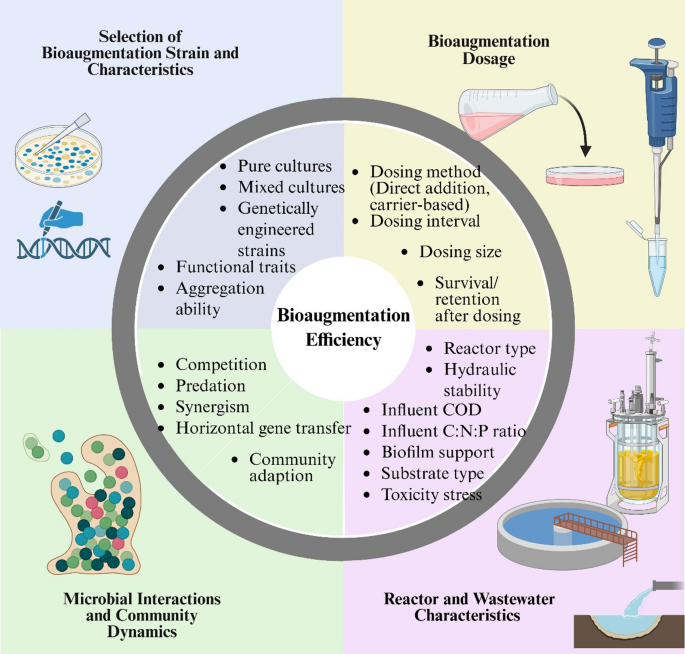
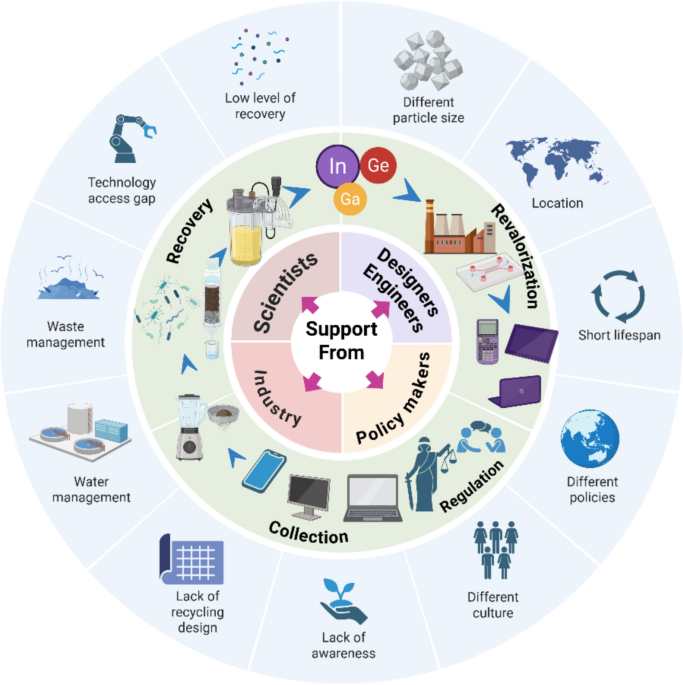
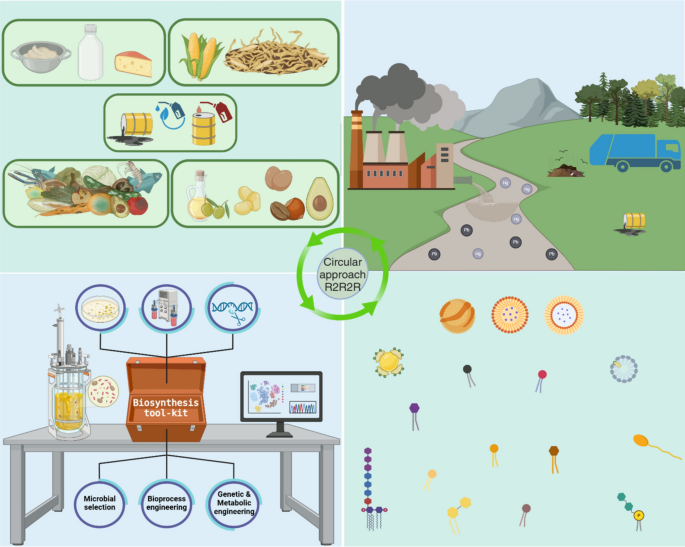
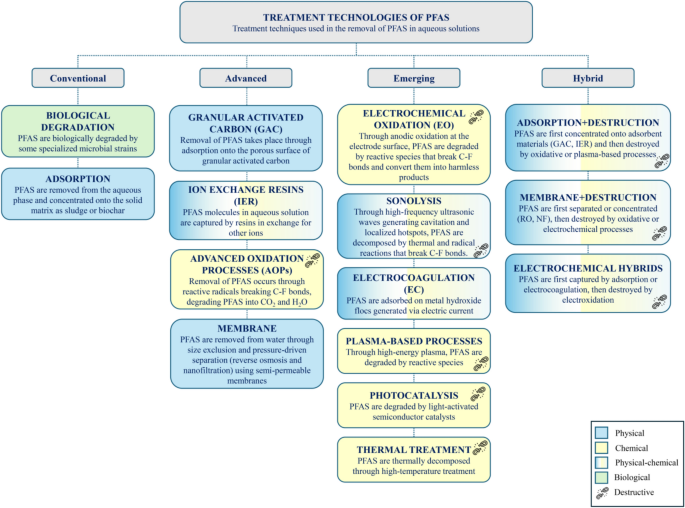
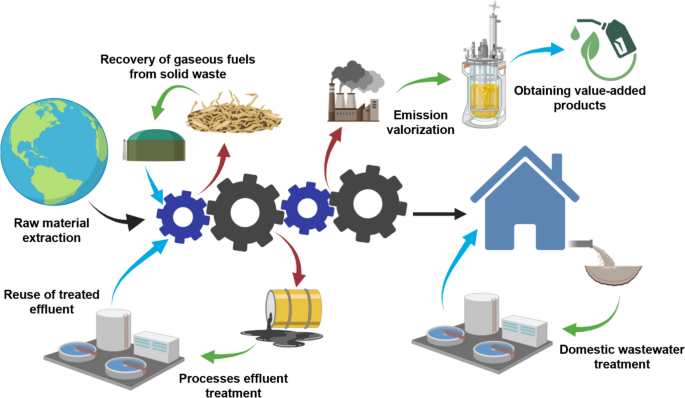

Biotechnological processes, owing to their extraordinary metabolic capacities, can decompose, transform, and detoxify a wide range of contaminants, including heavy metals, organic compounds, and even emerging pollutants (Anusuya et al. 2025). To address complex contaminants, hybrid treatment systems have been developed that combine biological processes with physicochemical treatments, currently focused on advanced oxidation technologies and the use of nanomaterials for adsorption and absorption processes (Huang et al. 2025). Although these processes are efficient as bioremediation strategies, biotechnological valorization has also emerged, in which not only a low-pollutant effluent or emission is obtained, but also value-added products, promoting non-linear models of waste utilization (Fig. 1).
Fig. 1 The alternative text for this image may have been generated using AI.
Conceptual scheme of a production and consumption model integrating Zero Pollution strategies. Throughout the chain, waste flows and treatment routes are presented for the recovery of gaseous fuels, emission valorization, production of a value-added products, effluent treatment, and reuse of treated water. Created with https://www.biorender.com/
At present, several emerging tools are contributing to the Zero Pollution objective through the collection integration of a both experimental and pilot-scale data. Notable examples include computational material design and the engineering of microbial consortia, which offer promising pathways of enhance the degradation and removal of pollutants, although their application remains largely exploratory.
Nevertheless, achieving the Zero Pollution goal faces significant challenges. The technological gap between developed and developing countries limits the implementation of clean solutions on a global scale. Moreover, many industries still rely on polluting processes, meaning that the transition to sustainable models requires investment, regulation, and political commitment. Additionally, emerging contaminants such as pharmaceuticals, personal-care products, pesticides, and microplastics remain difficult to remove using conventional methods, and their effects on the environment and human health are still not fully understood.
The idea of Zero Pollution is not impossible. Although it may seem distant, it represents an urgent global necessity. Achieving it demands a systemic vision in which scientists, industry, policymakers, and citizens work together.
Comments (0)