Oro-Antral Communication: Web-Based Health Information Quality Study
Aim
This study evaluates the quality of online health information regarding Oro-antral Communication (OAC) complications following surgical tooth extraction.
Methods
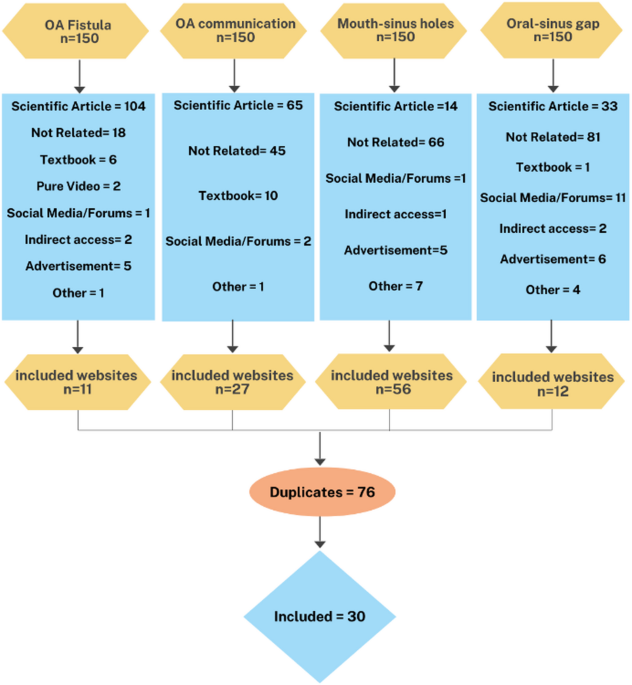
On December 4, 2024, Yahoo, Bing, and Google search engines were used to conduct searches for four distinct terms: “Oro-antral communication,” “Oro-antral fistula,” “mouth-sinus holes,” and “Oral-sinus gap.” The DISCERN tool and JAMA website benchmarks assessed the quality of the online material. The readability was examined using four separate measures.
Results
The majority of the 30 included websites (56.7%) were found to be associated with dentistry or medical facilities. Non-profit organizations accounted for 36.7% of the total, with government/university websites accounting for only 6.7%. In terms of specialty, all websites were only partially relevant to the topic. Regarding content type, all websites supplied medical facts (100%), and only 30% used a question-and-answer structure. The most common material presentation was images (36.7%). The overall quality rating of the websites (DISCERN Q16) had a mean of 2.83, suggesting moderate quality. The mean readability scores indicate moderate reading difficulty.
Conclusion
This perspective study suggests that available internet information on OAC appears to vary in quality and moderate difficulty to read, underlining the potential need for clearer and more accessible tools to improve patient awareness and enhance professional clinical communication.





Comments (0)