
Remember me


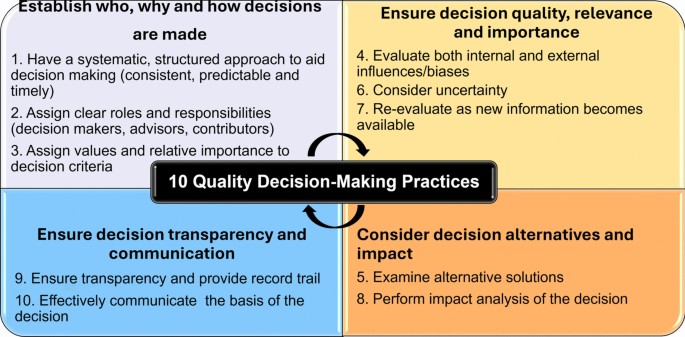


In dealing with DT, Chiesi’s R&D has adopted a distinctive approach that emphasizes the critical role of soft elements fostering a culture grounded in continuous learning, open communication, psychological safety, and purpose‑driven leadership. This cultural foundation strengthened the adoption, resilience, and long‑term sustainability of digital initiatives helping Chiesi navigate growing complexity, enhance engagement, and accelerate progress toward innovative objectives [43].
As a midsized pharmaceutical company with limited resources, Chiesi has approached its R&D DT journey with focus and intention, aligning every step with its strategic objectives and long-term vision. Rather than isolated initiatives, digitalization became embedded into tangible daily behaviors and practices, reflecting that effective change extends beyond organizational structure [43].
Chiesi’s R&D DT journey has underscored costs and risks that should not be underestimated. Beyond technology, data infrastructure, and specialized capabilities, organizations must invest in change management, upskilling, and stakeholder engagement. In midsized pharmaceutical companies, these investments may compete with core development priorities and create tensions around resources and short-term business objectives. As initiatives grow, risks can emerge—unclear accountabilities, fragmented governance, resistance to change, and digital structures that become disconnected from business needs. Regulated pharmaceutical R&D add further challenges around data quality, compliance, system validation, and trust in data-driven and artificial intelligence (AI)-enabled decision-making.
4.1 The DT Journey in Chiesi’s R&DThe R&D DT journey was initiated in 2020 as a strategic pillar of the R&D 2030 vision, aiming to accelerate innovation, enhance efficiency, and enable data-driven decision-making across the R&D value chain.
Chiesi recognized the need for a structured operating framework to coordinate DT initiatives, ensure strategic alignment, and optimize resource allocation. This led to the development of the P.O.L.A.R. Star framework (Table 2) [17]. The following sections will briefly introduce the framework, focusing on embedded and emerging soft elements and on why, over time, the journey evolved from a federated Digital Coordination Team model to a dedicated Digital, Data, and Modelling organization, ensuring stronger governance; sustainable ownership; and scalable digital, data, AI, and modelling solutions across R&D.
Table 2 P.O.L.A.R. Star framework—human soft elements4.1.1 People CoordinationFor Chiesi’s R&D, DT required strong alignment with the company’s strategy. A cross-functional R&D Digital Coordination Team (DCT) was therefore established to shape and refresh R&D digital strategy, foster collaboration, and build digital capabilities, working closely with R&D leadership to ensure strategic direction and alignment with company objectives.
The DCT brought together stakeholders from across R&D functions (Preclinical; Clinical: Chemistry, Manufacturing and Controls [CMC]; Regulatory; Quality; Patient Safety; and Project and Portfolio Management), selected for their operational and management expertise rather than digital skills alone. Allocating the right resources ensured DT was seen as a shared responsibility, aimed at building trust and shared understanding across functions.
This approach kept DT close to everyday work, while continuous dialogue with leadership and stakeholders helped build buy-in and reduce resistance.
The DCT also helped the wider R&D community understand the rationale for change and adopt new ways of working.
4.1.2 Ownable Focus AreasOnce the DCT was established, one of the first achievements was the identification of six key strategically ownable focus areas where digital capabilities could generate the greatest value for R&D. Workshops and collaborative sessions with R&D stakeholders and subject matter experts (SMEs) ensured that priorities reflected collective insights and needs, while direct employee involvement reinforced shared ownership. Prioritization targeted “quick win” use cases—early, visible successes that could boost morale, demonstrate tangible value, and build momentum for broader adoption.
Transparency was key at this stage: an open, inclusive process for selecting focus areas helped build trust in the transformation journey.
4.1.3 Long-Term RoadmapOnce digital opportunities and priorities were identified, the DCT developed a strategic digital roadmap to provide direction and coherence to Chiesi’s R&D’s transformation efforts, focusing on three main elements:
Roadmap adaptability: designed to be iteratively adjustable as the organization learned and matured, continually reassessing and reprioritizing opportunities as the development portfolio evolved, and fostering a culture of continuous improvement.
Resource resilience: supporting employees in coping with setbacks and evolving priorities through regular check-ins, peer support networks, and leadership modeling adaptive behaviors.
Ongoing engagement: regular communication on roadmap progress, reinforcing commitment and helping individuals understand how their work fit into the overall digital strategy.
The roadmap provided a shared direction, reduced uncertainty, and helped employees connect their contributions to organizational goals.
4.1.4 Common Digital Alphabet and LanguageA cornerstone of the DCT was the development of a semantic, ontology-based data model to harmonize data and enable interoperability.
Through this effort, a common language was established across departments, improving communication, reducing misunderstandings and misalignment, and encouraging knowledge sharing. Teams collaborated to define terms and concepts, creating a unified understanding of data—clarifying definitions, standardizing formats, and mapping relationships—making data sharing easier across the organization.
The ontology also helped the DCT assess whether data across corporate systems could be logically connected and to address inconsistencies as they emerged, for example, through the harmonization of departmental terminology and the subsequent update of the ontology to ensure interoperability.
Ultimately, the common language strengthened cross-functional teamwork and helped break down silos.
4.1.5 Reporting and MonitoringFinally, the DCT implemented a business intelligence dashboard to monitor digital initiatives through impact-oriented key performance indicators (KPIs) (e.g., portfolio value generation by focus area and program, on-time project delivery, budget adherence, and workload allocation). The dashboard supported organizational change by enabling continuous monitoring, collaborative tracking, and early identification of friction points. One such example emerged during cross-functional initiatives on common data standards, semantic models, and shared digital processes across R&D, where some functions initially perceived these efforts as competing with operational priorities and resource allocation. Leadership sponsorship, transparent communication, and regular reviews helped clarify roles, address feedback, and build the trust, collaboration, and ownership needed to sustain DT.
The P.O.L.A.R. Star framework emerged from Chiesi’s early DT efforts and was later formalized to guide the DCT, structuring DT as a step-by-step process that translated each phase into concrete, culturally and human-centered actions (Fig. 1). This framework helped reinforce the view of DT not just as technology deployment, but as a long-term organizational investment requiring sustained leadership commitment, cultural evolution, and continuous adaptation. It also provided the DCT—and managers more broadly—with a practical mechanism to balance innovation ambitions with organizational sustainability.
Fig. 1
P.O.L.A.R. Star framework—set of shared values that guide Chiesi’s R&D digital transformation
4.2 The Evolution of the DCT in Chiesi’s DT JourneyAs data volumes and complexity grew, it became clear that R&D needed a more comprehensive operating model and stronger governance and that creating alignment with the Findable, Accessible, Interoperable, and Reusable (FAIR) Data Principles (FAIRification) in data should be prioritized as a foundational next step.
Continuous alignment with the Information and Communication Technology (ICT) team enabled DCT to clarify interdependencies between data analysis and infrastructure management, while open dialogue with a cross-company Digital Transformation Office (DTO) ensured consistency with broader DT strategy at the company level. This collaboration helped define “digital” for Chiesi’s R&D as the strategic integration of digital technologies, data-driven methods, and computational tools across the entire drug life cycle—from discovery to development, manufacturing, quality, regulatory compliance, and postmarket surveillance.
Middle management and SMEs played a crucial role alongside DCT, acting as translators between leadership’s vision and operational realities. They were selected not only for their technical expertise but for their ability to recognize operational pain points; to connect functional needs with digital opportunities; and to communicate across scientific, business, and technical communities.
Building on this foundation, DCT identified three main areas in which to operationalize R&D’s digital strategy:
1.Data-driven change management and process excellence;
2.Data strategy and governance;
3.Advanced data science and modeling.
This evolution drove the shift toward a dedicated unit, harmonizing strategic oversight, operational execution, and technical capability while strengthening buy-in and minimizing internal resistance.
4.3 The New R&D Digital, Data, and Modeling UnitThis transition to a dedicated unit marked a pivotal moment for Chiesi’s R&D, acknowledging that coordination alone was no longer sufficient. The new Digital Unit includes selected DCT members, middle managers, and SMEs from the R&D functions most affected by the transformation, strengthening the foundations for a data-driven organization.
Its operating model is built around three interconnected pillars that work in synergy to operationalize Chiesi’s R&D’s digital strategy (Fig. 2):
Data-driven change management and process excellence, which supports the integration and optimization of digital technologies in data-driven processes;
Data architecture, governance, and foundation, which ensures robust data governance, data FAIRification, and semantic data layer deployment;
Data visualization and elaboration, bioinformatics, modelling and generative AI (GenAI),—which applies computational methods, simulations, advanced analytics, and dashboards to support decision-making and accelerate scientific insight generation.
Fig. 2
The three pillars for operationalizing Chiesi’s R&D digital strategy. GenAI, generative artificial intelligence; R&D, research and development
The Digital Unit also acts as the main point of contact for R&D functions in operationalizing the digital strategy, and as a facilitator for non-R&D functions (e.g., ICT and DTO), improving cross-functional communication and ensuring that initiatives remain aligned and operationally effective (Fig. 3).
Fig. 3
The new way of working with non-R&D functions, each R&D function (Research and Preclinical, Clinical, CMC, Regulatory, Patient Safety, QA, and Project and Portfolio Management) and across R&D functions themselves. Clin, Clinical; CMC, Chemistry, Manufacturing, and Controls; DTO: Digital Transformation Office; GenAI, generative artificial intelligence; ICT, Information and Communication Technology; PPM, Project and Portfolio Management; PS, Patient Safety; QA, Quality Assurance; R&D, research and development; Reg, regulatory; Res & Precl, Research and Preclinical; SME, subject matter expert
Designing the new model required assessing professional skills and technical capabilities, as DT often demands new roles and expertise not broadly available across the organization. Cross-disciplinary translators therefore became essential to connect scientific, business, and digital perspectives; support peer adoption; and turn strategic ambition into practical use cases.
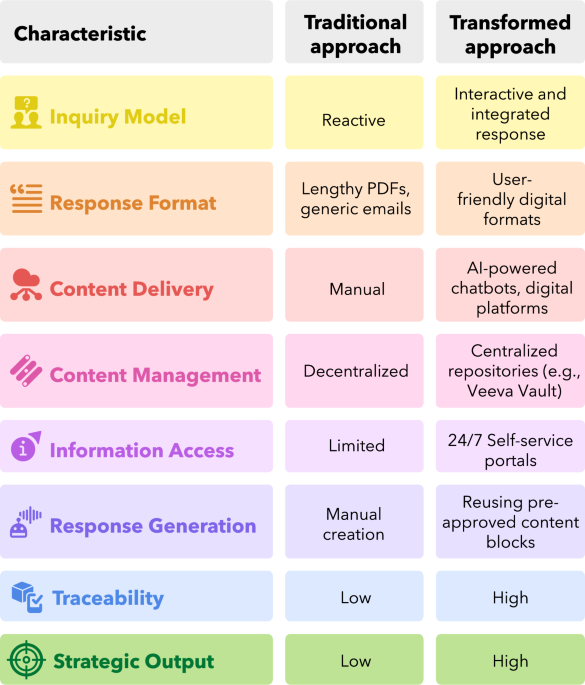
Consolidating these capabilities into a centralized Digital Unit, rather than maintaining a fully decentralized model, required balancing expected benefits with potential risks, obstacles, and mitigation strategies (Table 3). Chiesi’s R&D’s DT must therefore be viewed through a business lens, linking digital investments to tangible outcomes such as faster time to market and greater R&D efficiency. Early successes, including a GenAI pilot for drafting documentation, provide proof points that build trust and momentum. However, technology alone cannot deliver sustainable change: leadership commitment, clear interfaces, digital fluency, and collaboration are equally critical. Targeted training and engagement initiatives help employees understand how digital tools and data can improve their work. When technology, talent, and trust align, science and digital innovation can progress together, enabling faster, smarter breakthroughs for the organization and patients.
Table 3 Digital unit: benefits, risks, and mitigation strategies
Comments (0)