We demonstrated that patients with sepsis can be categorized into gene-expression sub-groups that have different outcomes based on a small panel of genes measured on a commercially available device, already available in hospitals. A ‘high-risk’ group with gene-expression features of immunosuppression including altered T-cell function and antigen presentation were at high risk of mortality and had an increased use of ICU resources.
We tested two risk prediction models derived using the IPP genes, one that predicted patients expected to have low mHLA-DR and another that predicted clinical risk. Of the models the clinical worsening model consistently identified a group at higher risk of death at 90-days whereas the mHLA-DR model did not. This could be for several reasons, first we did not have mHLA-DR measurements available so, although this model has been previously validated [12], we do not know how well it estimates this parameter in our population. Secondly, the clinical worsening model was developed specifically to predict clinical deterioration rather than low mHLA-DR and therefore it is perhaps not surprising that it appears be the better predictor of clinical deterioration rather than a proxy risk predictor.
Although we found clinical differences between the sub-groups, clinical parameters performed poorly at predicting IPP group membership suggesting that the immunological information provided by the IPP supplements routine clinical data and provides another indicator of risk not captured by other tests. The IPP genes give some insight into the underlying immunobiology of the two sub-groups. The genes upregulated in the ‘high-risk’ group suggest neutrophil dysfunction whilst those that are downregulated predict a reduction in T-cells and antigen presentation [11, 12, 15]. The patterns of gene-expression between the IPP groups are similar to those previously reported between the sepsis response signature (SRS) 1 and SRS2 sub-phenotypes [5, 6] suggesting possible similarities between the two profiling methods.
We hypothesized that increased mortality in ‘high-risk’ patients would be a consequence of an increase in HAI due to immunosuppression. However, this was not seen. It may be that an inability to clear the initial infection leads to mortality in this group, this is supported by findings that 89% of patients that died from septic shock had persistent evidence of infection at postmortem [20]. If patients die from the unresolved primary infection, they will never be able to contract a new secondary HAI. The finding that death without HAI was higher in the ‘high-risk groups’ supports this. Similarly, clinically identifiable infections may not be the main driver of mortality. Viral reactivation is more common in septic patients with immunosuppressed gene-expression sub-phenotypes [21] and it may be that this is responsible for a persistent cycle of inflammation and organ failure that contributes to death in ‘high-risk’ patients.
Although identifying patients at elevated risk may have utility, the real benefit of gene-expression sub-groups will be if they allow more targeted treatment. The demonstration that host gene-expression can be measured on a device that could be used in the clinical environment and that it can identify a group at risk of a poor outcome supports the development of a personalized approach to sepsis. This could be by investigating therapies predicted to benefit the ‘high-risk’ IPP group, for example, GM-CSF which boosts antigen presentation [22] or recombinant human interleukin-7 which increases CD4 lymphocyte proliferation [23] and IFNγ producing T-cells [24]. Corticosteroids have been shown to have a differential treatment effect based on SRS endotypes [8]. As patterns of gene-expression show some similarities between the SRS sub-phenotypes and the groups reported here, this may be a viable method to stratify patients to this intervention. Alternatively, the technology tested here could be repurposed to allow assignment into other gene-expression sub-phenotypes.
Moving away from syndromic diagnoses, such as sepsis and acute respiratory distress syndrome, to identifying pathobiological processes responsive to specific treatments, known as treatable traits, is an important step towards precision medicine in critical illness [4, 25]. However, for these to be deployed clinically, novel diagnostics are required that can identify these subgroups of patients. This study demonstrates that this could be possible using the FilmArray® device. Such precision medicine trials would require that such tests can be shown to be used in a local laboratory or even in a near-patient environment by clinical staff. Although that was not possible in this study due to the COVID-19 restrictions, the pandemic has subsequently accelerated the adoption of rapid PCR based diagnostics. The FilmArray® device has been successfully used in both adult and paediatric ICUs as a point of care test to guide antibiotic management for hospital-acquired and ventilator associated pneumonia [26].
It is likely that such biomarker guided precision medicine clinical trials would initially be used to simply select patients for immunomodulation therapies. The fact that the signal for increased mortality appears to become even more marked the longer the patient remain in the high-risk group opens the possibility that such biomarkers could be used to monitor response to therapy and guide when such immune modulating treatments could be stopped. However, this will require greater understanding of gene expression profiles over time and particularly their response to immune modulating therapy. Further studies will be needed to understand how gene-expression sub-phenotypes perform earlier in sepsis than studied here, for example at ICU admission or in the emergency department, and to validate the clinical applicability of the longitudinal dynamics of gene-expression group membership.
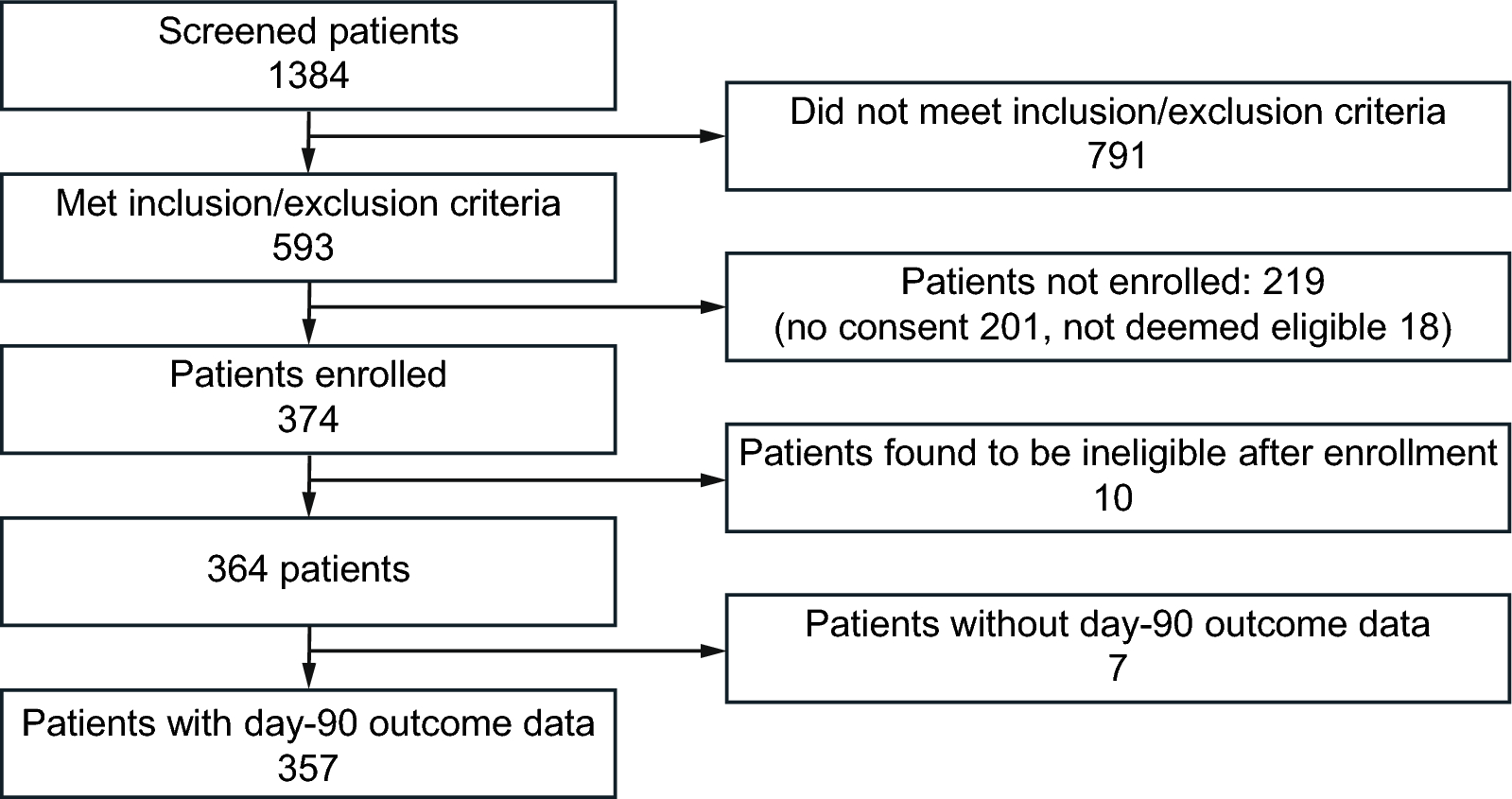
Although this study has several strengths, for example its prospective, international multi-center design and its well-defined approach to diagnosing HAI using internationally recognized criteria, it also has limitations. The study failed to meet its recruitment target due to the impact of the COVID-19 pandemic. This reduction in power may account for why some findings, importantly including the incidence of HAI, failed to reach statistical significance (i.e. could be a false negative result) and inevitably provides less precision around the size of mortality differences. However, despite this we were still able to detect clinically useful, statistically significant differences between clinical risk groups.
The mHLA-DR risk model did not reach statistical significance and this may reflect the reduced power of the reduced sample size. Without mHLA-DR measurements we cannot confirm if it predicted low mHLA-DR values as seen in previous validation studies [12] so without direct validation the results must be interpreted cautiously.
Due to limitations of clinical tests, including the accuracy of microbiological testing, it is often difficult to diagnose HAI with certainty. Our approach of using two definitions, one that would capture the broadest definition of HAI based on “bedside” clinical decision making and the other using an independent panel to limit cases to only those most likely to be genuine HAIs based on predefined criteria was designed to overcome this challenge.
In this study we have taken a categorical approach to phenotyping, as has been done by many studies in the field [5,6,7, 27] and have managed to demonstrate that this is able to determine clinically useful groups. However, treating the strength of group membership as a continuous trait may be more beneficial, providing more granular classification, avoiding issues around borderline cases and recognizing that critical illness induced immunosuppression is not binary. The evaluation of this approach is beyond the scope of this study. Finally, although samples were processed using the IPP pouches on the FilmArray® system, due to a lack of available devices (due to supply issues during the pandemic) this was done centrally and not in the clinical environment. Future studies will need to assess the utility of these gene-expression group allocations when devices are deployed near to the patient, this would also serve to provide further validation of the test in other cohorts. However, there is wealth of experience using the FilmArray® technology in hospitals for pathogen detection which demonstrates the device’s ease of use and accuracy.
In conclusion we demonstrated that subgroups of patients with sepsis with different outcomes can be identified using a small set of gene expression transcripts measured on a device that requires minimal sample handling and with a rapid turnaround time. This supports the feasibility of using gene-expression groups clinically, for example to stratify patients into clinical trials of immune modulating therapies to deliver a precision medicine approach to sepsis care.








Comments (0)