
Remember me
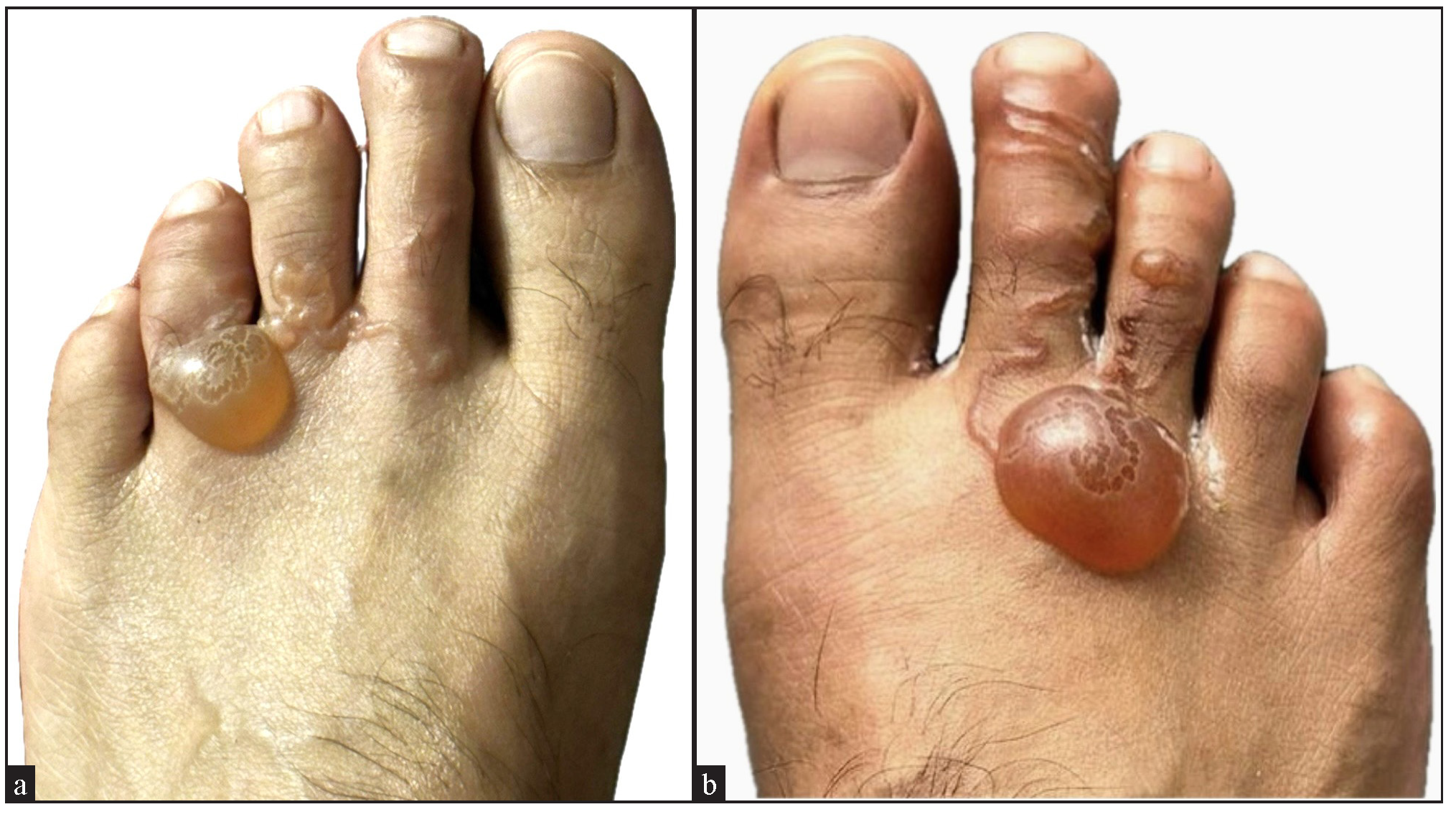
A 34-year-old man developed a blister with itching and migrating serpiginous tracts on both feet [Figure 1a, 1b] over 7 days after playing volleyball barefoot on a beach in California. He was diagnosed with bullous cutaneous larva migrans and treated with albendazole (400 mg daily for 3 days), ivermectin (12 mg stat) and prednisolone (10 mg once daily for 3 days and tapered to 5 mg for the next 3 days). His cutaneous larva migrans was resolved within a week. Cutaneous larva migrans, caused by animal hookworm larvae, can occasionally present with vesicles and bullae. The exact mechanism of bulla formation is unclear but may involve hypersensitivity or larval lytic enzymes. Due to rising helminthic resistance, dual therapy with albendazole and ivermectin is becoming increasingly necessary.
Export to PPT
Comments (0)