In this systematic review, we provided an update on the current clinical presentation and management of patients with HFS.
Clinical presentation
From the current systematic review, men diagnosed with HFS are aged between 16–42 years old. In the studies that reported potential aetiologies, all patients had a history of some form of trauma including aggressive masturbation, intense sexual intercourse, lumbar disc prolapse, annular tears, penile skin stretching/injury and possibly TEAT and RLT. It is evident that HFS associated symptoms varied across all patients and there was no standardised reporting of symptoms as demonstrated in Table 4. It is important to standardise reporting of symptoms in order for data to be compared in future studies to avoid heterogenicity. Since there are no agreed diagnostic criteria, it is appropriate to use the clinical features “list” described by Gul et al. as it represents the commonest symptoms identified from patient forums [1, 2, 18].
Table 4 Comparison of symptoms and assessment amongst included studies according to Gul et al.’s [2] suggested clinical features list.A survey distributed at the 2023 American Urological Association (AUA) meeting received 36 responses and nearly a third of participants had never seen HFS in their practice and about half of the respondents who had encountered HFS were confident in its legitimacy as a real medical syndrome. This survey highlighted the ongoing lack of familiarity [6].
HFS includes a cluster of symptoms reported by patients on the internet. The suggested diagnostic features were developed through the qualitative analysis of internet forum discussions on HFS [2, 18]. There are currently no objective tests to help diagnose HFS as the aetiology and pathophysiology is not entirely clear, and the diagnosis is mainly based on subjective symptoms review and exclusion of other pathologies through blood and radiological tests. A recent survey conducted by Niedenfuehr and Stevens on HFS distributed on social media platforms received 143 responses [10]. The mean age of the participants in the survey was 27.4 years confirming that HFS predominantly affects young men. The authors presented a more extensive list of symptoms compared to Gul et al.’s [2], and the most common symptoms (experienced by >65% of patients) were: changes in penis shape/size (92.3%), rigid penis when not erect (90.9%), psychological distress, anxiety and/or depression (89.5%), weak, tight and/or overactive pelvic muscles (85.3%), numbness/loss of sensation anywhere on the penis (74.8%), difficulty or inability to have an erection (74.1%), decreased force of urinary stream (72.7%), changes in dorsal vein size (71.8%), cold glans (66.7%) and loss of morning erections (66.2%) [10]. Since the most common symptoms apart from having a rigid penis when not erect were changes in penile shape/size and psychological symptoms, it is appropriate to include these 2 symptoms to Gul et al.’s [2] “list” as both of our patients had psychological distress, 1 of which also reported a change in penile size. In addition, in Sullivan et al.’s study 75% of patients had a history of depression or anxiety [17].
Aetiology and pathophysiology
The onset of symptoms was hypothesised to arise from some form of minor trauma [1, 2, 19]. However, in Niedenfuehr and Stevens HFS survey, 58% claimed that their HFS symptoms appeared following an incident or injury [10]. Therefore, HFS could possibly be idiopathic in origin. In Pang et al.’s [15] report, a patient received penile TEAT and both patients underwent RLT in the private sector for which the indication and therapeutic benefits were not entirely clear. TEAT involves inserting biodegradable sutures into acupoints, usually subcutaneously. It is practiced in Korean and Traditional Chinese Medicine with the aim to provide continuous stimulation of the acupoint avoiding regular acupuncture visits [20, 21]. Randomised-controlled trials have demonstrated that TEAT is effective in managing musculoskeletal pain such as osteoarthritic pain [22], or low back pain [23, 24] and abdominal obesity [25]. In addition, penile TEAT has been demonstrated to be effective in managing premature ejaculation [26]. However, there are currently no published clinical data on the role of TEAT in managing erectile dysfunction. In rat models with cavernous nerve injury, it has been shown that red-light controllable nitric oxide releaser, NORD-1 with red-light irradiation improved erectile function [27]. However, its role in human erectile dysfunction is unknown as there have been no clinical studies on human evaluating this.
The hypothesis on the aetiology and pathophysiology of HFS includes the initiation of inflammation following a trauma-like event involving the pudendal nerve and/or vasculature inducing neuropathy, penile hypoxia and muscle spasms. These muscle spasms may increase the intracavernosal pressuring during the flaccid phase of erection and inhibit optimal erection during the rigid phase, causing a hard-flaccid penis. In addition, the muscle spasms may also be associated with symptoms seen in chronic pelvic pain and primary prostatic pain syndromes. The neuropathy and penile hypoxia may cause the coldness and numbness in the glans and penile shaft reported by patients. The symptom complex may induce anxiety and distress and in turn worsen muscle spasms and symptoms resulting in a vicious circle between psychological ad HFS symptoms [1, 2, 18].
Interestingly, Goldstein and Komisaruk hypothesised that HFS is a result of pathological activation of a somato-visceral and/or a viscero-visceral reflex that they termed a “pelvic/pudendal-hypogastric” reflex [4]. This reflex may be pathologically activated via triggers located in 5 regions: (1) end organ (penis); (2) pelvis/perineum; (3) cauda equina; (4) spinal cord; (5) brain. Any insult at these levels, for example penile injury (e.g. aggressive masturbation) or pelvic/perineum injury would result in excess sympathetic activity and penile and pelvic/perineal symptoms respectively. Symptoms relief may be obtained by down-regulating the sympathetic drive, for example anti-inflammatory medications or Li-SWT for penile symptoms, and muscle-relaxants or pelvic floor physical therapy for pelvic/perineal symptoms [4]. In Goldstein and Komisaruk’s case, the patient had a disc prolapse resulting in injury in “region 3” and subsequent lumber discectomy resulted in significant relief of symptoms. Whilst this hypothesis is intriguing and logical, more research and patient cases are required to test this. In addition, Goldstein et al. identified that in 21 men with HFS and sacral radiculopathy, 16 (76%) had a surgically treatable annular tear [16]. Further follow-up regarding whether surgery was performed and whether symptoms resolved were unknown.
In Pang et al.’s [15] cases, psychotropic medications were given to both patients, and symptoms appeared to have improved, further suggesting a psychological component to HFS. In irritable bowel syndrome the gut-brain-axis represents a complex communication network between the gastrointestinal tract and the central nervous system. In individuals with irritable bowel syndrome, this system is believed to be dysregulated, resulting in atypical responses to stress, emotions, and gastrointestinal function [28]. Similarly, in the case of HFS, there may be a comparable “penis-brain-axis” involved in the manifestation of symptoms. However, this remains a hypothesis that requires further scientific investigation. Given the relatively mild degree of injury in these two patients, it cannot be ruled out that the trauma may have triggered the onset of HFS by inducing psychological abnormalities in individuals with an underlying psychological vulnerability.
Clinical assessment and investigations
Most studies in this review performed baseline bloods including hormonal profile to rule out organic cause of the patients’ erectile symptoms. In addition, most studies included at least an USS, not to diagnose HFS as such, but to rule out any abnormal blood flow or penile masses that may explain the patients’ penile symptoms. Therefore, in patients presenting with HFS, initial baseline blood tests and USS are suggested to exclude any differential diagnoses. Sullivan et al. reported that all patients in their study who had a penile CDUS, all had normal PSV and only 2 (2.4%) patient had an abnormal EDV [17].
Apart from identifying a list of signs and symptoms from patients’ history, evaluation of the degree and impact of symptoms through relevant questionnaires or scoring aids may be useful. Billis et al. used VAS, IIEF-5 and HAD questionnaires [8], and Pang et al. [15] used IIEF-5, EHS, VAS for pain, IPSS, NIH-CPSI and HADS. Using these questionnaires, it was evident that, patient 1 had more symptoms of higher severity compared with patient 2 in their report [15]. In addition, both patients claimed that their symptoms had significant impact on the quality of life (QoL) this suggested that the degree of impact on QoL may not necessarily correlate with the severity of symptoms [15].
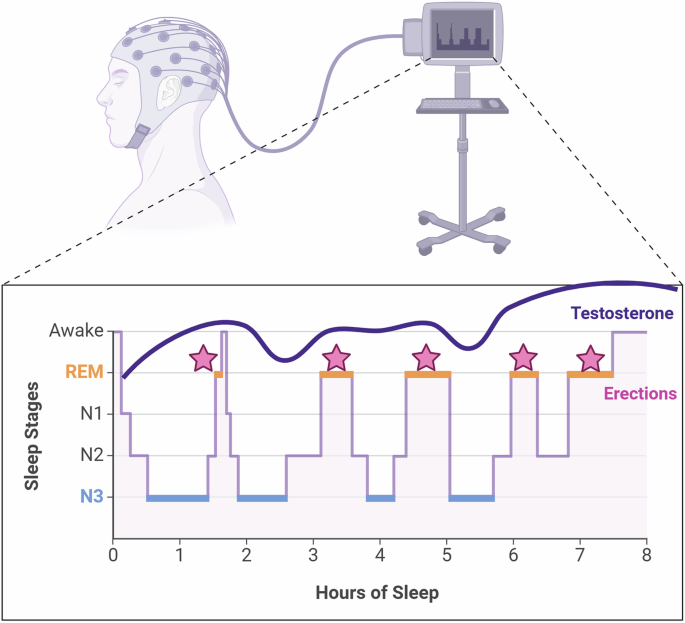
Pang et al. [15] also utilised NPTR to objectively assess penile tumescence and rigidity. Although this test may not be readily available outside specialised centres and may offer limited diagnostic value, it can be useful for evaluating underlying psychogenic erectile dysfunction when no clear cause is identified through biochemical or radiological investigations. However, its accuracy can be influenced by the patient’s sleep state.
If patients present with HFS associated with back pain, sciatica or signs of radiculopathy, a lumber spine MRI may be required to rule out any spinal pathology as demonstrated in Goldstein at al’s reports [4, 16].
Management and outcomes
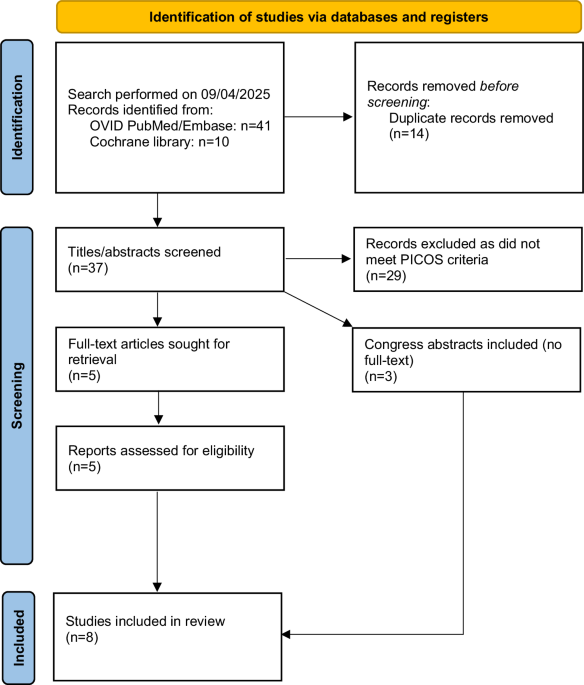
Various treatment and outcomes were identified in this review which included PDE5i, Li-SWT, physical therapy and lumber spine surgery. In the reported cases, only 2 (20%) patients were symptom free, 1 patient following physical therapy [9], and the other patient following trimodal therapy with PDE5i, Li-SWT and physical therapy [7]. It is likely that patients require multimodal therapy to target different physical symptoms accordingly as suggested by Goldstein and Komisaruk [4]. In addition psychotherapy or anxiolytics/anti-depressants should be consider appropriately to break the vicious cycle of HFS. Billis et al. used a combination of biopsychosocial therapy and their patient reported 85% improvement in symptoms [8]. In addition Pang et al. [15] also reported improvement in symptoms with both patients following a course of anti-depressants or anxiolytics.
In Niedenfuehr and Stevens’s survey, treatments patients received included PDE5i, pelvic floor physical therapy, SWT, diet/nutrition changes, nerve blocks, muscle relaxants, anti-inflammatory medications, cognitive therapy and nerve pain medications. No treatments provided significant improvements or complete cure. PDE5i was perceived the most efficacious, with patients reporting between “little” to “moderate” improvement. The other treatments provided “no” to “little” improvement. In addition, no patients were completely satisfied with any of the treatments and PDE5i received the highest satisfaction score (mean 4.8 on an 11-point slider scale) [10].
It appears that, most treatments do not provide complete cure, and patients are commonly not satisfied with the treatments they received. HFS is a complex disease to manage, and treatment would require multimodal therapy via a multidisciplinary approach and should be personalised according to the patient’s presenting symptoms. Treatments may not result in a cure unless the aetiological factor is eliminated, but more to relief symptoms and break the vicious cycle of HFS and may require coping mechanism to focus on factors that relieve symptoms and to avoid factors that exacerbate symptoms.
Limitations
The limitation of this systematic review is the small number of patients and heterogenicity in data reporting which restricted any quantitative analysis. However, HFS is extremely rare and may be under-diagnosed or reported by clinicians due to the unfamiliarity. Larger case series are required in the medical literature to allow continued education to improve familiarity of HFS, and in order to increase the case load enabling more meaningful analysis in the future.
Implications of results
This systematic review has highlighted the range of symptoms associated with HFS, the differences in clinical assessment tools used and the different treatment approaches. In addition, this review summarised the current hypothesis suggested by experts in the field. Due to the heterogenicity in data reporting, lack of clinical guidelines on diagnostic workup and management, and lack of familiarity in general amongst clinicians, it is imperative that an expert consensus recommendation on HFS is developed. In addition, apart from the clinical aspects, future research in the basic science of HFS may unravel molecular mechanisms associated with the pathophysiology of this syndrome, allowing the investigation into therapeutic agents.

Comments (0)