All experiments were conducted in accordance with relevant ethical guidelines. The approving institutions and ethics committees are listed in the pertinent sections of the manuscript. Further information on research design is available in the Nature Research Reporting Summary linked to this article.
Viral vector design
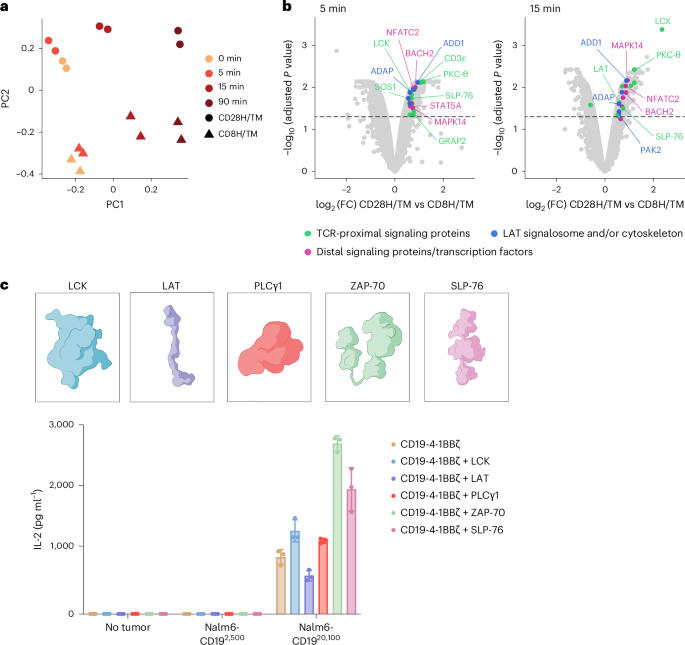
Retroviral vectors for CD19-4-1BBζ (FMC63), CD19-CD28ζ (FMC63), CD22-4-1BBζ (m971), HER2-4-1BBζ (4D5), ROR1-4-1BBζ (R11) and the lentiviral NFAT–GFP reporter vector have been previously described13,69,70,71,72. The sequence for the BCMA-4-1BBζ CAR was kindly provided by S. Riddell (Fred Hutchinson Cancer Center) and cloned into the MSGV1 retroviral vector70. CARs used a CD28 H/TM domain except CD22 (CD8 H/TM), BCMA (IgG4S10P hinge and CD28 transmembrane) and ROR1 (IgG44/2NQ long spacer and CD28 transmembrane). CD19-4-1BBζ experiments used a CD28 H/TM except where appropriate to capture failure of the CD8 H/TM at low antigen density (Figs. 1c, 2d and 6b and Extended Data Fig. 2b). For the in vivo experiment described in Fig. 3g, the CAR construct was cloned in frame with truncated NGFR via a P2A polyprotein cleavage sequence to allow efficient gating of the CAR T cell population. For LCK, ZAP-70, LAT, SLP-76 and PLCγ1 overexpression, codon-optimized gBlocks (Integrated DNA Technologies) encoding the full-length proteins were cloned by In-Fusion (Takara Bio) in MSGV1 retroviral vectors. For detection purposes, a 2×HA tag was added at the C terminus of the LCK sequence. ZAP-70, LAT, SLP-76 and PLCγ1 were cloned in frame with truncated NGFR via a P2A sequence. To generate the membrane-tethered SLP-76 (MT-SLP-76) molecule, the N terminus of SLP-76 was linked to the CD8α H/TM and a VSV-G extracellular tag. A construct containing the VSV-G extracellular tag and the CD8α H/TM, lacking any intracellular signaling domain, was used as a control for co-transduction where indicated. MT-SLP-76 mutations and deletions were generated by PCR and In-Fusion cloning. The LAT–SLP-76 chimeric protein, including amino acids 1–35 of LAT and full-length SLP-76, as previously described, was produced by PCR and In-Fusion cloning into a vector including truncated NGFR after a P2A sequence49. The various CD22 CAR designs were generated via In-Fusion cloning of PCR products or gBlocks. The CD22-4-1BBζ-GRB2-SH2 construct includes a linker followed by the GRB2-SH2 at the C terminus of CD3ζ, as previously described14. The CD22-4-1BB-εRK-ζ CAR was generated by adding the CD3ε RK domain between the 4-1BB and CD3ζ sequences. The CD22-4-1BB-εICD-ζ CAR was generated by adding the CD3ε intracellular domain (including the RK motif) between the 4-1BB and CD3ζ sequences, as previously described55. The CD22-εBRS-4-1BBζ CAR was generated by adding the CD3ε BRS domain after the transmembrane domain, as previously described54. The CD22-4-1BB-εPRS-ITAM-ζ CAR includes the CD3ε PRS and ITAM components immediately before CD3ζ, as previously described14. Amino acid sequences of the constructs are provided in Supplementary Table 2.
Viral vector production
Retroviral supernatants were generated by transiently transfecting 293GP cells as previously described69. Briefly, 6 × 10⁶–7 × 10⁶ 293GP cells were plated on 100-mm poly-D-lysine-coated plates (Corning) in DMEM supplemented with 10% fetal bovine serum (FBS), 10 mM HEPES and 1× penicillin–streptomycin–glutamine solution (Gibco). After 24 h, the cells were transfected with 4.5 μg of RD114, 9 μg of the plasmid encoding the gene of interest, 60 μl of Lipofectamine 2000 (Invitrogen) and 3 ml of Opti-MEM (Gibco). The medium was changed 24 h after transfection. The supernatant was collected 48 and 72 h after transfection and stored at –80 °C until use. Similarly, lentiviral supernatants for the NFAT–GFP reporter were produced by transient transfection of 293T cells using 10 μg of vector plasmid, along with 9 μg each of REV and GAG/Pol and 3.5 μg of VSV-G helper plasmids, as previously described72.
Peripheral blood mononuclear cell and T cell isolation
Buffy coats, leukopaks or leukocyte reduction system chambers were obtained from consenting healthy donors through the Stanford Blood Center under an institutional review board-exempt protocol. Peripheral blood mononuclear cells were isolated using Ficoll-Paque Plus (GE Healthcare, 17–1440) density gradient centrifugation, according to the manufacturer’s instructions. In some experiments, T cells were isolated using RosetteSep Human T Cell Enrichment Cocktail (Stem Cell Technologies), according to the manufacturer’s protocol. Cells were cryopreserved using CryoStor CS10 freeze medium (Sigma-Aldrich).
CAR T cell production
CAR T cells were generated as previously described72. Briefly, at day 0, peripheral blood mononuclear cells or isolated T cells were thawed and activated with Human T-Activator αCD3/CD28 Dynabeads (Gibco) at a 3:1 bead:cell ratio in complete AIM-V medium (Gibco; supplemented with 5% FBS, 10 mM HEPES, 1× penicillin–streptomycin–glutamine solution (Gibco) and 100 U ml−1 recombinant human IL-2 (Peprotech)). Retroviral transduction was performed on days 3 and 4 after activation. Twelve-well non-tissue culture-treated plates were coated with RetroNectin (Takara Bio) and blocked with 2% bovine serum albumin before incubation and centrifugation with the retroviral supernatant for at least 2 h at 32 °C and 2,174g. Coexpression of CAR and proximal signaling molecules was achieved by simultaneous transduction with two separate viral vectors. The supernatant was removed, and 0.5 × 10⁶ T cells were added to each well in 1 ml of complete AIM-V medium.
For experiments using the NFAT-inducible GFP reporter, activated T cells were transduced on day 3 with the NFAT–GFP lentiviral supernatant and then on days 4 and 5 with the CAR ± MT-SLP-76 retroviral supernatants. Dynabeads were removed on day 5 or 6 after activation by magnetic separation, and the T cells were maintained in culture in complete AIM-V at a density of 0.3 × 10⁶ cells per ml until days 10–14, with medium changes performed every 2–3 days.
Cell lines
All cell lines were cultured in complete RPMI-1640 medium (Gibco) supplemented with 10% FBS, 10 mM HEPES and 1× penicillin–streptomycin–glutamine solution (Gibco) and tested negative for mycoplasma using a MycoAlert Mycoplasma Detection kit (Lonza). The Nalm6-GFP Luciferase B-ALL cell line was obtained from S. Grupp (University of Pennsylvania). The generation of Nalm6 cell lines with variable levels of CD19, CD22, HER2 and ROR1 expression was previously described10,13,71. The OPM-2-GFP-luciferase multiple myeloma cell line was obtained from E. Smith (Dana-Farber Cancer Institute). The Nalm6-CD221,300 cell line10 was further engineered using CRISPR–Cas9 to remove β2-microglobulin to eliminate the graft versus leukemia effect. The following single guide RNA (sgRNA) target sequences were used: 5′-ACTCACGCTGGATAGCCTCC-3′73 (B2M sgRNA 1) and 5′-GAGTAGCGCGAGCACAGCTA-3′74 (B2M sgRNA 2). Guide RNAs were purchased from Synthego, and Alt-R S.p. Cas9 Nuclease V3 (10 μg μl−1) and Nuclease-Free Duplex Buffer were purchased from IDT. Editing was performed as previously described31, and B2M-KO cells were identified as HLA-A2 negative (APC, clone BB7.2, BD) and flow sorted.
Flow cytometry
Surface and intracellular markers were evaluated using a BD Fortessa or an Agilent NovoCyte Quanteon or Penteon flow cytometer and FlowJo software (BD) for data analysis. CD19 CAR was detected using an idiotype antibody specific for the FMC63 scFv (1:400). HER2, CD22, BCMA and ROR1 CARs were detected using the respective target recombinant protein (R&D Systems, 1:400). Idiotype antibodies and recombinant proteins were fluorophore conjugated using DyLight 650 or DyLight 488 Microscale Antibody Labeling kits (Invitrogen) following the manufacturer’s instructions. The surface detection of overexpressed proximal signaling molecules was evaluated via VSV-G (FITC or biotin, polyclonal, Abcam, 1:100), NGFR (BV421, clone C40-1457, BD Biosciences, 1:200), HA (Pacific Blue, clone 16B12, BioLegend, 1:100) and streptavidin (PE, BioLegend, 1:100) staining.
T cells were further assessed for the expression of CD4 (BUV 395, clone SK3, BD Biosciences, 1:100), CD8 (BUV 805, clone SK1, BD Biosciences, 1:200), CD45 (PerCP–Cy5.5, clone HI30, Invitrogen), CD62L (BV605, clone DREG-56, BD Biosciences, 1:100) and CD45RA (BV711, clone HI100, BD Biosciences, 1:100). Intracellular staining of proximal T cell signaling molecules was performed according to the manufacturer’s protocol using a Foxp3/Transcription Factor Staining Buffer Set (eBioscience). The following antibodies were used for intracellular staining: LCK (Alexa Fluor 647, clone Lck-01, BioLegend, 1:200), LAT (Alexa Fluor 647, clone 661002, R&D Systems, 1:200), PLCγ1 (Alexa Fluor 647, clone 10, BD Biosciences, 1:12.5), ZAP-70 (Alexa Fluor 647, clone A16043B, BioLegend, 1:100) and SLP-76 (Alexa Fluor 647, clone H3, BD Biosciences, 1:12.5).
Tumor cells were assessed for target antigen expression with antibodies recognizing CD19 (APC or PE, clone HIB19, BioLegend, 1:50), CD22 (APC, clone HIB22, BioLegend, PE, clone S-HCL-1, BioLegend, 1:50), HER2 (PE–Cy7 or PE, clone 24D2, BioLegend, 1:50), ROR1 (PE–Cy7, clone 2A2, BioLegend, 1:50) and BCMA (PE, clone 19F2, BioLegend, 1:100). A fixable viability dye (eFluor 780, eBioscience, 1×) was used in all in vivo and intracellular flow cytometry analyses. CD19, CD22, HER2 and BCMA antigen density was estimated using BD QuantiBRITE PE beads, as per the manufacturer’s protocol. Mean density (±s.d.) calculated in two independent quantification experiments is reported in Supplementary Table 1.
Mass spectrometry
CD19-CD8H/TM-4-1BBζ and CD19-CD28H/TM-4-1BBζ T cells (5 × 10⁶) were stimulated with 5 μg ml−1 anti-CD19 CAR idiotype and a goat anti-mouse cross-linking antibody (Jackson ImmunoResearch) and incubated at 37 °C for 5, 15 or 90 min. After stimulation, cells were quenched with cold PBS, and cell pellets were collected and flash frozen. Samples were then dissolved in 100 µl of lysis buffer (0.5 M triethylammonium bicarbonate and 0.05% sodium deoxycholate), subjected to tip sonication (Q700, QSonica, amplitude = 10, pulses of 2 s on/2 s off, 20 s total processing time per sample, on ice) and centrifuged at 17,000g at 4 °C for 10 min. Protein concentration was measured using a Pierce Bradford Protein Assay kit (Thermo Fisher Scientific), per the manufacturer’s instructions. Equal protein amounts (100 µg per sample) were adjusted to a uniform volume with lysis buffer. Samples were reduced with 4 µl of reducing reagent (Sigma) at 60 °C for 1 h and alkylated with 2 µl of alkylating reagent (Sigma) at room temperature for 15 min. Digestion was performed with 4 µg of trypsin/Lys-C (Promega) overnight at room temperature in the dark.
TMTpro reagents (Thermo Fisher Scientific) were reconstituted in 20 µl of anhydrous acetonitrile (Sigma) and added to each sample, followed by incubation at room temperature for 1 h. Labeling was quenched with 8 µl of 5% hydroxylamine for 15 min. Samples were combined and dried using a SpeedVac (Eppendorf 5301). Phosphopeptides were sequentially enriched using High-Select TiO2 and Fe-NTA phosphopeptide enrichment kits (Thermo Fisher Scientific), according to the manufacturer’s instructions. Enriched fractions were reconstituted in 0.1% formic acid and analyzed by LC–MS (nano-easy LC 1200, Thermo Q Exactive).
Raw LC–MS data were processed using Proteome Discoverer 2.3 (Thermo Fisher Scientific) with a target-decoy search via Byonic against the Homo sapiens SwissProt database (TaxID 9606, v2019-12-30). Search parameters included up to two missed cleavages, 20-ppm precursor mass tolerance, a minimum peptide length of six and dynamic modifications of oxidation (M; rare 1), deamidation (N, Q; rare 1) and phosphorylation (S, T, Y; common 2). Methylthio (C) and TMTpro (K, peptide N terminus) were set as static modifications. Peptide level confidence was set at q < 0.01 (<1% false discovery rate). Counts per million normalization mode of total peptide amount was applied per sample, and downstream analyses, including PC analysis and differential expression, was performed on the log2-transformed counts matrix. Differential peptide analyses were conducted using an empirical Bayes moderated t-test75.
Cytokine production assays
At days 10–14 after activation, CAR T cells were cocultured with tumor cells at a 1:1 effector:target (E:T) ratio in complete RPMI medium. In some experiments, a plate was coated with recombinant CD22 protein at various concentrations and used for stimulation. After 24 h, supernatants were collected, and IL-2 or IFN-γ was measured by enzyme-linked immunosorbent assay following the manufacturer’s protocol (BioLegend).
Cytotoxicity assays
At days 10–14 after activation, CAR T cells were cocultured with various GFP+ tumor cells in a 1:1 E:T ratio in complete RPMI medium for 72 h. Cocultures were imaged every 3 h with an Incucyte S3 Live-Cell Analysis System (Sartorius). Target cell killing was quantified by measuring the total green fluorescence intensity over time using the basic analyzer feature on the Incucyte S3 software. The reported cytotoxicity index was calculated by dividing the total green fluorescence intensity at each time point by the measurement at time 0.
Luminex assay
CD19-4-1BBζ ± MT-SLP-76 CAR T cells were cocultured with Nalm6-CD19600 or Nalm6-CD1920,100 cells for 24 h, and the supernatant was collected and frozen. The assay was performed by the Human Immune Monitoring Center Immunoassay Team at Stanford University. Kits were purchased from EMD Millipore (Human 80 Plex kit) and included three panels. Panel 1 was Milliplex HCYTA-60K-PX48, panel 2 was Milliplex HCP2MAG-62K-PX23, and panel 3 included the Milliplex HSP1MAG-63K-06 and HADCYMAG-61K-03 (Resistin, Leptin and HGF) to generate a nine-plex. The assay setup followed the recommended protocol. Samples were diluted threefold for panels 1 and 2 and tenfold for panel 3 and incubated overnight at 4 °C with antibody-linked magnetic beads in a 96-well plate (25 µl per well) on an orbital shaker (500–600 rpm). Plates were washed twice using a Biotek ELx405 washer (BioTek Instruments), followed by a 1-h incubation with biotinylated detection antibody and a 30-min incubation with streptavidin–PE, both at room temperature with shaking. After a final wash, PBS was added, and samples were read on a Luminex FlexMap3D instrument (≥50 beads per cytokine per sample). Custom Assay Chex control beads (Radix Biosolutions) were included in all wells. All wells met quality control metrics (bead count of >50). Data are shown as heat maps of log2 (FC) from unstimulated controls. All samples were run in technical duplicate.
NFAT–GFP T cell activation assay
CD19-4-1BBζ CAR T cells co-transduced with either MT-SLP-76 variants or the VSV-G-CD8H/TM control and an NFAT–GFP reporter72 were stimulated with 1 or 2.5 μg ml−1 of idiotype antibody to CD19 CAR and a goat anti-mouse cross-linking antibody and incubated at 37 °C for 6 h. In parallel, as a positive control for maximal NFAT activation, the same CAR T cells were stimulated with Cell Stimulation Cocktail (500×, eBioscience) containing phorbol 12-myristate 13-acetate and ionomycin. Following stimulation, cells were washed with cold PBS containing 2% FBS, stained for CAR, VSV-G tag, CD4 and CD8 and analyzed by flow cytometry. NFAT activation was quantified as the gMFI of GFP⁺ cells within the CAR⁺, VSV-G⁺ population.
In vivo xenograft models
Animal studies were performed according to a Stanford Institutional Animal Care and Use Committee-approved protocol (protocol 33698). Immunodeficient NOD.Cg-PrkdcscidIl2rgtm1Wjl/SzJl mice were purchased from The Jackson Laboratory or were bred in-house. Five- to 10-week-old male or female mice were used for all experiments. Mice were housed at 22 °C with 50% humidity under a 12-h light/12-h dark cycle. In the CD19-low model, mice were injected with 1 × 10⁶ Nalm6-CD19600 cells and treated with 3 × 10⁶ CD19-4-1BBζ CAR T cells ± MT-SLP-76 or an equivalent number of untransduced control T cells (mock) 4 days later, following a previously described dosing scheme13. In the CD22-low model, mice were injected with 1 × 10⁶ Nalm6-CD221,300 cells and treated with 5 × 10⁶–7 × 10⁶ CD22-4-1BBζ CAR T cells ± MT-SLP-76 or an equivalent number of control T cells (mock or MT-SLP-76-only transduced cells) 3 days later. T cell dose was determined based on tumor engraftment before treatment (5 × 10⁶ cells were administered when total flux values were below 1.5 × 10⁷ p s−1 and 6 × 10⁶–7 × 10⁶ cells for higher values). For the CD19 stress test model, mice were injected with 1 × 10⁶ wild-type Nalm6-CD1920,100 cells and treated with 1 × 10⁶ CD19-4-1BBζ CAR T cells ± MT-SLP-76 or an equivalent number of control T cells (MT-SLP-76 only) after 3 days. In the persistence experiments, mice were injected with 1 × 10⁶ Nalm6-CD1920,100 cells and treated with 5 × 10⁶ CD19-CD28ζ or 7 × 10⁶ CD19-4-1BBζ CAR T cells ± MT-SLP-76 or an equivalent number of mock cells 3 days later. T cell doses were chosen to ensure tumor clearance, accounting for differences in potency between co-stimulatory domains. For the multiple myeloma model, mice were engrafted with 1 × 10⁶ OPM-2 cells and treated with 0.4 × 10⁶ BCMA-4-1BBζ CAR T cells ± MT-SLP-76 or an equivalent number of control mock cells after 3 weeks. In the OTOTT model, mice were injected with 1 × 10⁶ ROR1+-Nalm6 cells and treated with 5 × 10⁶ ROR1-4-1BBζ CAR T cells ± MT-SLP-76 or an equivalent number of control T cells (MT-SLP-76 only) 3 days later. Mice were weighed daily and were humanely killed if their weight dropped by 20% from baseline or if they displayed significant signs of distress. Disease progression was monitored at least weekly via BLI. Mice were injected intraperitoneally with 200 μl of 15 mg ml−1D-luciferin and imaged with an IVIS imaging system (PerkinElmer) or an Ami HTX (Spectral Instruments Imaging) 4 min later, with an exposure time of 30 s. Saturated images were reacquired using autoexposure. Regions of interest of consistent shape were drawn around each mouse, and total fluxes were calculated using LivingImage software (PerkinElmer) and Aura software (Spectral Instruments Imaging). Mice were humanely killed when they showed signs of morbidity or hind leg paralysis or developed solid masses, in compliance with the approved ethical protocol. No statistical methods were used to predetermine sample sizes. Group sizes were informed by previously published and validated models13,31. Mice were randomized before treatment to equalize tumor burden. No animals or data points were excluded. Injections were performed by a blinded technician.
Single-cell RNA sequencing
CD22-4-1BBζ T ± MT-SLP-76 cells were cocultured with or without Nalm6-CD221,300 cells for 5 and 24 h at a 1:1 E:T ratio. Cells were then stained with Viability Dye and anti-CD4, anti-CD8 and recombinant CD22 protein for CAR detection. CAR+ T cells were gated as live, GFP−, CD4+, CD8+ and CAR+ before isolation using a BD FACS Aria cell sorter. Approximately 60,000 live cells per condition were collected for each T cell donor (two donors total), which were then pooled in each condition before library preparation using the 10× Chromium Controller and a Chromium Single Cell 5′ Library Construction kit. Suspended cells were loaded onto the Chromium controller to generate single-cell Gel Bead-In-Emulsions. cDNA libraries were generated by reverse transcription and sample indexing using a C1000 Touch Thermal cycler with the 96-Deep Well Reaction Module (Bio-Rad). Fragmenting, poly(A) tailing, adaptor ligation and PCR amplification with sample index primers were used for multiplexing libraries. The final products were quantified using a Bioanalyzer 2100 system (Agilent). The 10× scRNA-seq libraries were sequenced as recommended by the manufacturer on a Nova-seq 6000 S4 Flow Cell at approximately 25,000 reads per cell. Raw sequencing reads were demultiplexed using CellRanger mkfastq and aligned to the human reference transcriptome using the CellRanger count v.6.0 pipeline with all default parameters. Donors were demultiplexed using mitochondrial DNA genotypes and the mgatk v.0.6.2 software76. Downstream analyses, including cell filtering, cell-type identification, module score estimation and reduced dimensionality visualizations, were conducted using Seurat v.5.1 (ref. 77). Notably, to identify single-cell RNA-sequencing clusters, count data were first log normalized, and the top 2,000 most variable genes were selected for scaling and dimensionality reduction via PC analysis. The first 30 PCs were used to construct a nearest neighbor graph where clusters were identified via Louvain clustering with the FindClusters defined at 2. The same PCs were then used to embed cells via the UMAP algorithm. For cell-type assignment, a cell was classified as CD8+ if it was in a cluster where the total number of reads mapped to CD8A and CD8B was more than twice the number of reads mapped to CD4; otherwise the cell cluster was classified as CD4+. Pseudobulk samples were created by aggregating read counts from all cells from either donor either in the unstimulated condition or the stimulated condition for specific cell types. Per-cell module scores were computed using the FindModuleScores with default parameters for previously described gene sets31.
Statistical analysis
Data were visualized and analyzed using Excel v.16.83 (Microsoft), GraphPad Prism v.10.2.2 (GraphPad) or R v.4.2.2 (R Core Team) software. Graphs represent either individual values or group mean values ± s.d. for in vitro experiments and group mean values ± s.e.m. for in vivo experiments. The statistical analyses performed are specified in the individual figure legends. Data distribution was assumed to be normal, but this was not formally tested. P values of less than 0.05 were considered statistically significant. All genomics and proteomics analyses were performed using the R analysis software environments noted above.
Reporting summary
Further information on research design is available in the Nature Portfolio Reporting Summary linked to this article.



Comments (0)