Mesenteric avulsion is a rare but potentially life-threatening consequence of blunt abdominal trauma. Early diagnosis remains challenging because radiologic findings are often nonspecific and clinical presentation may initially be subtle. In our series, mesenteric avulsion was not suspected preoperatively and was identified only during surgical exploration, highlighting the diagnostic challenges of this rare injury.
To provide a clearer comparison of our findings with previously published data, a summary of the main clinical series describing mesenteric avulsion and related blunt mesenteric injuries is presented in Table 2 [2, 5,6,7]. Most available publications consist of small and heterogeneous case series, literature reviews, or imaging-based cohorts. In contrast, our study represents a contemporary cohort of surgically confirmed mesenteric avulsion cases, allowing a detailed characterization of the involved intestinal segments and operative management strategies.
Table 2 Comparison of previously published series of mesenteric avulsion and bucket-handle injuriesThis contemporary case series highlights the persistent diagnostic challenge of mesenteric avulsion following blunt abdominal trauma in the computed tomography era and underscores the critical role of clinical judgment and early surgical exploration. Despite systematic use of contrast-enhanced CT, none of the patients in our cohort demonstrated direct imaging findings diagnostic of mesenteric avulsion, reinforcing prior observations that radiologic evaluation alone is insufficient to reliably identify devascularizing mesenteric injuries. Importantly, our findings extend the existing literature by demonstrating that this diagnostic limitation persists even in modern trauma settings and across a spectrum of intestinal segments, including small bowel and colon. The uniformly intraoperative diagnosis in our series supports a paradigm in which timely operative decision-making, rather than reliance on imaging findings, remains central to preventing bowel ischemia and its associated morbidity and mortality in patients with suspected mesenteric avulsion.
Beyond confirming previously reported mechanisms of injury, our series provides several additional insights. First, the cohort demonstrates that mesenteric avulsion may involve not only the small bowel but also colonic segments, thereby expanding the spectrum of injury patterns previously described in the literature. Second, despite the routine use of contrast-enhanced CT in modern trauma practice, none of the patients demonstrated direct preoperative imaging evidence of mesenteric avulsion, further emphasizing the limitations of CT in detecting devascularizing mesenteric injuries. Finally, our findings highlight the continued importance of clinical judgment in trauma surgery when imaging findings are equivocal, indicating that timely operative exploration remains essential to prevent bowel ischemia.
Mesenteric and intestinal injuries resulting from blunt trauma are rare but potentially life-threatening, and delayed diagnosis substantially increases the risk of morbidity and mortality [1, 2, 9]. Because mesenteric avulsions (MAs) often present with ambiguous clinical manifestations and nonspecific CT findings, establishing the diagnosis after blunt abdominal impact is challenging and frequently requires a high index of clinical suspicion [7, 10, 11].
Kordzadeh et al. [5], in a systematic review of previously reported cases, identified motor vehicle collisions associated with seat-belt use as the most common mechanism of mesenteric avulsion injury. In line with these findings, motor vehicle crashes were also the predominant cause of injury in our cohort. Similar observations have been reported by Chowdhury et al. [2], who described seat-belt–related trauma as a frequent mechanism in their review of mesenteric injuries. Although the mean age of patients in our series was somewhat higher than that reported in earlier studies, this difference likely reflects the higher prevalence of multisystem trauma among the patients included in our cohort [5].
From a preoperative diagnostic perspective, the literature indicates that imaging findings of mesenteric avulsion are often subtle, and diagnosis is established intraoperatively in most cases [5, 11].
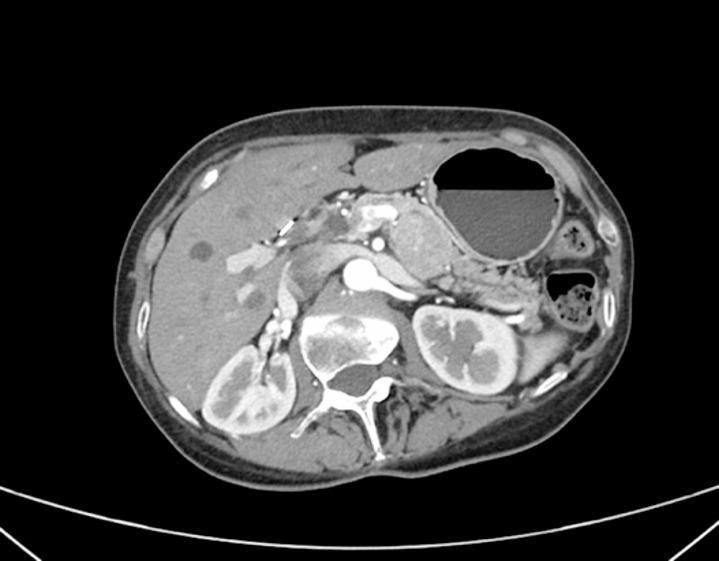
In our series, none of the patients demonstrated direct CT evidence of mesenteric avulsion or a bucket-handle–type tear; instead, only nonspecific findings such as free intraperitoneal fluid or solid-organ laceration were observed. This observation supports the conclusion by Kordzadeh et al., who noted that CT has low sensitivity (approximately 45–50%) for detecting such injuries [5]. Similarly, Extein et al. [1] reported that CT has limited value in identifying devascularizing mesenteric injuries, with the most common findings being mesenteric hematoma, bowel wall hypoenhancement, interloop fluid, and associated traumatic abdominal wall hernia (TAWH). In our cohort, none of these findings were prominent at presentation; thus, the diagnosis in all cases was confirmed during surgical exploration.
Patients who are hemodynamically unstable or present with signs of peritonitis or overt intra-abdominal bleeding should proceed directly to emergency laparotomy, with or without prior Focused Assessment with Sonography for Trauma (FAST) evaluation. In contrast, hemodynamically stable patients pose a greater diagnostic challenge and should undergo a contrast-enhanced CT trauma scan to identify any intra-abdominal injuries [6, 12].
Although CT is the recommended imaging modality for blunt abdominal trauma, mesenteric injuries remain difficult to detect, particularly with respect to distinguishing those amenable to conservative management from those requiring operative intervention. Bucket-handle mesenteric tears mandate urgent surgical management because of the attendant risk of devascularization followed by bowel ischemia and perforation [2].
An untreated, devascularized bucket-handle mesenteric injury can also progress to ischemia and ultimately perforation [2, 9], leading to peritonitis, sepsis, and increased morbidity and mortality. Pathophysiologically, the literature emphasizes that mesenteric avulsion separates the affected intestinal segment from its mesentery, resulting in arterial and venous devascularization; this process causes early ischemia and necrosis, and if diagnosis is delayed, may culminate in perforation [9]. In our series, devascularization frequently accompanied the avulsion intraoperatively, underscoring the importance of maintaining a low threshold for early surgical exploration.
Regarding intraoperative findings, the jejunum and ileum were the most frequently involved intestinal segments in our series. This pattern is consistent with previous studies indicating that bucket-handle-type mesenteric tears tend to occur near the transition zones of the proximal jejunum and distal ileum [1, 2]. Once surgical intervention becomes necessary, treatment options include primary repair of the mesentery, bowel resection with primary anastomosis, or resection with temporary or permanent stoma formation [10, 13]. Because the available evidence is limited and largely derived from small case series, standardized operative strategies remain poorly defined. Consequently, the choice between primary anastomosis and stoma formation often depends on intraoperative findings and the patient’s overall physiological status, particularly in hemodynamically unstable or high-risk trauma patients [10, 13].
Colonic involvement was also observed in our cohort. In cases with mesenteric avulsion or bowel necrosis, extended right hemicolectomy, ileocecectomy, or segmental sigmoid resection was required, whereas superficial serosal injuries were managed with local repair when appropriate. Overall, the operative strategies applied in our series were consistent with those reported in previous studies [2, 5], further highlighting the heterogeneous spectrum of bowel and mesenteric injuries encountered in blunt abdominal trauma.
The timing of surgical intervention in our series was also comparable to that reported in previous studies. Most patients required early operative management directly after the initial trauma evaluation, while delayed intervention was necessary only in rare cases when clinical deterioration occurred during observation. Similar patterns have been described in previous reports, where the majority of patients underwent surgical exploration within the early phase following trauma [2, 5].
Regarding postoperative outcomes, patients in our series generally demonstrated a favorable postoperative course with relatively short intensive care unit and hospital stays. Previous studies have reported variable durations of hospitalization following mesenteric avulsion injuries [1,2,3, 5]. The comparatively shorter recovery period observed in our cohort may be related to early surgical intervention in most patients as well as close postoperative monitoring and management.
The mortality rate in our series was 30.7%, which is higher than the 10–15% reported in the literature. Upon review of fatal cases, multisystem injuries, such as concomitant cranial and thoracic trauma, were identified in half of the patients. Similarly, Kordzadeh et al. emphasized that multiple organ involvement significantly increases mortality [5]. Nevertheless, it should be recognized that unrecognized mesenteric avulsion can also lead to bowel devascularization, ischemia, and necrosis, all of which are potentially fatal if diagnosis and intervention are delayed. Therefore, even in the absence of specific CT findings after blunt abdominal trauma, maintaining a high index of clinical suspicion, closely monitoring the clinical course, and not deferring early surgical exploration when indicated are of vital importance. Timely diagnosis and appropriate operative management remain the key determinants not only for preserving intestinal viability but also for improving overall survival.
In multitrauma patients with nonspecific or inconclusive CT findings, the decision to proceed with surgical exploration represents one of the most challenging dilemmas in trauma surgery [9, 14]. Operative exploration carries the risk of nontherapeutic laparotomy, whereas delayed intervention may lead to irreversible bowel ischemia, sepsis, and death. In such situations, clinical findings remain of paramount importance. The presence of peritoneal irritation, rebound tenderness, persistent abdominal pain, or otherwise unexplained free intraperitoneal fluid should raise suspicion for occult bowel or mesenteric injury, including mesenteric avulsion [14]. Therefore, maintaining a low threshold for surgical exploration may be justified in selected patients. In hemodynamically stable patients with equivocal imaging findings, diagnostic laparoscopy has been proposed as a minimally invasive alternative to evaluate bowel viability and detect occult injuries when adequate expertise is available in high-volume trauma centers [15]. In our series, however, operative decisions were primarily driven by clinical judgment rather than radiologic certainty, and surgical exploration ultimately proved justified in all cases.
In hemodynamically stable patients with equivocal CT findings, diagnostic laparoscopy may represent a valuable minimally invasive option for evaluating suspected bowel or mesenteric injuries and potentially avoiding non-therapeutic laparotomy [16, 17]. Recent studies have demonstrated that laparoscopy can be safely used both for diagnostic assessment and therapeutic management in selected trauma patients when adequate expertise is available [16, 18]. However, in patients with hemodynamic instability, diffuse peritonitis, or clear evidence of significant intra-abdominal bleeding, immediate exploratory laparotomy remains the standard approach.
Limitations
This study has several limitations. First, its retrospective and single-center design inherently limits generalizability. Second, the relatively small sample size reflects the rarity of mesenteric avulsion following blunt abdominal trauma. However, this cohort represents one of the larger contemporary series with surgically confirmed diagnosis. Third, only patients who underwent surgical exploration were included, which may introduce selection bias but ensures definitive intraoperative confirmation of mesenteric avulsion. Finally, given the descriptive nature of the study and limited sample size, comparative statistical analyses were not feasible. Despite these limitations, the study provides valuable insights into the clinical presentation, diagnostic challenges, and surgical management of this rare but potentially fatal injury.
In addition, only patients with surgically confirmed mesenteric avulsion were included in this series. Exploratory laparotomies performed for suspected bowel or mesenteric injury in which no mesenteric avulsion was identified were not evaluated. Therefore, the study does not allow estimation of the incidence of negative exploratory laparotomy or the diagnostic accuracy of preoperative imaging. Furthermore, in multitrauma patients who were managed non-operatively or who were not referred for surgical exploration, the presence of mesenteric avulsion cannot be completely excluded.
Another limitation is that the exact length of bowel resection was not systematically analyzed. Operative reports did not consistently include precise measurements, and the primary focus of this study was the pattern of mesenteric avulsion and the corresponding surgical management strategies rather than the exact length of resected bowel.





Comments (0)