Critical appraisal and temporal validation of the Niguarda scoring model: a CT-based diagnostic score for detecting hollow viscus and mesenteric injury in blunt abdominal trauma
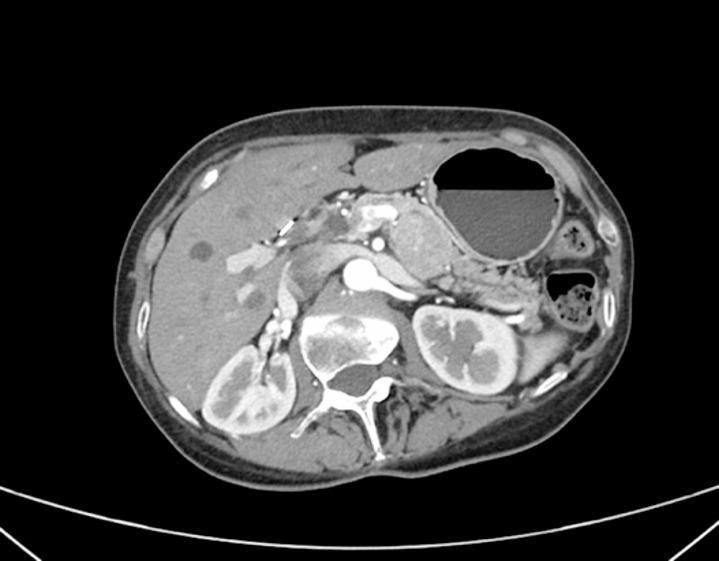
Blunt traumatic hollow viscus and mesenteric injuries (THVMI) are uncommon but carry high morbidity if diagnosis is delayed. The Niguarda Score, based on six predefined computed tomography (CT) findings, was originally developed in 2020 to aid early identification of surgically relevant THVMI. This study aimed to perform a critical appraisal and temporal validation of the score. The data of all adult blunt trauma patients consecutively admitted to our trauma center from 2010 to 2021, who underwent contrast-enhanced CT-scan on admission, were collected and retrospectively analyzed. Patients admitted between 2010 and 2018 represented the cohort used to build the original score, and their data were re-analyzed for a critical appraisal of the Niguarda score. The data of patients admitted from 2019 to 2021 were used for temporal validation in an independent cohort from the same institution. Six CT findings—free intraperitoneal air, free fluid without solid organ injury, gastrointestinal wall alteration, mesenteric alteration, intra-mesenteric fluid, and mesenteric blushing—were scored 0–6, with one point for each present finding. The primary outcome was THVMI requiring surgical repair. Model performance was assessed in the derivation and temporal validation cohorts for discrimination (C-index), calibration slope, and overall accuracy (Brier score). Cut-offs were identified using ROC-based methods. In the derivation cohort, the score achieved AUC 0.925 (95% CI 0.874–0.976), Nagelkerke R2 0.662, and Brier score 0.111, with a calibration slope of ≈1. Internal bootstrap validation yielded optimism-corrected C-index 0.930. Temporal validation demonstrated preserved discrimination (AUC 0.914, 95% CI 0.807–1.000). The optimal cut-off in correspondence of one or more findings present gave a sensitivity of 81.8% and a specificity of 90.0%. After critical re-evaluation of the original tool, a remarkable diagnostic and predictive performance was confirmed for the Niguarda scoring model. The model also showed excellent diagnostic accuracy and calibration in the temporal validation cohort, supporting its utility as a simple and reproducible tool to guide early operative decision-making in blunt THVMI.





Comments (0)