We describe the largest Salmonella outbreak in Norway since the 1980s, with 230 cases and multiple serovars detected across the country between October and December 2024. Comprehensive epidemiological, microbiological, and traceback investigations identified alfalfa sprouts as the outbreak source. These sprouts were produced by a specific Norwegian facility (Producer A) using seeds supplied by an Italian seed supplier (Supplier A).
Earlier in 2024, two additional Salmonella outbreaks in Norway were linked to sprout consumption. The first batch from Supplier A, used between February and September 2024, was suspected to be associated with these outbreaks—one from May to August with S. Typhimurium ST36 and another from August to October with S. Hvittingfoss. The second batch, used from October until 28 November, was linked to the current Salmonella outbreak. Since 2023, multiple RASFF alerts and EpiPulse notifications have associated sprouts consumption with Salmonella outbreaks across the EU/EEA, affecting countries such as Sweden, Finland, Spain, Germany, Italy, and Norway (Supplementary Table S2) [17, 18]. By sharing data from independent national outbreak investigations, the joint ECDC-EFSA ROA revealed that all outbreaks were linked to a common alfalfa seed supplier in Italy (Supplier A), which sourced seeds from three seed growers in the same geographical region of Italy [17].
The detection of multiple Salmonella serovars—such as S. Newport, S. Typhimurium, S. Kisarawe, and S. Kinondoni—within a single outbreak is highly unusual and highlights the complexity of this event. The diversity of serovars suggests that the contamination of the alfalfa sprouts was not due to a single contamination event but likely resulted from multiple contamination points or sources along the production and supply chain. A similar scenario was observed in a previous multi-country outbreak linked to a sesame-based product imported from Syria, where multiple Salmonella serovars were also identified [6]. Multi-serovar outbreaks pose significant challenges for public health surveillance and outbreak detection. They can be often missed or underestimated when surveillance systems focus on a single serovar or genetic cluster and fail to integrate well epidemiological and microbiological data. This highlights the need of using advanced molecular tools, such as WGS, which can identify and link genetically diverse isolates to a common source of exposure. It also emphasizes the importance of interpreting WGS data in conjunction with epidemiological findings to accurately identify the source of the outbreak. Additionally, these outbreaks underscore the importance of having flexible outbreak investigation criteria and greater awareness of complex contamination scenarios, particularly in high-risk food products such as sprouted seeds.
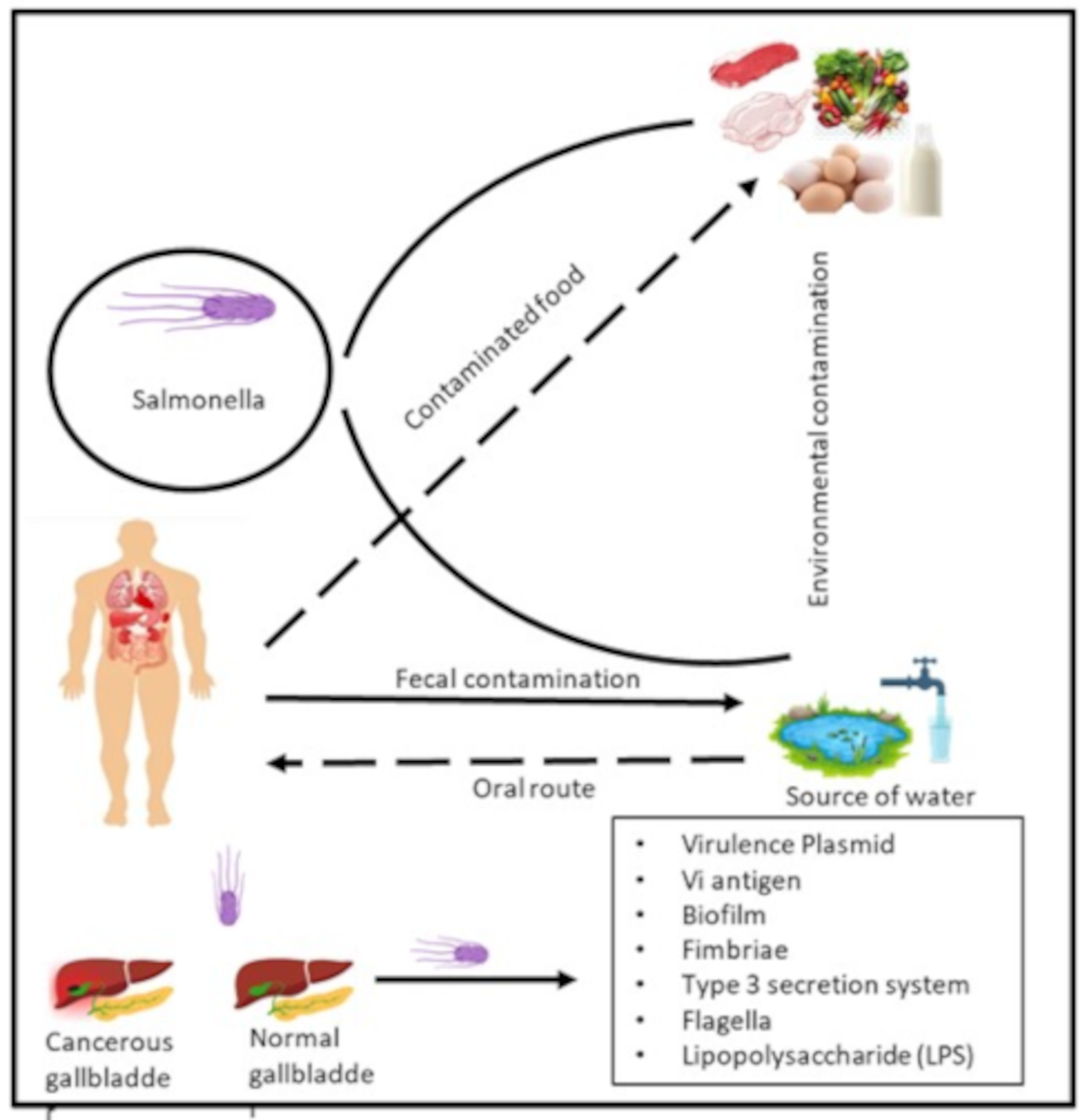
Sprouts are a well-known source of foodborne illness, often implicated in Salmonella outbreaks [19,20,21,22]. In 2007, Norway, Sweden, and Finland experienced an outbreak with S. Weltevreden associated with consumption of alfalfa sprouts. Traceback investigations suggested that contaminated seeds, likely originating from Italy, were the source of the infection [7]. Since 1988, sprout consumption has been associated with over 60 outbreaks worldwide, many of which were specifically traced to alfalfa sprouts [19]. Sprouts pose a high-risk due to the warm and humid conditions required for their growth, which also favor bacterial proliferation [23]. Moreover, because alfalfa sprouts are typically consumed raw, pathogens present are not eliminated by cooking, increasing the potential for human infection [19,20,21,22].
Seed contamination can occur at various stages, ranging from field cultivation to post-harvest handling, storage, and distribution. Environmental factors—such as the use of contaminated irrigation water, exposure to tainted soil, animal intrusion, and poor hygiene practices during harvesting and processing—can all contribute to the introduction of pathogens [24]. Once seeds are contaminated, bacteria can persist and even multiply throughout the sprouting process, making early-stage contamination prevention critical to food safety [25]. The EU has a comprehensive regulatory framework for sprouts, requiring all food business operators (FBOs) to adhere to general hygiene standards (Regulation 852/2004) and microbiological criteria (Regulation 2073/2005), implement good agricultural and manufacturing practices, and routinely test for pathogens like Salmonella [26, 27]. No deviations were found at Producer A. All pre-outbreak samples taken by the producer were negative for Salmonella, but several samples taken during the outbreak by NFSA were positive for different Salmonella serovars. Posted RASFF alerts from various countries also reported Salmonella detected in sprouts through official testing. Contrary, the Supplier A only reported negative findings for Salmonella in their self-monitoring checks on seeds sent to Norway and Sweden. The joint ECDC-EFSA ROA also highlighted the need for further investigation into the role of environmental factors in seed contamination at the grower level, as seeds to Supplier A were received from three seed growers in the same geographical area of Italy, as well as potential cross-contamination along the seed supply chain [17].
Our investigation suggests that reinforcing official controls by the local competent authority overseeing the Supplier A involved in this outbreak is crucial. Inconsistencies in detecting Salmonella in environmental and seed samples posed significant challenges. The challenge of obtaining representative samples from an entire seed lot—sometimes weighing several tons—makes it difficult to detect contamination, especially as it may be unevenly distributed. The detection of Salmonella is highly dependent on sampling strategies, and seeds and sprouts are complex matrices that can challenge detection methods. Therefore, detection methods should be validated specifically for this matrix. In the current investigation, two analytical methods were used to increase the likelihood of detection. Two of the isolates were detected with one method and the remaining six with the other. When Supplier A reported no detection of Salmonella, it may reflect limitations of the testing regimen used rather than an actual absence of contamination. Improved sampling protocols and appropriate methods of testing are essential for detection of Salmonella contamination. Revisiting regulatory framework for sprout production and methods used for detecting microbiological contamination could significantly improve food safety measures and reduce the risk of future outbreaks.
This outbreak also underscores the public health risks associated with internationally traded seeds and the critical need for coordinated cross-border response. The detection of multiple Salmonella strains in several EU/EEA countries, all linked to the same seed supplier, highlights the importance of timely communication through platforms such as EpiPulse and RASFF, and systematic sharing of WGS, epidemiological, and traceability data across public health and food safety sectors. These collaborative efforts, culminating in the joint ECDC-EFSA ROA were instrumental in identifying the common source, reinforcing the value of international cooperation.
Our investigation employed a comprehensive, multidisciplinary approach that integrated epidemiological, traceback, and microbiological methods, with WGS playing a key role in linking human cases to the contaminated sprout samples in Norway and to the Swedish S. Typhimurium outbreak strains. Several Salmonella serovars were detected in sprouts, with strains within the same serovar varying in genetic distance—from 0 AD for S. Kisarawe to over 2500 AD for S. Newport ST166 and ST31, indicating extensive contamination of the sprouts. While the typical threshold to define Salmonella isolates in an outbreak is 2–5 AD [28], we expanded this threshold to 10–20 AD within each serovar in this outbreak to capture all potential sources of contamination.
Despite these strengths, some limitations impacted our investigation. As always in case–control studies and interviews, recall bias could be present, as participants sometimes would struggle to remember whether they had consumed sprouts, particularly when they were included in meals like sandwiches or salads. This may have resulted in misclassification of exposure status, potentially biasing the estimated odds ratios. Another important limitation is the potential bias in case identification inherent in the passive nature of the laboratory surveillance system. The investigation likely captured predominantly severe cases, with milder or moderate cases potentially going undetected. Both these limitations have likely resulted in under-reporting of cases, affecting our ability to fully characterizing the extent of the outbreak.



Comments (0)