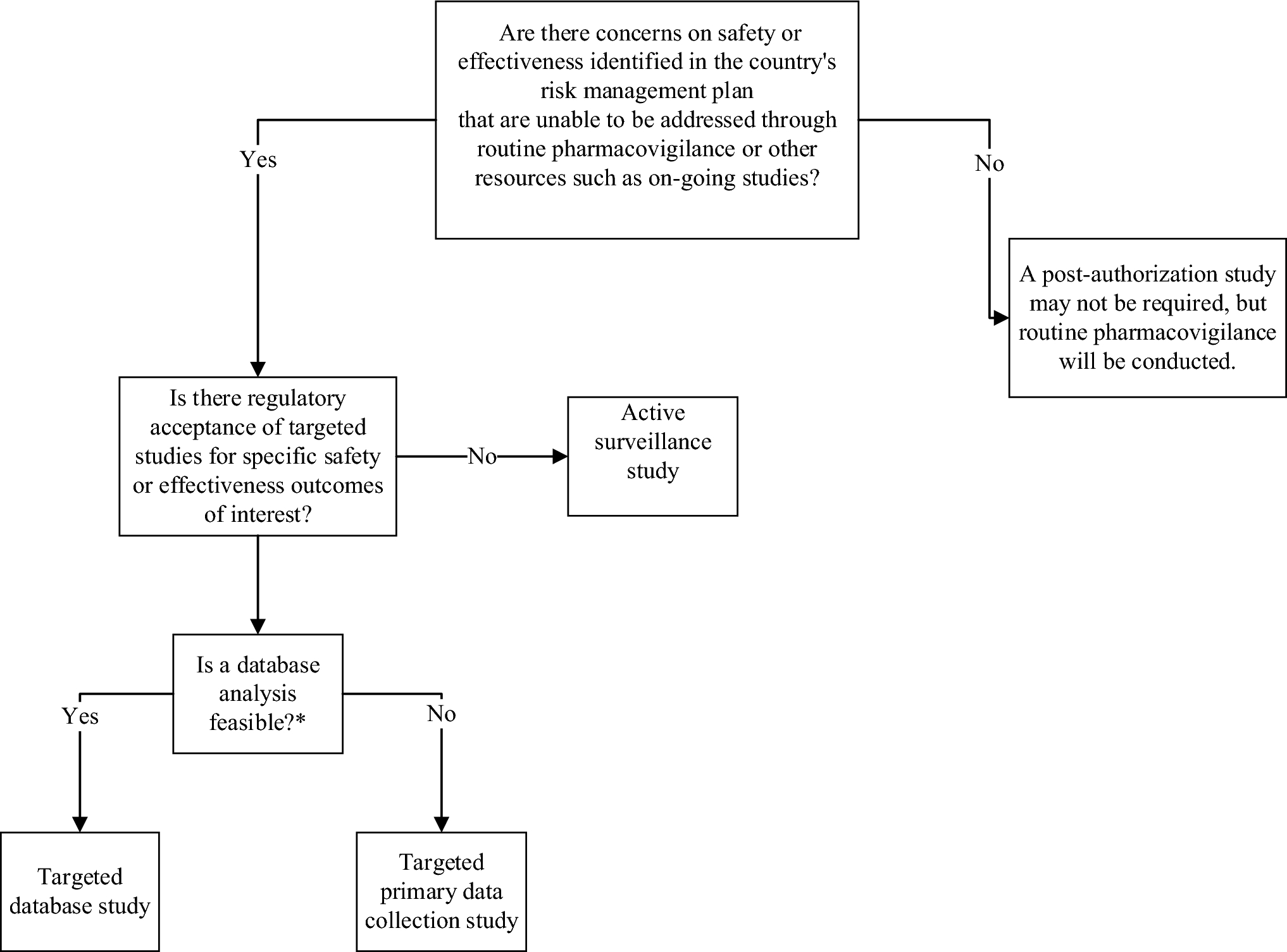
Anes A, et al. The European Network of Centres for Pharmacoepidemiology and Pharmacovigilance (ENCePP)-Guide on Methodological Standards in Pharmacoepidemiology, revision 11. European Medicines Agency (2023). p. 72–76
Edwards IR, Lindquist M. The Who database—II. Drug Inf J. 1992;26(4):481–6.
Article
Google Scholar
Kumar A. The newly available FAERS public dashboard: implications for health care professionals. Hosp Pharm. 2019;54(2):75–7.
Article
PubMed
Google Scholar
Avery AJ, et al. Evaluation of patient reporting of adverse drug reactions to the UK ‘Yellow Card Scheme’: literature review, descriptive and qualitative analyses, and questionnaire surveys. Health Technol Assess. 2011;15(20):1–234.
Article
CAS
PubMed
Google Scholar
Lardon J, et al. Evaluating Twitter as a complementary data source for pharmacovigilance. Expert Opin Drug Saf. 2018;17(8):763–74.
Article
PubMed
Google Scholar
Gaucher L, et al. Pharmacovigilance studies without a priori hypothesis systematic review highlights inappropriate multiple testing correction procedures. J Clin Epidemiol. 2023. https://doi.org/10.1016/j.jclinepi.2023.08.010.
Article
PubMed
Google Scholar
Cutroneo PM, et al. Conducting and interpreting disproportionality analyses derived from spontaneous reporting systems. Front Drug Saf Regul. 2024;3:1323057.
Article
PubMed
PubMed Central
Google Scholar
Evans SJW, Waller PC, Davis S. Use of proportional reporting ratios (PRRs) for signal generation from spontaneous adverse drug reaction reports. Pharmacoepidemiol Drug Saf. 2001;10(6):483–6.
Article
CAS
PubMed
Google Scholar
Rothman KJ, Lanes S, Sacks ST. The reporting odds ratio and its advantages over the proportional reporting ratio. Pharmacoepidemiol Drug Saf. 2004;13(8):519–23.
Article
PubMed
Google Scholar
Gelman A, et al. Bayesian data analysis. Chapman and Hall/CRC; 1995.
Book
Google Scholar
Heo SJ, Jung I. Extended multi-item gamma Poisson shrinker methods based on the zero-inflated Poisson model for post market drug safety surveillance. Stat Med. 2020;39(30):4636–50. https://doi.org/10.1002/sim.8745.
Article
PubMed
Google Scholar
Dumouchel W. Bayesian data mining in large frequency tables, with an application to the FDA spontaneous reporting system. Am Stat. 1999;53(3):177–90. https://doi.org/10.1080/00031305.1999.10474456.
Article
Google Scholar
Orre R, et al. Bayesian neural networks with confidence estimations applied to data mining. Comput Stat Data Anal. 2000;34(4):473–93. https://doi.org/10.1016/S0167-9473(99)00114-0.
Article
Google Scholar
Bate A, et al. A Bayesian neural network method for adverse drug reaction signal generation. Eur J Clin Pharmacol. 1998;54:315–21.
Article
CAS
PubMed
Google Scholar
Lukose, Lipin, et al. Uncovering False Alarms: Examining Biases and Confounders in Disproportionality Analysis. Signal Analysis in Pharmacovigilance. CRC Press, 2024. 73–94.
Lawrence Gould A. Practical pharmacovigilance analysis strategies. Pharmacoepidemiol Drug Safe. 2003;12:559–74. https://doi.org/10.1002/pds.771.
Article
Google Scholar
Pariente A, et al. A potential competition bias in the detection of safety signals from spontaneous reporting databases. Pharmacoepidemiol Drug Saf. 2010;19(11):1166–71.
Article
PubMed
Google Scholar
Wang H-W, et al. An experimental investigation of masking in the US FDA adverse event reporting system database. Drug Saf. 2010;33:1117–33.
Article
PubMed
Google Scholar
Maignen F, Hauben M, Hung E, Holle LV, Dogne JM. A conceptual approach to the masking effect of measures of disproportionality. Pharmacoepidemiol Drug Saf. 2014;23(2):208–17.
Article
PubMed
Google Scholar
Alkabbani W, Gamble JM. Active-comparator restricted disproportionality analysis for pharmacovigilance signal detection studies of chronic disease medications: an example using sodium/glucose cotransporter 2 inhibitors. Br J Clin Pharmacol. 2023;89(2):431–9.
Article
CAS
PubMed
Google Scholar
Tatonetti NP, Ye PP, Daneshjou R, Altman RB. Data-driven prediction of drug effects and interactions. Sci Transl Med. 2012;4(125):125ra31-125ra31.
Article
Google Scholar
Dijkstra L, Garling M, Foraita R, Pigeot I. Adverse drug reaction or innocent bystander? A systematic comparison of statistical discovery methods for spontaneous reporting systems. Pharmacoepidemiol Drug Saf. 2020;29(4):396–403. https://doi.org/10.1002/pds.4970.
Article
PubMed
Google Scholar
Brooks S. Markov chain Monte Carlo method and its application. J R Stat Soc Ser D (Stat). 1998;47(1):69–100.
Google Scholar
Hoffman MD, Gelman A. The No-U-Turn sampler: adaptively setting path lengths in Hamiltonian Monte Carlo. J Mach Learn Res. 2014;15(1):1593–623.
Google Scholar
Stan Development Team. Stan modelling language users guide and reference manual, V 2.35. 2024. https://mc-stan.org. Accessed 15 Apr 2025.
Abril-Pla, Oriol, et al. PyMC: a modern, and comprehensive probabilistic programming framework in Python. PeerJ Computer Science 9 (2023): e1516.
Gelfand AE. Gibbs sampling. J Am Stat Assoc. 2000;95(452):1300–4.
Article
Google Scholar
Chib S, Greenberg E. Understanding the metropolis-hastings algorithm. Am Stat. 1995;49(4):327–35.
Article
Google Scholar
Riddell A, Hartikainen A, Carter M. PyStan (3.0.0). (2021). https://pypi.org/project/pystan. Accessed 15 Apr 2025.
Kontsioti E, et al. A reference set of clinically relevant adverse drug–drug interactions. Sci Data. 2022;9(1):72.
Article
PubMed
PubMed Central
Google Scholar
Beery, D. “vigipy” GitHub repository. https://github.com/Shakesbeery/vigipy. Accessed 15 Apr 2025.
Fawcett T. An introduction to ROC analysis. Pattern Recognit Lett. 2006;27(8):861–74.
Article
Google Scholar
Antkiewicz-Michaluk L, et al. Reduction of morphine dependence and potentiation of analgesia by chronic co-administration of nifedipine. Psychopharmacology. 1993;111:457–64.
Article
CAS
PubMed
Google Scholar
Naidu PS, Singh A, Kulkarni SK. Carvedilol attenuates neuroleptic-induced orofacial dyskinesia: possible antioxidant mechanisms. Br J Pharmacol. 2002;136(2):193–200.
Article
CAS
PubMed
PubMed Central
Google Scholar
Jimenez XF, Sundararajan T, Covington EC. A systematic review of atypical antipsychotics in chronic pain management: olanzapine demonstrates potential in central sensitization, fibromyalgia, and headache/migraine. Clin J Pain. 2018;34(6):585–91.
Article
PubMed
Google Scholar
Chauvet C, et al. Statins reduce the risks of relapse to addiction in rats. Neuropsychopharmacology. 2016;41(6):1588–97.
Article
CAS
PubMed
Google Scholar
Gu Y, et al. Non-antibacterial tetracyclines modulate mediators of periodontitis and atherosclerotic cardiovascular disease: a mechanistic link between local and systemic inflammation. Pharmacol Res. 2011;64(6):573–9.
Article
CAS
PubMed
Google Scholar
Crespo-Facorro B, et al. Aripiprazole as a candidate treatment of COVID-19 identified through genomic analysis. Front Pharmacol. 2021;12:646701.
Article
CAS
PubMed
PubMed Central
Google Scholar
East JE, Foweraker JE, Murgatroyd FD. Gentamicin induced ototoxicity during treatment of enterococcal endocarditis: resolution with substitution by netilmicin. Heart. 2005;91(5):e32. https://doi.org/10.1136/hrt.2003.028308.
Article
CAS
PubMed
PubMed Central
Google Scholar
Sansone RA, Sansone LA. Duloxetine-related acute dysphoria. Psychiatry (Edgmont). 2007;4(11):65.
PubMed
Google Scholar
Filippone EJ, Kraft WK, Farber JL. The nephrotoxicity of vancomycin. Clin Pharmacol Ther. 2017;102(3):459–69.
Article
CAS
PubMed
PubMed Central
Google Scholar
Peña MS, Yaltho TC, Jankovic J. Tardive dyskinesia and other movement disorders secondary to aripiprazole. Mov Disord. 2011;26(1)


Comments (0)