The Incidence and Spectrum of Congenital Heart Defects in Patients with Anorectal Malformations: A 10-Year Retrospective Cohort Study
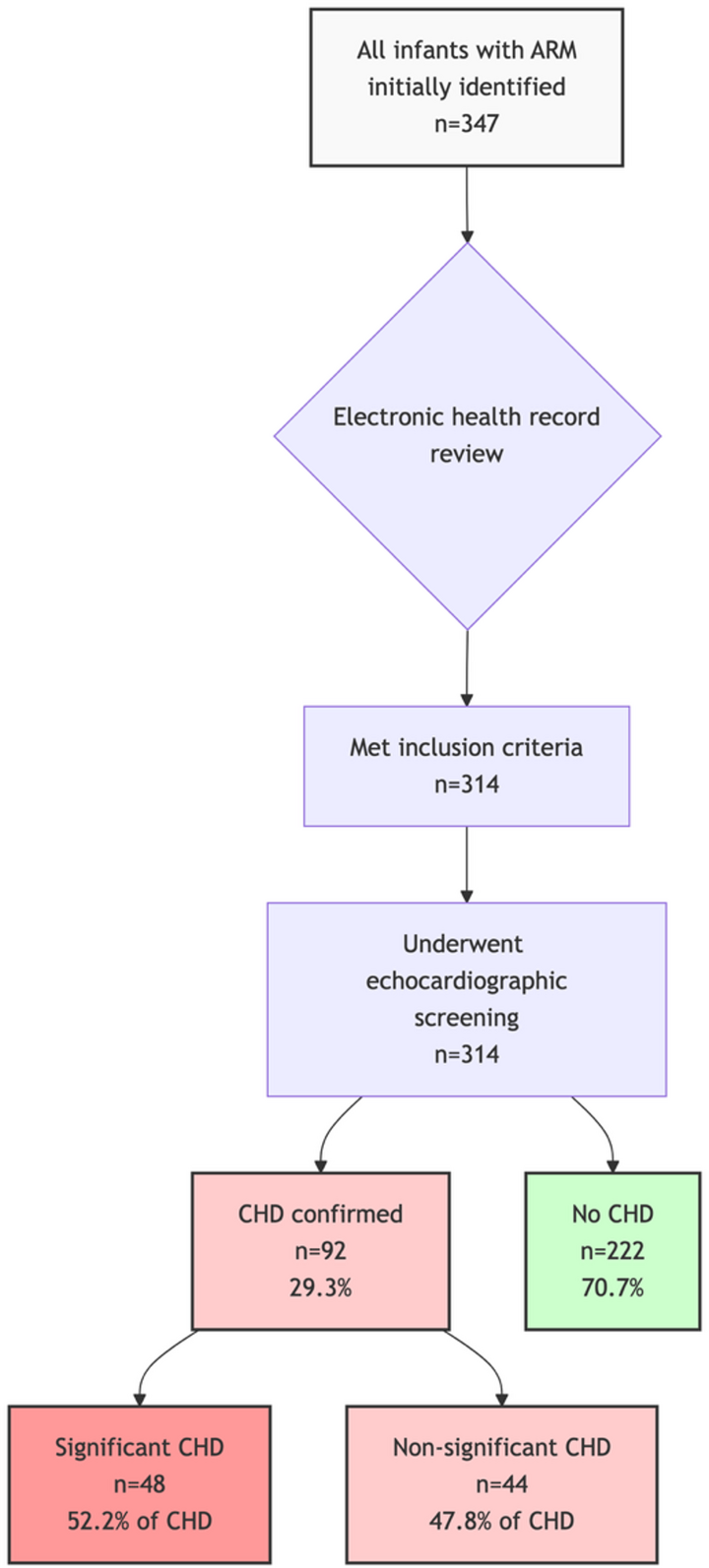
Congenital heart defects (CHD) and anorectal malformations (ARM) frequently co-occur, but contemporary large-scale data are limited. This study aimed to define CHD incidence, spectrum, and risk factors in ARM patients. We conducted a retrospective cohort study of infants with ARM at a tertiary pediatric center (2013–2022). Demographic, clinical, and echocardiographic data were analyzed. Primary outcome was CHD incidence; secondary outcomes included CHD types and associations with ARM complexity and VACTERL features. Among 314 ARM patients, 92 had CHD (incidence 29.3%, 95% CI: 24.3–34.7%). Significant CHD requiring intervention/surveillance occurred in 48 patients (52.2% of CHD cohort). Common CHD types included atrial septal defects (ASD) (28.3%), ventricular septal defects (VSD) (26.1%), and tetralogy of Fallot (TOF) (10.9%). Complex ARM patients had significantly higher CHD incidence versus simple ARM (52.9% vs. 23.1%, p < 0.001). ≥2 VACTERL (Vertebral, Anorectal, Cardiac, Tracheo-Esophageal, Renal, Limb anomalies) features predicted CHD (OR: 4.8, 95% CI: 2.9–8.1). Nearly one-third of ARM patients had concomitant CHD, with over half being clinically significant. ARM alone confers increased CHD risk, with VACTERL features further elevating this risk. Universal echocardiographic screening is imperative in all ARM patients.



Comments (0)