Performance of the Biotilt™ System Versus Semi-solid Medium
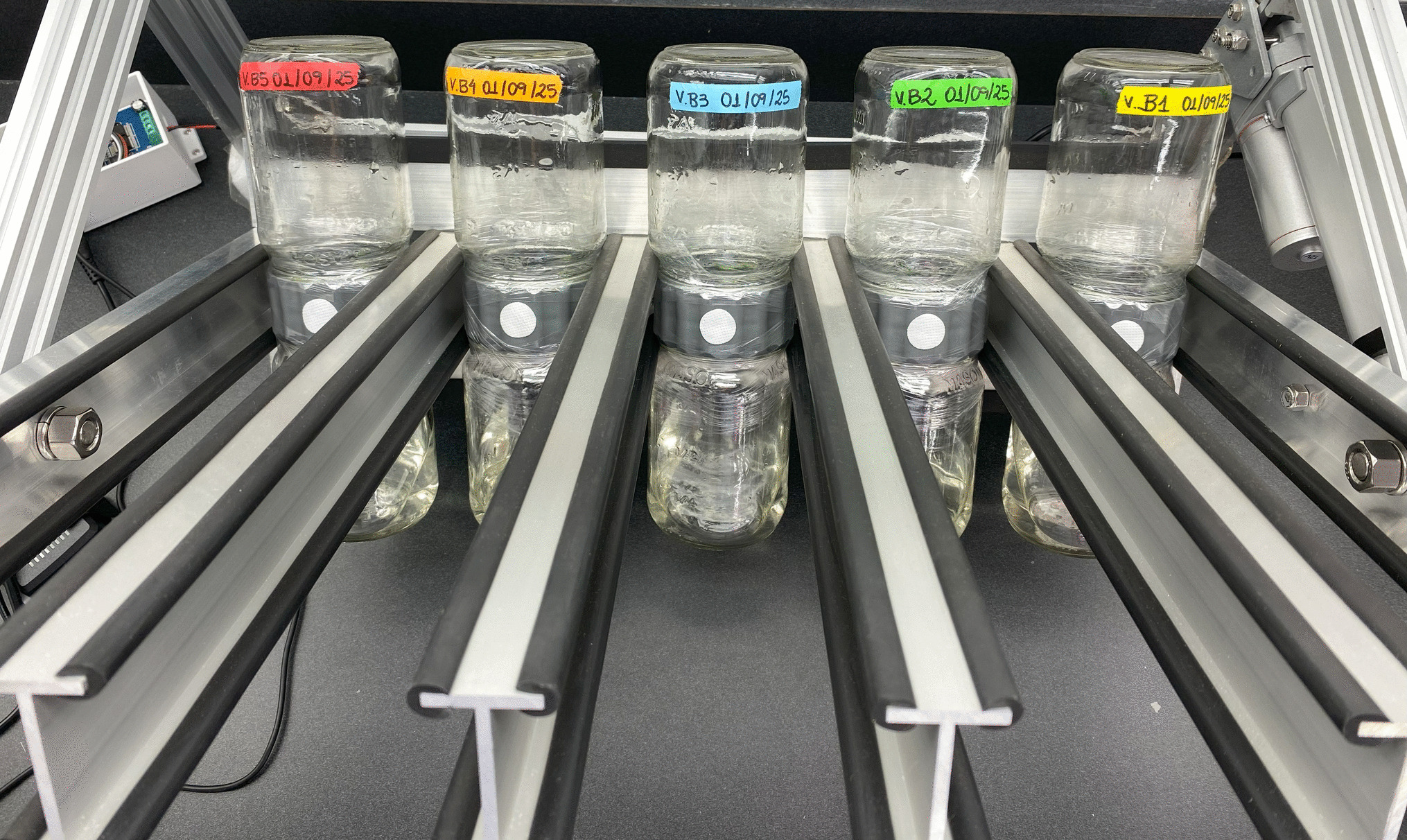
The superior performance of the explants in the temporary immersion system (Table 1) indicated greater physiological and multiplicative efficiency of the protocol. This performance is possibly explained by the greater contact surface between the explant and the nutrients, allowing better absorption by all tissues that were in interaction with the medium. In the semi-solid system, on the other hand, the availability of nutrients was restricted to the base of the explant, since only this part remained in direct contact with the culture medium (Ramírez-Mosqueda and Bello-Bello 2021; Vendrame et al. 2023; Cabrera et al. 2024).
Shoot length and shoot production per explant were the variables that stood out the most in the Biotilt™ system, presenting mean values more than twice as high for length and almost double for the number of shoots compared to the semi-solid system. Similar patterns of superiority of temporary immersion systems were also observed in Epipactis flava Seidenf., which promoted significant increases in the multiplication rate and shoot elongation (Kunakhonnuruk et al. 2019).
In line with this, Ramírez-Mosqueda (2021) reported comparable gains in Vanilla using SETIS™ bioreactors, attributing such results to the greater availability of nutrients and to the design of each bioreactor in relation to light availability. Similarly, Leyva-Ovalle et al. (2020) concluded that the temporary immersion system in Guarianthe skinneri was efficient for generating a higher number of shoots, standing out as a potential protocol to meet the commercial demand for ornamental and conservation purposes.
This capacity to amplify plant material in a shorter time is highly desirable in micropropagation, since each shoot is a potential unit for the formation of new plants. In this same context, the positive correlation between the number of shoots, leaves, and chlorophyll content shows that these characteristics together reinforce multiplication efficiency, as they indicate metabolically active explants capable of photosynthetic activity (Fig. 4). Studies with orchids, such as Spathoglottis plicata, highlight that temporary immersion systems can enhance this performance by optimizing the efficiency of photosynthetic pigments. This set of characteristics can directly contribute to the survival and quality of the plantlets during the acclimatization process (Shekhawat et al. 2021).
Additionally, there was also a positive correlation of these variables with the number of roots and biomass, which demonstrated vigorous initial growth. Such a pattern reinforced the physiological efficiency of the temporary immersion system, which has proven effective in promoting greater vigor in ornamental plants. For example, Zhang et al. (2022) demonstrated that the use of temporary immersion resulted in greater plant biomass accumulation in Dendrobium nobile, while Martínez-Estrada et al. (2019) reported significant improvements in the micropropagation of Anthurium andreanum, in terms of rooting and physiological aspects, using the same principle.
The calculated composite indices reinforced the superior performance of the temporary immersion system compared to the semi-solid system (Fig. 5). The multiplication index was the main discriminating factor between the systems, which consolidated the greater multiplicative potential of the Biotilt™ system for the propagation of Vanilla planifolia. Additionally, the global and physiological indices complemented these results, demonstrating that this system also promoted better physiological quality of the explants.
Several studies have already demonstrated the performance of the temporary immersion system for Vanilla propagation (Ramírez‑Mosqueda et al. 2019; Ramírez-Mosqueda and Bello-Bello 2021; Spinoso‑Castillo and Bello‑Bello 2023). However, it is worth noting that this is the first report on the use of the Biotilt™ bioreactor model for Vanilla. Considering practical implications, conventional micropropagation tends to be more laborious and costly compared to this system, as it requires the maintenance of many culture vessels and the use of gelling agents in semi-solid media. These agents increase the costs of in vitro production and still limit the potential for large scale automation.
The coherence between the composite indices and the data obtained from individual variables reinforced the reliability of the results, providing an integrated view of the performance of the tested systems. These findings not only highlighted the superiority of the temporary immersion based protocol but also strengthened its applicability as a more efficient, practical, and economically viable alternative.
In addition, the Biotilt™ system also shows potential for broader applicability, as it can be used for other orchid species and even for different plant groups that benefit from temporary immersion, such as Phalaenopsis, Dendrobium, or Anthurium. Due to its simple design, with fewer structural components and low maintenance requirements, it offers practical advantages compared to more complex temporary immersion systems, which generally require higher operational costs and technical adjustments. Therefore, it represents an alternative particularly suitable for laboratories or commercial facilities seeking scalable, user friendly bioreactors that optimize production and research processes.
Medium Volume and Immersion Frequency in the BioTilt™ System
The medium volume and immersion time were essential parameters in this type of protocol, as they directly influenced the exposure of the explants to nutrients, growth regulators, and adequate oxygenation. Inadequate immersion frequencies may result in hyperhydricity and asphyxia, while excessive or insufficient medium volumes compromise explant formation, reducing their growth and vigor (Murthy et al. 2023; Nongdam et al. 2023). However, in this study, hyperhydricity and asphyxia were not observed as problems, since these events did not occur, even though they are commonly reported in the literature.
In general, when analyzing the results through the heatmap, a trend of better performance was observed with the three hours frequency. In other reports with Vanilla, better performances were obtained with four hours frequencies compared to longer frequencies, but under different experimental conditions and using other types of media and systems, such as SETIS™ and RITA® (Ramos-Castellá et al. 2014; Ramírez-Mosqueda and Iglesias-Andreu 2016; Ramírez-Mosqueda et al. 2022). Thus, the three hours frequency tested in this study represents a promising alternative, especially since it concerns a relatively new bioreactor model, whose results revealed superior trends, particularly when compared to those observed in the conventional semi-solid system.
Furthermore, the heatmap analysis with standardized values (z-score) showed that, within the three hours frequency, the volumes of 150 and 300 mL presented similar performance (Fig. 6). However, a greater intensity of values was observed for 300 mL (75 mL per explant), indicating a trend toward a better response with this medium volume. It is important to emphasize that the ideal volume may vary according to the bioreactor model and the species cultivated. For example, for Vanilla in the SETIS™, Ramírez-Mosqueda et al. (2021) reported better performance with 50 mL per explant; for Phalaenopsis protocorms, success was achieved with 10.5 mL per explant in the RITA® (Mohammadpour Barough et al. 2024), while for Agave, also using the RITA®, the ideal volume was 10 mL per explant (Monja-Mio et al. 2021).
It is important to note that, despite the observed tendencies, several variables did not reach statistical significance in the factorial analysis. The heatmap interpretation therefore serves mainly to visualize the overall behavior of treatments rather than to confirm statistically supported differences. This limitation highlights the need for further experiments with larger sample sizes or additional replicates to reinforce these preliminary findings. Considering that the treatments showed similar performance for most variables, the choice of the most suitable protocol may consider factors such as cost, medium availability, and operational practicality.

Comments (0)