T cell activity is boosted after meals
Long-term nutritional status has key roles in supporting immune system function, but how immune cell activity changes during the period shortly after a meal is not well understood. A study published in Nature has now demonstrated that T cells show notable responses to increased nutrient availability after meals. The findings demonstrate that, under these conditions, T cell activity is improved in ways that could have implications for medical interventions such as chimeric antigen receptor (CAR)-T cell therapy.
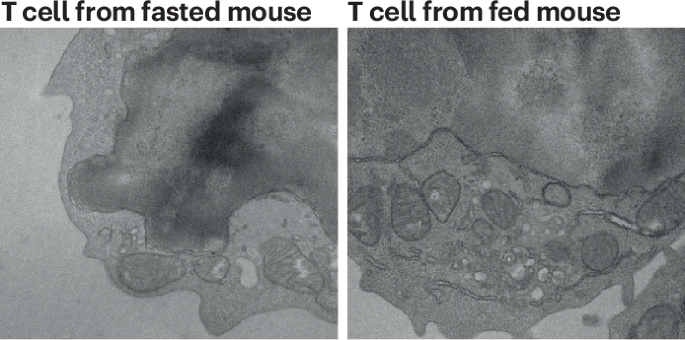
Next, the scientists used a mouse model to test whether T cells isolated after a meal responded more effectively to infection than T cells isolated before a meal. They used genetically modified mice with CD8+ T cells that react to the protein ovalbumin. T cells were isolated from a group of these mice that were fed ad libitum and from another group after a 12-hour fast. The two T cell populations were then transferred together into wild-type mice. After the T cell transfer, the wild-type mice were infected with a viral vector encoding ovalbumin protein. The researchers saw that, after infection, T cells isolated from the genetically modified mice that were fed multiplied far more quickly than T cells isolated from the genetically modified mice that were fasted.


Comments (0)