The complement system is part of innate immunity and consists of numerous membrane-bound and circulating proteins that can be activated in different pathways, but which all converge to form the membrane attachment complex (MAC or C5b-9), which disrupts cell membrane integrity, leading to cell lysis. Several proteins participate in counteracting and modulating the persistent activation of the alternative pathway, thereby limiting damage to self-tissues. Pathogenic or likely pathogenic variants are normally identified in approximately 60% of aHUS cases.
Pathological variants of the CFH gene are the most prevalent in cases of aHUS [20], resulting in an excessive activation of the alternative pathway. The CFH gene and CFHR1–CFHR5 are tandemly located on chromosome 1, exhibiting a significant level of sequence similarity. The presence of repetitive sequences promotes genomic rearrangements through nonallelic homologous recombination, leading to the identification of different hybrid genes resulting from recombination within the CFH/CFHR region in aHUS [21]. Homozygous deletions in CFHR3–CFHR1 are commonly described in aHUS patients and are associated with the development of anti-CFH autoantibodies in 80% of cases [22]. We can speculate that CFHR1 deficiency may increase the immunogenicity of CFH, determining the increase of anti-CFH autoantibodies [23], affecting the function of CFH [24]. Genetic analysis of our patient revealed a compound heterozygous deletion of CFHR3–CFHR1 and CFHR1–CFHR4, resulting in the homozygous deletion of CFHR1 and consequent generation of anti-CFH autoantibodies. STEC infection acted as a possible trigger for the clinical manifestation of aHUS, as previously described [10,11,12,13,14,15,16,17,18,19]. Identifying patients with aHUS is crucial due to the high risk of relapse and posttransplant recurrence. Anti-complement therapy has the potential to prevent recurrences and mitigate severe clinical consequences. This case prompts pertinent enquiry regarding the judicious timing of serological investigations and/or genetic testing in HUS. Under what circumstances is anti-complement therapy required? Is it effective in cases of STEC-HUS?
Genetic test and complement alterations in HUS
The feasibility of genetic analysis for all HUS patients is constrained by availability and cost. In suspected cases of aHUS, prioritizing faster serological tests, including measurements of C3, C4, classical hemolytic 50% complement activity (CH50) levels, and screening for anti-CFH autoantibodies, would be advantageous. Identifying specific patient cohorts where genetic analysis is most appropriate becomes crucial, as it enables a strategic advantage in clinical outcomes.
Variants in complement genes usually involve CFH, C3, CFI, CFB, and MCP, as well as potential CFHR1 − CFH hybrid genes. To date, more than 500 variants in these five complement genes have been identified in patients with aHUS [25]. In these genes, rare variants with minor allele frequencies (MAFs) of < 1% and very rare MAFs of < 0.1% are present in 12% and 3.7% of healthy individuals, respectively [26, 27]. Variants with a MAF of < 0.1% might be considered relevant for the pathogenesis of aHUS or other complement-mediated disorders. Their relevance in other TMA associated diseases, including STEC-HUS, is still debated. In a US cohort/series, the frequency of rare complement variants is only moderately increased in patients with STEC-HUS compared with healthy individuals (16% vs. 12%) [28]. A comparison of the frequencies of rare and pathogenic variants in the five complement genes in healthy individuals and in patients with TMA suggests that only aHUS and pregnancy-associated HUS are associated with clear genetic susceptibility factors related to complement activation [29]. Therefore, genetic analysis would normally be limited to these conditions. However, diagnosing aHUS remains challenging as a genetic variant in the complement system alone is insufficient; a “second hit” is necessary. This second insult, precipitating the clinical manifestation of the disease, may arise from various sources, including bacterial infections (such as STEC infection), viral infections, drugs, pregnancy, and organ transplantation. Numerous conditions can autonomously contribute to the development of TMA, rendering the diagnostic process intricate, as underscored in our case report and comprehensive review.
Fremeaux-Bacchi et al. analyzed 108 children with post-diarrheal HUS, 75 Stx-positive and 33 Stx-negative cases [27]. They detected rare variants (< 1%) and very rare variants (< 0.1%) in CFH, CFHR1–CFHR3, CFI, CFB, MCP, C3, and THBD genes in 16% and 4% of STEC-positive patients. The frequency of rare variants was comparable to that found in 80 French controls (14%) and 503 healthy European subjects (12%). On the other hand, very rare variants were not identified in any of the French controls (0%) and in just 0.8% of European controls, indicating a fivefold increased risk for the development of HUS when associated with STEC-HUS. These findings suggested a genetic predisposition for complement activation in this context [27]. No significant differences were noted regarding neurological manifestations, AKI requiring KRT and/or the development of CKD. These findings indicate that the clinical impact of genetic variants on STEC-HUS is lower than that observed in aHUS. Nevertheless, a plausible scenario involves a multiple-hit model, suggesting that genetic factors, while less influential, may still contribute to the development of STEC-HUS.
As aHUS is prone to recurrence, meticulous patient follow-up is essential for accurate diagnosis and in mitigating potentially severe relapses. Due to the severe clinical manifestations and prognosis associated with aHUS, an early diagnosis becomes imperative to initiate timely and appropriate therapy. aHUS is definitely a diagnosis of exclusion, but as highlighted by the reported clinical case and literature review, the presence of a STEC infection should not automatically exclude a complement-mediated form of HUS. Indeed, the simultaneous presence of certain features such as the absence of bloody diarrhea, accentuated alternative complement pathway activation, and lack of recovery of kidney function should raise suspicion of additional pathogenetic mechanisms underlying HUS.
STEC-HUS patients require dialysis during the acute phase in approximately 50% of cases [4], with only 2–3% progressing to kidney failure and requiring kidney transplantation [30, 31].
In our small case series, dialysis was required in 72% of patients, of whom 36% progressed to kidney failure and requiring kidney transplantation, although 64% exhibited low C3 levels.
In the acute phase of STEC-HUS, low C3 levels are reported, particularly in severe cases [32]. However, a more pronounced activation of the alternative pathway is observed in aHUS compared to other forms of TMA [32], where hypocomplementemia occurs in up to 50% of cases [33]. Prohàszka et al. analyzed complement parameters in samples from 55 TMA patients and discovered that all patients with aHUS exhibited dysregulated alternative pathway activity and low C3 levels [34]. Compared to patients with TTP or STEC-HUS, patients with aHUS were more likely to demonstrate a dysregulation in the complement alternative pathway.
Sridharan et al. investigated the clinical utility of a complement serology panel (including CH50, alternative hemolytic 50% complement activity (AH50), C3, C4, CFB, CFH, C4d, Bb, and soluble MAC) in diagnosing aHUS within a cohort of 147 patients with TMA [35]. Their findings indicated that a decrease in both CFB and CH50 resulted in the best balance of sensitivity and specificity for diagnosing aHUS. Additionally, as noted by the authors, complement system abnormalities should be assessed in conjunction with clinical presentation. Despite the need for larger studies and the limited accessibility of these analyses, a comprehensive evaluation of the complement system shows potential to enhance physicians’ diagnostic capabilities in identifying atypical forms of HUS in cases with unclear etiopathogenesis. However, its current use is predominantly for research purposes rather than clinical practice, due to its limited availability in a few specialized centers and its time-consuming nature.
Kidney failure following STEC-HUS is uncommon, and genetic testing should be performed in patients who are being considered for kidney transplantation due to the high risk or recurrence tendency of complement-mediated HUS [36]. This becomes crucial in the context of living kidney transplantation from a related donor. For instance, the patient with an MCP variant described by Alberti et al. underwent transplantation from her mother, who shared the same MCP variant, resulting in the production of the same dysfunctional MCP protein in the graft and causing aHUS recurrence [10].
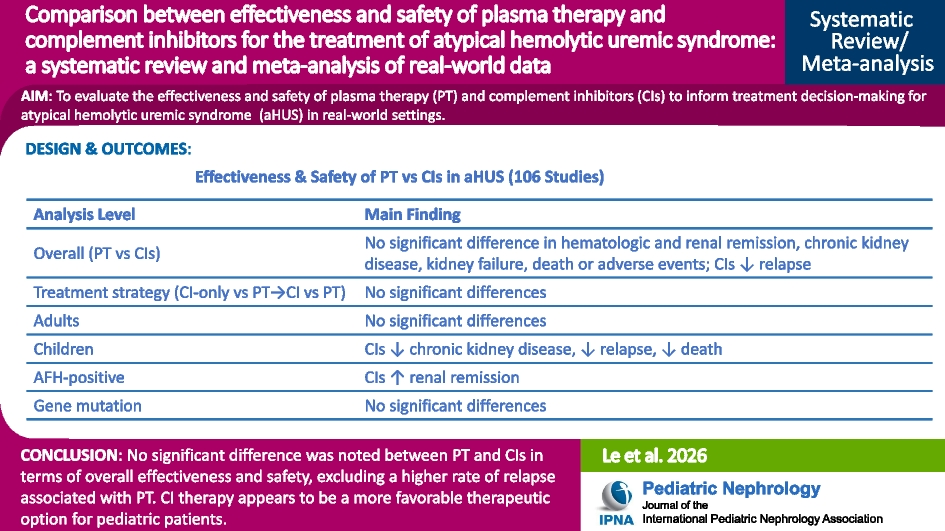
In summary, genetic screening and complement/serological investigations should be considered on a case-by-case basis for HUS patients with STEC infection who have an atypical presentation or disease course. This includes the absence of hematic diarrhea at onset, a family history of HUS or related parents, accentuated alternative pathway dysregulation, failure to recover kidney function, relapse, and posttransplant recurrence. Furthermore, in cases presenting as life-threatening, initiating anti-complement therapy at HUS onset should be considered, given the challenge of promptly establishing a definitive etiological diagnosis. Subsequent close monitoring of these patients is warranted to detect relapse, and if necessary, anti-complement therapy should be resumed and genetic analyses conducted. Moreover, population-specific cost-analysis investigation is recommended, since the above considerations may not always be readily applicable, especially in resource-limited countries.
Anti-complement therapy in STEC-HUS
As widely reported, activation of the complement cascade is deeply involved in the pathogenesis of STEC-HUS [37,38,39]; however, the efficacy of anti-complement therapy is still debated.
Ahlenstiel-Grunow et al., in a case-series study, described 25 children with STEC-HUS, of whom 7 were treated with eculizumab [38]. The authors reported that high serum levels of C5b-9 significantly correlated with more severe clinical presentation in terms of arterial hypertension, edema, and lower platelet counts, but not with the need for prolonged KRT. Although patients in the eculizumab group exhibited a more severe HUS manifestation, eculizumab treatment did not appear to influence hematological outcome or the duration of KRT but showed a clear impact on the improvement of neurological symptoms in 11 out of 25 patients who presented with seizures and/or were in a stupor or coma. In a more recent multicentric study, Percheron et al. evaluated the use of eculizumab in 28 children with severe STEC-HUS, with neurological involvement [40]. Overall, 19 out of 28 had favorable neurological outcomes, 17 with prompt recovery following the first eculizumab dose.
In a systematic review of 21 STEC-HUS cases treated with eculizumab, the authors reported a rapid restoration of hematological (20 out of 21) and neurological (15 out of 21) parameters, while 19 out of 21 patients saw gradual improvement in kidney parameters [41]. Similarly positive outcomes were reported in more limited case series or case reports involving both pediatric [42, 43] and adult subjects [44].
Garnier et al. presented a randomized controlled multicenter trial addressing the efficacy and safety of eculizumab in 100 pediatric patients with STEC-HUS [45]. Authors showed that eculizumab was not associated with faster kidney improvement in the acute phase, but with better kidney outcomes, defined by high blood pressure and/or declined eGFR and/or proteinuria, at 1 year of follow-up. Furthermore, no disparity in hematological and extrarenal manifestations was observed between the two groups, although this study excluded patients with severe neurological presentations.
Most of the studies in the current literature indicate a cautious but positive clinical improvement in cases of severe STEC-HUS with neurological involvement. However, this evidence is based on mostly retrospective nonrandomized studies and case series; randomized controlled trials are required to determine the efficacy of eculizumab for such patients.
On the other hand, significant positive effect of eculizumab on medium- to long-term outcomes of 386 infection-associated HUS cases was observed in a systematic review by de Zwart et al., based on observational studies [46]. Nevertheless, the authors noted a critical risk of bias in most studies due to confounding factors. For instance, eculizumab administration was often delayed in sicker patients, potentially impacting its effectiveness; additionally, the co-administration of complement components with plasmapheresis might have attenuated eculizumab’s effect.
It is worth noting that genetic and/or complement abnormalities can be observed in STEC-HUS patients, whereas some cases of complement-mediated HUS are triggered by infection, making acute phase differentiation challenging. However, the treatment effect of eculizumab in STEC-HUS may be overestimated if the treatment group includes complement-mediated HUS patients. Nevertheless, the challenge in distinguishing between these patient groups during the acute phase may strengthen the case for the empirical treatment of STEC-HUS with eculizumab.
In conclusion, given the absence of other effective therapies, the potential benefits of eculizumab in patients with neurological involvement and the pathogenic role of complement dysregulation could justify its use in cases of severe HUS presentation at the onset where distinguishing between aHUS and STEC-HUS is challenging.



Comments (0)