
Remember me









Uroflowmetry is a non-invasive test that measures changes in urinary flow rate over time and facilitates the recognition of lower urinary tract dysfunction. Most pediatric uroflowmetry studies have been conducted in healthy children to construct nomograms. This study aimed to evaluate the uroflowmetric parameters of children with non-neurogenic voiding dysfunction in a tertiary pediatric hospital.
MethodsThis single-center retrospective study included children aged 5–18 years with lower urinary tract symptoms who underwent uroflowmetry and pelvic floor electromyography (EMG) and met predefined functional criteria, while those with neurogenic bladder, anatomical obstruction, or neurological disorders were excluded. Uroflowmetric parameters were compared according to sex, age groups, and voiding patterns.
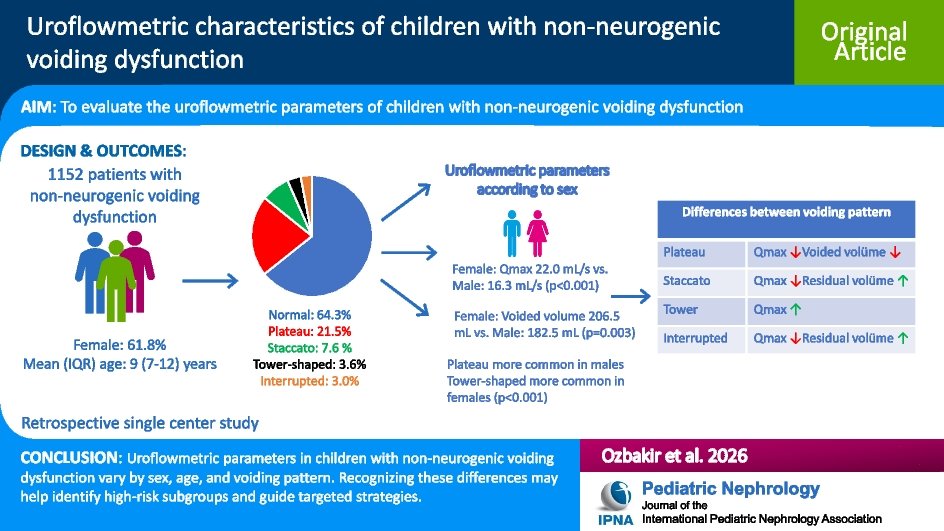
ResultsA total of 1152 patients (median age: 9 years; 61.8% female) were included. Normal voiding patterns were observed in 64.3% of patients, followed by plateau (21.5%), staccato (7.6%), tower-shaped (3.6%), and interrupted (3.0%) patterns. Plateau patterns were more common in males, while tower-shaped patterns predominated in females (p < 0.001). Females had higher Qmax and voided volume than males (p < 0.001 and p = 0.003, respectively), whereas no difference was observed in post-void residual urine (p > 0.05). Qmax was lower in plateau and staccato patterns but higher in tower-shaped patterns (all p < 0.001). Post-void residual urine was significantly higher in staccato and interrupted patterns (p = 0.001 and p < 0.001, respectively).
ConclusionsUroflowmetric parameters in children with non-neurogenic voiding dysfunction differ according to sex, age, and voiding pattern. Recognition of these differences may facilitate early identification of high-risk subgroups and support the development of more targeted diagnostic and therapeutic strategies.
Graphical Abstract
Comments (0)