New BPH therapy classification: what really FITs?
The prevalence of lower urinary tract symptoms (LUTS) secondary to benign prostatic hyperplasia (BPH) increases with age. Histologically confirmed BPH is present in approximately 50% of men in their 50 s and almost 90% of men in their 90 s [1]. An aging population and increased access to healthcare has resulted in a tsunami of BPH patients presenting with LUTS. BPH is the number one reason men visit their urologist, with over 14 million men being actively managed for BPH in the United States alone. Patient management typically starts with watchful waiting, then progresses to medical therapy, and finally surgery.
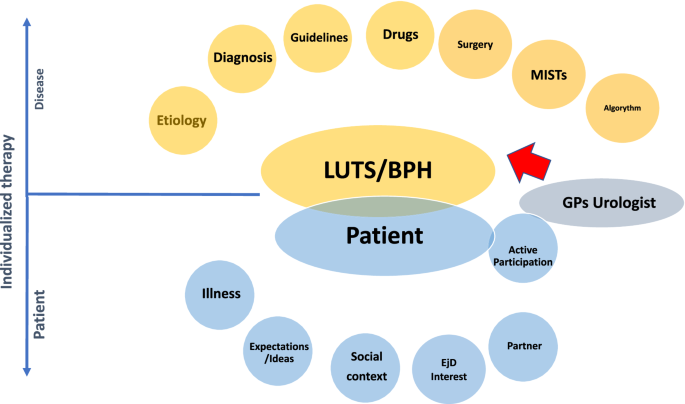
However, despite the common use of transurethral resection of the prostate (TURP) as the gold standard for reducing bladder outlet obstruction, it is not always seen as the gold standard for net health outcomes—the balance of efficacy, morbidity, and patient experience. Of the 12.4 million men in the U.S. with moderate to severe BPH, less than 2% choose TURP, and only an additional 1% opt for other interventional alternatives. This reluctance stems from concerns regarding long recovery times, sexual dysfunction, and the risk of permanent bladder damage, prompting the majority of men to avoid surgery altogether. As a result, many patients fall back on medical management, which itself is associated with compliance challenges and significant side effects such as sexual dysfunction, dizziness, and an increased risk of depression, dementia, and stroke. It is therefore essential to re-evaluate how we classify therapies for BPH and what truly fits the patient’s needs. Herein we introduce the novel class of BPH therapy, FIT, First-line Interventional Therapy. The ideal FIT for BPH should not only provide superior symptom relief compared to medications but also avoid systemic side effects and de-obstruct the bladder to preserve its function. In addition, this therapy must meet both patient and urologist expectations.

Comments (0)