Large Language Models in Oral and Maxillofacial Surgery Triage: A Scoping Review
Purpose of Review
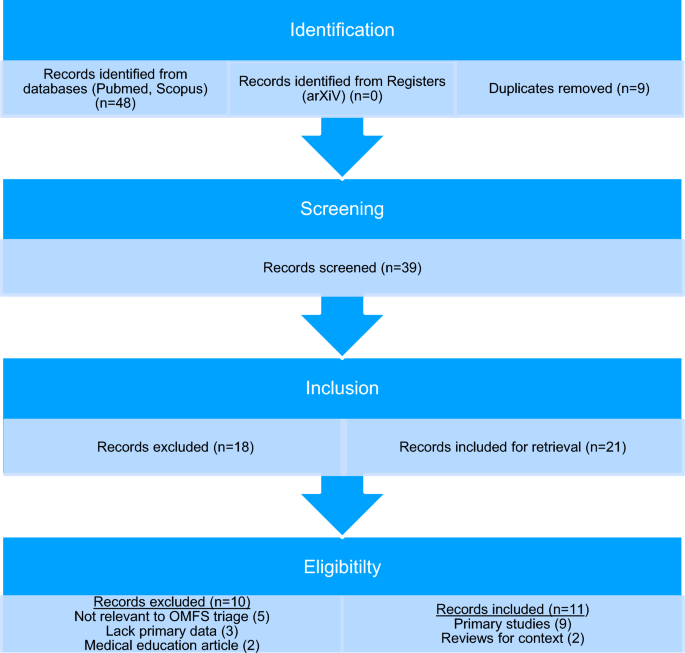
Oral and Maxillofacial Surgery (OMFS) has a small workforce tasked with managing a high volume of triage alongside clinical work. Large Language Models (LLMs) represent a potential route towards streamlining triage and enabling prioritisation of clinical work. LLM research is an emerging area with a relatively small evidence base within OMFS. This scoping review aims to address this by identifying and summarising studies using LLMs for triage, diagnostics and management in OMFS and allied specialities.
Recent Findings
11 articles were included after screening 39 unique records. Diagnostic accuracy was high where synthetic cases were used (88–100%) but dropped when real patient data was used (30–84%). Generic LLMs prioritized textual data over imaging and video but specifically trained LLMs were able to use additional data to improve accuracy. LLMs showed higher sensitivity than specificity, which resulted in subsequent over-investigation, whilst management performance was lower than diagnostics.
Summary
General purpose LLMs are not currently reliable enough to independently triage, diagnose or manage OMFS referrals. Limitations are predominantly related to the quality of data input and lack of specific training. However, specifically trained LLMs show potential in their diagnostic accuracy and consequent ability to reduce clinician burden. At present, LLMs may provide the greatest benefit when used to optimise referral quality at source, improving both clinician and potentially LLM triage downstream. Whilst LLM development suggests greater future uptake, it is dependent on production of validated multimodal models, data protection, and patient trust.






Comments (0)