
Remember me

Deficiencies in various subunits of the SWI/SNF chromatin remodeling complexes are implicated in neurodevelopmental disorders, highlighting their critical role in central nervous system (CNS) development (Singh et al. 2024). The mammalian SWI/SNF (SWItch/sucrose non-fermentable) family comprises three major multi-subunit complexes: canonical BRG1-Associated Factor (BAF or cBAF), non-canonical BAF (ncBAF or GBAF), and Polybromo-associated BAF (PBAF) (Soshnikova et al. 2023). These complexes utilize ATP hydrolysis to reposition nucleosomes, thereby regulating gene accessibility (Hargreaves and Crabtree 2011). TFs often recruit co-activators like BAF complexes to displace nucleosomes from promoters and enhancers, facilitating RNA polymerase II binding and transcription initiation (Zaret 2020; Brahma and Henikoff 2024). The BAF and PBAF complexes exhibit distinct genomic localization and functional properties. PBAF is enriched at active promoters (marked by H3K4me3), while BAF primarily binds tissue-specific enhancers (Carcamo et al. 2022). In adult mice, PHF10D-containing PBAF complexes are found at promoters of the actively transcribed neuron-specific and housekeeping genes (Soshnikova et al. 2023). Furthermore, PBAF-enriched regions can coincide with the repressive H3K27me3 mark, and PBAF-bound regions are generally less sensitive to ATPase-dependent remodeling than BAF-bound regions (Grossi et al. 2024).
The transcriptional repressor REST (RE1 Silencing Transcription Factor) is a key regulator that silences neuronal genes in non-neuronal cells and stem cells by recruiting histone deacetylases and methyltransferases (Kimura et al. 2022; Jin et al. 2023). The PBAF complex is functionally connected to REST. PBAF deficiency, such as through mutations in its specific subunit BAF200, impairs REST-mediated repression, leading to the aberrant expression of neuronal genes (Grossi et al. 2024). REST-bound regions in mESC are characterized by their unique response to SWI/SNF chemical inhibition, as they lose accessibility and TF binding at slower rates compared to regions bound by activating TFs (Iurlaro et al. 2021). The majority of REST sites overlap with BAF200 and repressive chromatin marks, such as H3K27me3, indicating that the PBAF complex and REST are functionally connected at inactive regions (Grossi et al. 2024).
Pax6, a master regulator of neurodevelopment, functionally interacts with both BAF and REST complexes. The Pax6/REST complex helps maintain NSCs and control the timing of neural differentiation (Ochi et al. 2022). Pax6/REST interaction is modulated by the BAF complex; specifically, Pax6 interacts with the BAF170 subunit, which facilitates the recruitment of the REST corepressor complex to Pax6 target genes to promote the generation of early-born neurons (Cong Tuoc et al. 2013).
The functional diversity of BAF complexes arises from the combinatorial assembly of subunits. In mammals BAF complexes contain two ATPase subunits, BRG1 or BRM (Brahma), which are mutually exclusive and necessary for chromatin remodeling activity, in combination with at least 15 different BAF subunits. Certain BAF subunits have restricted expression patterns, enabling the formation of cell-type-specific complexes (Ho et al. 2009). During neurodevelopment, the composition of BAF complexes undergoes dynamic changes, driving the transition from pluripotent embryonic stem cells (ESCs) to neural stem cells (NSCs), and subsequently from proliferating progenitors to post-mitotic neurons (Ho et al. 2009; Lessard et al. 2007; Yoo et al. 2009).
This precise regulation is critical, as mutations in BAF subunits cause a “BAFopathies”, a group of neurodevelopmental disorders characterized by intellectual disability, autism, and brain malformations (Table 1) (Hoyer et al. 2012; Bögershausen and Wollnik 2018; Chen et al. 2022). In general, PAX6 is known to recruit a BAF complex to activate chromatin at its target loci, while BAF also modulates the function of PAX6 (Ninkovic et al. 2013). This cooperation is vital for mediating the transition of intermediate progenitor cells (IP) into mature neurons (Staahl et al. 2013; Kadoch and Crabtree 2015; Bachmann et al. 2016). Accordingly, multiple BAF subunits have been identified in purified Pax6-containing complexes from NSCs, underscoring their direct partnership (Ninkovic et al. 2013).
Interaction of Pax6 with the BAF Complex via the BRG1 ATPaseThe dynamic interplay between the BAF complex and histone modifications is critical for regulating cell-type-specific gene expression programs. A key example is oligodendrocyte differentiation, where the transcription factor Olig2 physically associates with the BAF complex at oligodendrocyte-specific enhancers. The ATPase subunit BRG1 is highly expressed in oligodendrocyte progenitor cells (OPCs) and is recruited by Olig2 to achieve target binding specificity and activate the expression programs related to oligodendrocyte differentiation (Yu et al. 2013).
BRG1 plays a dual role in OPCs: it activates genes necessary for oligodendrocyte differentiation while simultaneously suppressing the expression of oligodendrocyte differentiation inhibitors, as well as genes related to neuronal differentiation (Yu et al. 2013). This function is essential, as BRG1-deficient NSCs in the cerebral cortex fail to differentiate into oligodendrocytes even upon ectopically activated Olig2 expression (Matsumoto et al. 2016). The repressive function of BRG1 involves cooperation with PRC2 complex to establish the repressive H3K27me3 mark at promoters of genes inhibiting oligodendrocyte differentiation, as well as neuronal differentiation genes (Wang et al. 2024). Consequently, deletion of brg1 in oligodendrocytes causes severe hypomyelination due to disrupted oligodendrocyte differentiation in the CNS (Yu et al. 2013). Once differentiating oligodendrocytes acquire the open chromatin state with H3K27ac-marked enhancers, they may become less dependent on BRG1 to maintain these characteristics for subsequent myelination (Wang et al. 2024).
The interaction between BRG1 and Pax6 introduces a key regulatory layer in cell fate determination to inhibit oligodendrocytes differentiation. Pax6 physically interacts with BRG1-containing BAF complexes in NSCs and adult mouse olfactory bulb (OB) neurons. Also Pax6 colocalizes with BRG1 in neuroblasts of the subependymal zone (SEZ) and rostral migratory stream (RMS) (Ninkovic et al. 2013). This partnership is functionally significant: in progenitor cells, BRG1-containing complexes repress Olig2 expression while simultaneously stimulating Pax6 transcription (Matsumoto et al. 2016). The direct Pax6-BRG1 interaction is necessary for regulating genes that specify neurons in adult neuronal precursors (Ninkovic et al. 2013). Specifically, it enhances the expression of neurogenic targets of Pax6 – genes encoding such TFs as Sox11, Nfib, and Pou3f4 – forming a cross-regulatory network that controls adult neurogenesis (Ninkovic et al. 2013). Thus, the BAF complex affects the direct regulation of target gene expression by the Pax6 protein and regulates its role not only in embryonic but also in adult neurogenesis (Cong Tuoc et al. 2013; Ninkovic et al. 2013; Manuel et al. 2015).
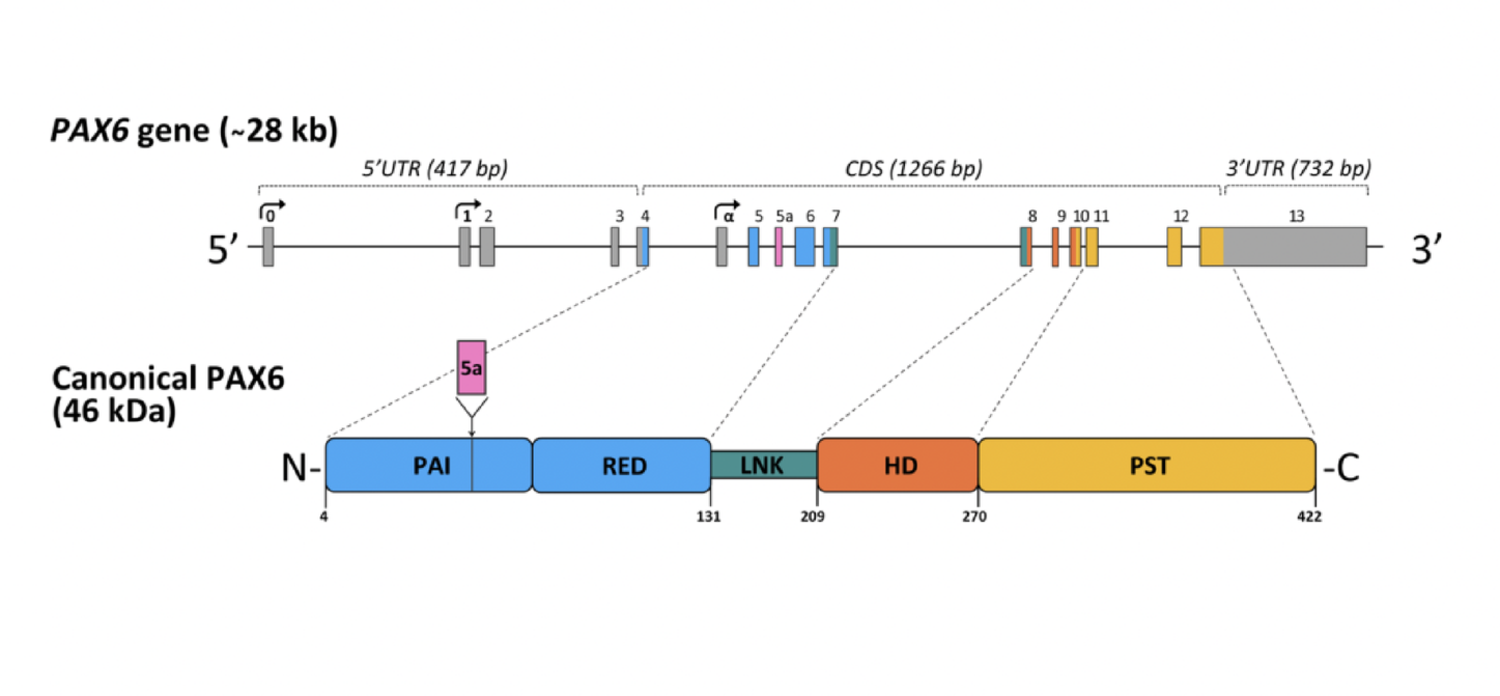
Pax6 expression is regulated by various Pax6 promoters (P0, P1, and Pα) (Anderson et al. 2002). BRG1 binds to the Pax6 P0 promoter in both the ganglion and cerebral cortex, but only to the P1 promoter in the cortex, with no detected interaction at the Pα promoter (Matsumoto et al. 2016). This suggests that BRG1-containing complexes fine-tune Pax6 transcription in a context-dependent manner.
In summary, BRG1-containing BAF complexes exhibit cell-context-specific functions: they promote a neuronal fate in cortical precursors by activating Pax6 transcription and repressing Olig2, while in Olig2-expressing progenitor cells, BRG1 is necessary for the differentiation and maturation of oligodendrocytes (Matsumoto et al. 2016). This sophisticated regulation involves direct interaction with Pax6, although other factors can also recruit BRG1-containing complexes to the Olig2 promoter independently of Pax6 (Matsumoto et al. 2016).
Interaction of Pax6 with the BAF Complex via the BAF47 SubunitThe BAF47 subunit (also known as SNF5 or INI1) is a core component of the BAF chromatin remodeling complex. Unlike other core subunits such as BRG1, BAF155, or BAF170, whose expression levels fluctuate during differentiation, BAF47 maintains consistent expression throughout this process (Ho and Crabtree 2010). BAF47 is essential for proper cell differentiation, where it suppresses stemness-related gene networks while activating differentiation programs, thereby ensuring cell survival during the differentiation process. A key function of BAF47 involves creating nucleosome-depleted regions at the regulatory regions of repressed Oct4 target genes, including Pax6 and Neurog1 (You et al. 2013). Through nucleosome repositioning, the BAF complex containing BAF47 plays a dual role in both activating and repressing Oct4 target genes during differentiation. This coordinated activity of transcription factors, epigenetic marks, and chromatin remodelers determines the chromatin landscape at the regulatory regions of Oct4 target genes, ultimately determining their transcriptional potential (You et al. 2013).
BAF47 regulates the chromatin state in the interaction with genes that regulate Pax6, e.g., the Oct4 gene (You et al. 2013). Interestingly, this regulatory relationship appears bidirectional, as Pax6, Tbr2, and Tbr1 can induce significant changes in BAF complex subunit composition during differentiation (Wiegreffe et al. 2015; Woodworth et al. 2016; Greig et al. 2016).
The functional importance of BAF47 is demonstrated by the consequences of its dysregulation: BAF47 knockdown or overexpression disrupts the balance between pluripotency and differentiation by altering nucleosome occupancy at the regulatory regions of Oct4 target genes. BAF47 deficiency during differentiation leads to cell death, highlighting its essential role in cell survival, while its overexpression induces premature differentiation by counteracting Oct4-mediated pluripotency (You et al. 2013).
These findings establish that BAF170, BRG1, BAF47, BAF155, and other BAF subunits interact closely with Pax6 in developing CNS cells, forming a complex regulatory network in cell lines of the cerebral cortex. Consequently, the neurological phenotype associated with PAX6 mutations in the patients with congenital aniridia may be referred to as one of the BAFopathies (Levchenko et al. 2022; Singh et al. 2024).
Supporting this connection, analysis of Pax6 protein expression in Down syndrome cells revealed delayed formation of neuronal precursors alongside suppressed expression of the neurogenic genes Nfib and Pou3f4, which are activated by the Pax6-BAF interaction. These cells also exhibited reduced expression of several BAF complex genes, including Brg1, Baf53a, Baf53b, Baf47, Baf155 and Dpf1 (Sharma et al. 2022). The BAF53b subunit, a component of the neuron-specific BAF complexes (Lessard et al. 2007), plays an important role in the formation of neuronal processes (Wu and Liu 2007), synaptic plasticity, and memory formation (Vogel-Ciernia et al. 2013). The impaired expression of Pax6-BAF regulated genes in Down syndrome models suggests possible pathways of neurogenesis disorders in patients with CA (and PAX6 gene insufficiency).
In summary, the BAF47 subunit and its interactions with Pax6 underlie critical processes in neuronal differentiation and survival. Disruptions in these interactions can lead to various neurodevelopmental phenotypes, including those associated with congenital eye conditions like aniridia and broader neurological disorders such as Down syndrome.
Interaction of Pax6 with the BAF Complex via the BAF53a SubunitThe differentiation of NSCs into neurons is marked by a subunit switch within BAF complexes, transitioning from neural progenitor (npBAF) to neuron-specific (nBAF) configurations. This transition is characterized by the repression of the BAF53a subunit and concurrent activation of its homolog BAF53b (Lessard et al. 2007). BAF53a plays a critical role in maintaining NSC proliferation. Premature loss of BAF53a inhibits cell cycle exit and disrupts the ability of key neural transcription factors to sustain proliferation. This occurs through decreased chromatin accessibility, resulting in repression of cell cycle genes, ultimately blocking both cell cycle progression and differentiation. Notably, the cell cycle arrest caused by Baf53a deletion can be rescued by premature expression of the nBAF subunit BAF53b but not by subunits, highlighting the specific functional relationship between these two homologs (Braun et al. 2021).
The functional interaction between Pax6 and BAF53a is essential for proper neurogenesis. Under normal conditions, Pax6 is expressed in apical progenitors of the VZ, while Tbr2 labels populations of IPs in SVZ. However, BAF53a mutant mice exhibit a disruption of this spatial organization, with RGCs displaced from the ventricular wall and Tbr2 + IPCs accumulating abnormally close to the ventricle. An increased co-expression of Pax6 and Tbr2 was also observed in BAF53a knockout NSCs (Braun et al. 2021).
Mechanistically, BAF53a regulates chromatin accessibility at neural enhancers marked by H3K4me1, H3K9ac, and H3K27ac histone modifications in E15.5 mouse forebrains. Overexpression of pax6 increased NSCs’ proliferation but failed to rescue the cell cycle arrest at G1/S or G2/M phases in Baf53a-deleted NSCs and BAF53b rescues the cell cycle arrest resulting from deletion of Baf53a. This demonstrates that BAF53a is essential for mediating pro-proliferative effects of Pax6 (Braun et al. 2021).
Baf53a deletion alters the chromatin landscape, reducing accessibility at genes associated with maintaining NSCs’ identity (e.g., pax6 and hes1) while increasing accessibility at genes associated with neuronal differentiation (e.g., Map2) and axon development (e.g., Wnt5a) (Braun et al. 2021). npBAF complexes containing BAF53a directly regulate genes controlling both G1/S transition and G2/M progression, thereby orchestrating cell cycle dynamics in NSCs (Mao et al. 2003). The early loss of the BAF53a subunit in NSCs stops the exit from the cell cycle and disrupts neurogenesis (Fig. 2). In contrast, Pax6 normally functions to reduce cell cycle exit among early cortical progenitors to maintain the size of the cortical progenitor pool. Pax6 deficiency leads to reduced S-phase re-entry and increased the proportions of differentiating neurons (Quinn et al. 2007). The inability of Pax6 to support proliferation in the absence of BAF53a reveals a novel mechanism governing neural precursor cell cycle regulation (Braun et al. 2021). An additional mechanism involves dual-specific phosphatase 5 (DUSP5), a negative regulator of ERK signaling. BAF53a depletion upregulates DUSP5 expression. BAF53a normally activates P63-mediated DUSP5 promoter by interacting with P63, a transcription repressor of DUSP5, resulting in ERK1/2 phosphorylation (Yang et al. 2022).
Fig. 2
Transition from npBAF to nBAF complex during cortical development. The model illustrates how WNT signaling pathway, together with Pax6 and BAF53a-containing npBAF complexes, drives NSCs’ proliferation. Deletion of BAF53a renders NSCs unresponsive to pro-proliferative signals, halting their progression until the expression of BAF53b and the other nBAF subunits to progress through neural differentiation programs
In summary, BAF53a is crucial for maintaining NSC proliferation and proper cortical development by regulating chromatin accessibility at key cell cycle and neural genes. Its deletion impairs proliferation, disrupts cellular identity, and blocks neurogenesis. The subsequent transition to nBAF complexes containing BAF53b signifies a commitment to neuronal differentiation. The functional interaction BAF53b with Pax6 underscores the complex regulatory mechanisms governing neural precursor cell fate decisions.
Interaction of Pax6 with the BAF Complex via the BAF100a/b Subunits: the Pax6→ Tbr2→ Tbr1 CascadeThe Pax6→ Tbr2→ Tbr1 transcriptional cascade represents a regulatory hierarchy in cerebral cortex development, with each factor sequentially expressed in specific progenitor populations: Pax6 in RG, Tbr2 in intermediate precursors, and Tbr1 in postmitotic projection neurons (Englund et al. 2005; Hevner et al. 2006).
The regulatory relationships within this cascade are well-established. Pax6 directly represses its own transcription (Manuel et al. 2007) while activating Tbr2 expression (Sansom et al. 2009). This has been further confirmed by findings that both Pax6 and Tbr2 genes are bound and regulated by the Pax6 protein (Elsen et al. 2018). In the developing cortex, these transcription factors define two major types of NSC in the proliferative zones: Pax6 + RGs and Tbr2 + IPs (Stahl et al. 2013). At E12.5 in mice, Pax6 directly promotes the expression of genes specifically expressed in BPs, primarily by activating Tbr2 expression to drive BP generation from cortical stem cells (Kawaguchi et al. 2008). This regulatory relationship is evidenced by the strong downregulation of Tbr2 in the proliferative cells of the Pax6-deficient mutants in neocortex (Quinn et al. 2007).
The expression patterns of these factors follow a precise spatiotemporal sequence. In mice, Pax6 is expressed in RGs but becomes downregulated as cells transition to BPs, while Tbr2 is normally expressed in BPs and Pax6 is downregulated in cells expressing Tbr2 (Englund et al. 2005). This mutually exclusive expression pattern reflects cell-autonomous functions of Pax6 in activating Tbr2 while repressing genes normally expressed in the lateral ganglionic eminence (Quinn et al. 2007). This transcriptional cascade directly influences BAF complex composition in mice during differentiation. Pax6, Tbr2, or Tbr1 activated 7 of 11 BAF subunits, predominated in neurons (Elsen et al. 2018). In the precursor cells of the subependymal zone in adult mice, Pax6 forms a complex with BAF to activate neurogenic genes such as Sox11 (Ninkovic et al. 2013).
Notably, this cascade specifically regulates the expression of distinct BAF complex subunits. Pax6 protein directly activates the expression of the BAF100a subunit, while Tbr2 and Tbr1 directly activate BAF100b (Elsen et al. 2018). These paralogous subunits, BAF100a (Ctip 1/Bcl11a) and BAF100b (Ctip2/Bcl11b), play an important role in the differentiation and regional specification of projection neurons (Wiegreffe et al. 2015; Woodworth et al. 2016; Greig et al.
Comments (0)