
Remember me



A 69-year-old Caucasian woman was diagnosed with anti-GAD cerebellar ataxia, confirmed by markedly elevated serum anti-GAD antibodies (ELISA index > 400; norm < 1). She initially experienced episodic vestibular symptoms, but after a second episode developed a chronic, progressive course characterised by blurred vision, diplopia, dizziness, dysarthria, and gait and stance ataxia. Oculomotor function was evaluated clinically and with videonystagmography (VNG) at baseline, day 7, and day 30 following initiation of sustained-release fampridine (4-aminopyridine) 20 mg/day. All assessments were performed by the same clinician, and written informed consent was obtained. No other symptomatic or immunomodulatory treatment was given to a patient during this period.
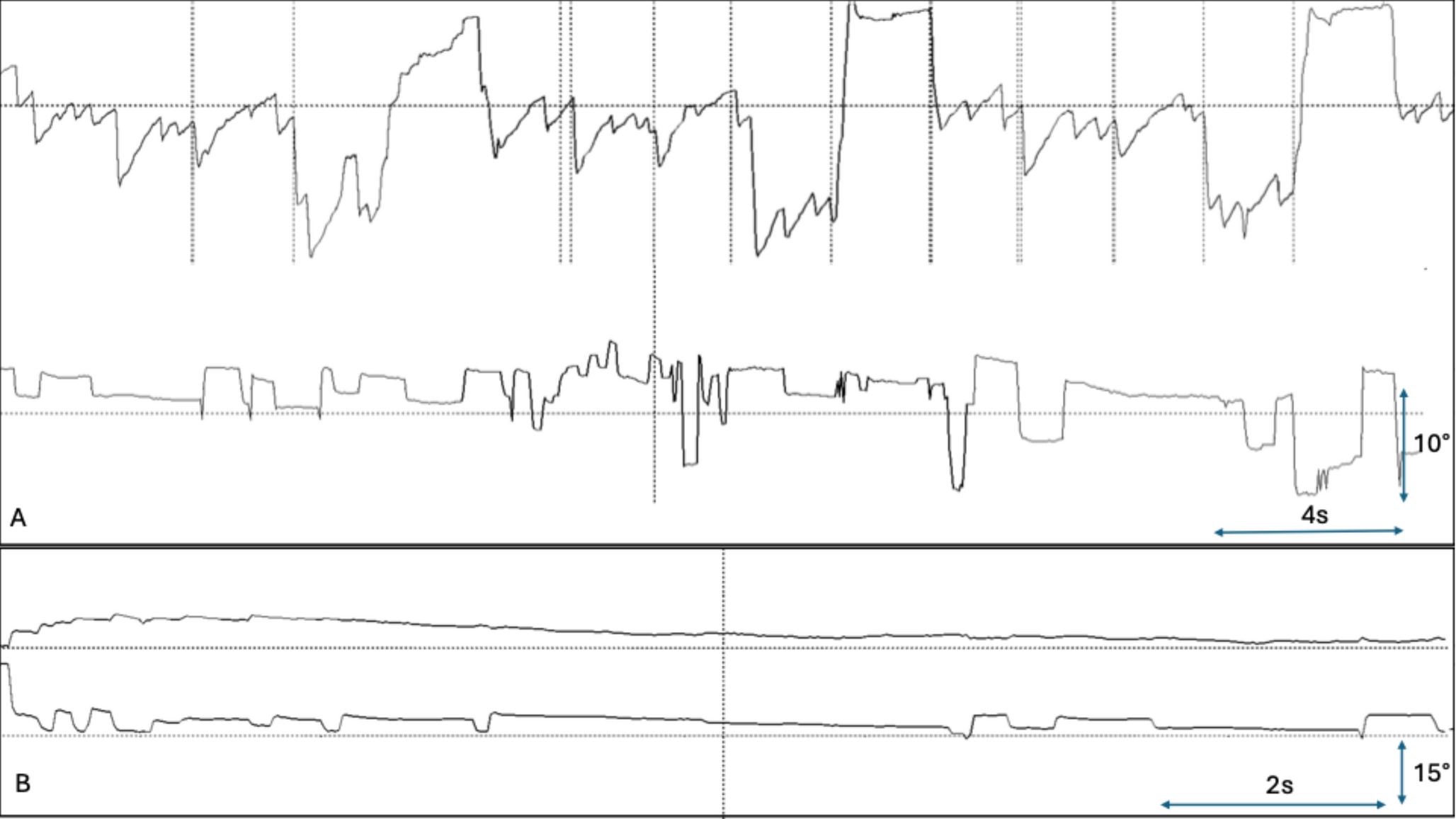
VNG at baseline showed pronounced downbeat nystagmus with frequent square-wave jerks, and the patient reported oscillopsia, diplopia, and dizziness. After initiation of fampridine 20 mg/day, the Day 7 assessment revealed complete resolution of downbeat nystagmus and a marked reduction in square-wave jerks (see Fig. 1), accompanied by clear subjective improvement in oscillopsia and diplopia. Findings at Day 30 remained stable, with sustained suppression of downbeat nystagmus and no further subjective changes.
Assessment with the SARA scale showed no treatment-related improvement in stance or gait ataxia, nor in other motor cerebellar manifestations.
Fig. 1
(A) Baseline monocular VNG traces showing downbeat nystagmus and square-wave jerks. (B) Day 7 monocular VNG traces after fampridine 20 mg/day showing resolved downbeat nystagmus and reduced square-wave jerks
Comments (0)