A computational model for predicting shock in patients at risk of urosepsis after urolithiasis surgery
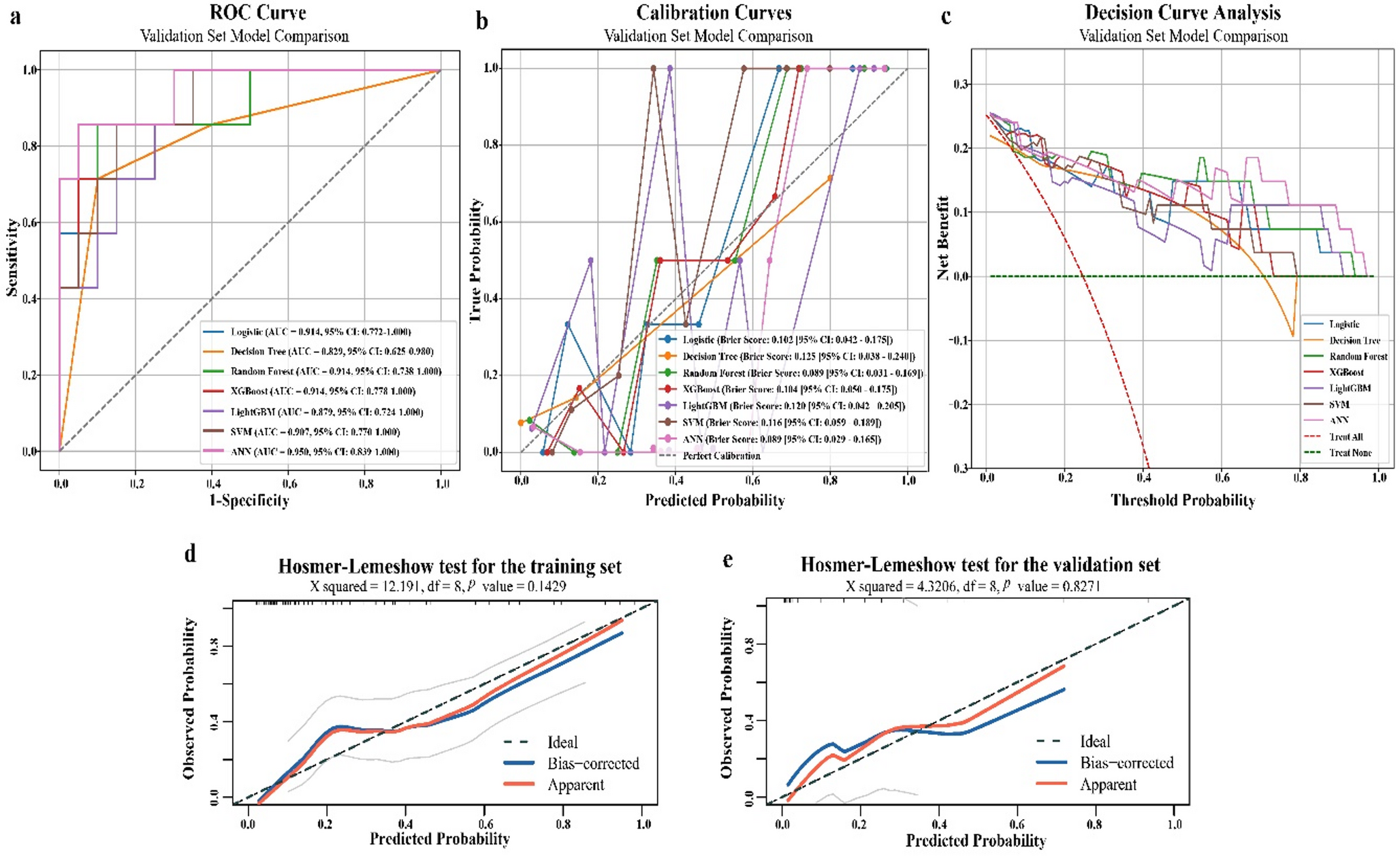
To develop and validate an artificial intelligence model for predicting septic shock risk in urosepsis patients following urolithiasis surgery.This retrospective study analyzed clinical data from 143 intensive care unit patients with postoperative urosepsis (39 with septic shock). Independent predictors were identified via multivariate logistic regression. Seven machine learning models were constructed and evaluated using area under the receiver operating characteristic curve (AUC), calibration curves, and decision curve analysis (DCA). The optimal model was interpreted via SHAP (SHapley Additive exPlanations).Four independent predictors were identified: postoperative respiratory rate, procalcitonin, serum lactate, and bilirubin. The Artificial Neural Network (ANN) model demonstrated the best performance in the validation set (AUC: 0.950, accuracy: 0.889). It showed excellent calibration and clinical net benefit per DCA. An interpretable online dynamic nomogram was developed based on the ANN.An ANN model incorporating four postoperative variables effectively predicts septic shock risk in urosepsis patients, serving as a supplementary tool for early identification of high-risk individuals.

Comments (0)