Equal-power Ho:YAG laser energy–frequency modulation during RIRS for renal pelvis stones: 0.3 J × 50 Hz vs. 1.5 J × 10 Hz
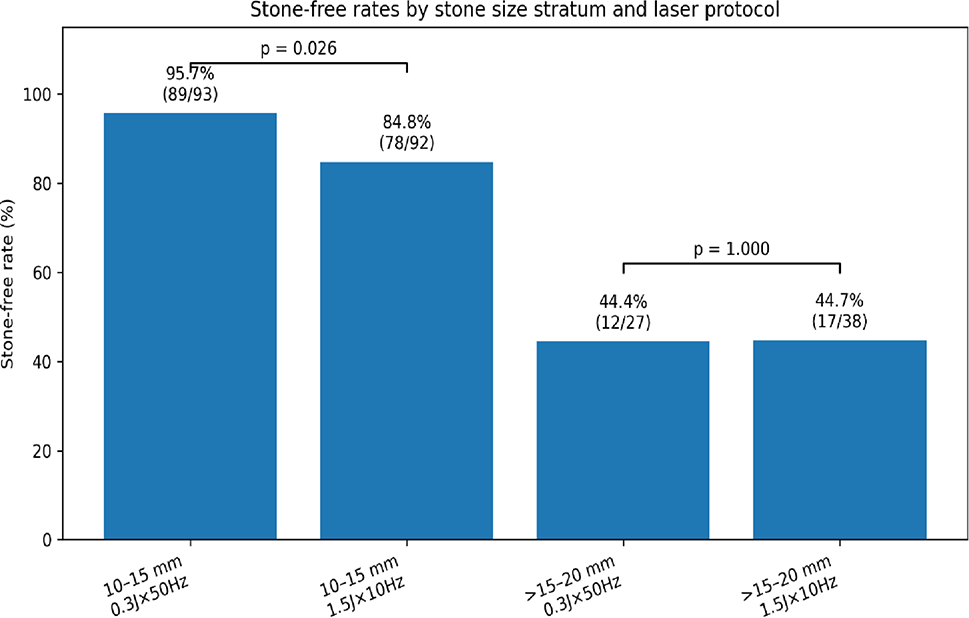
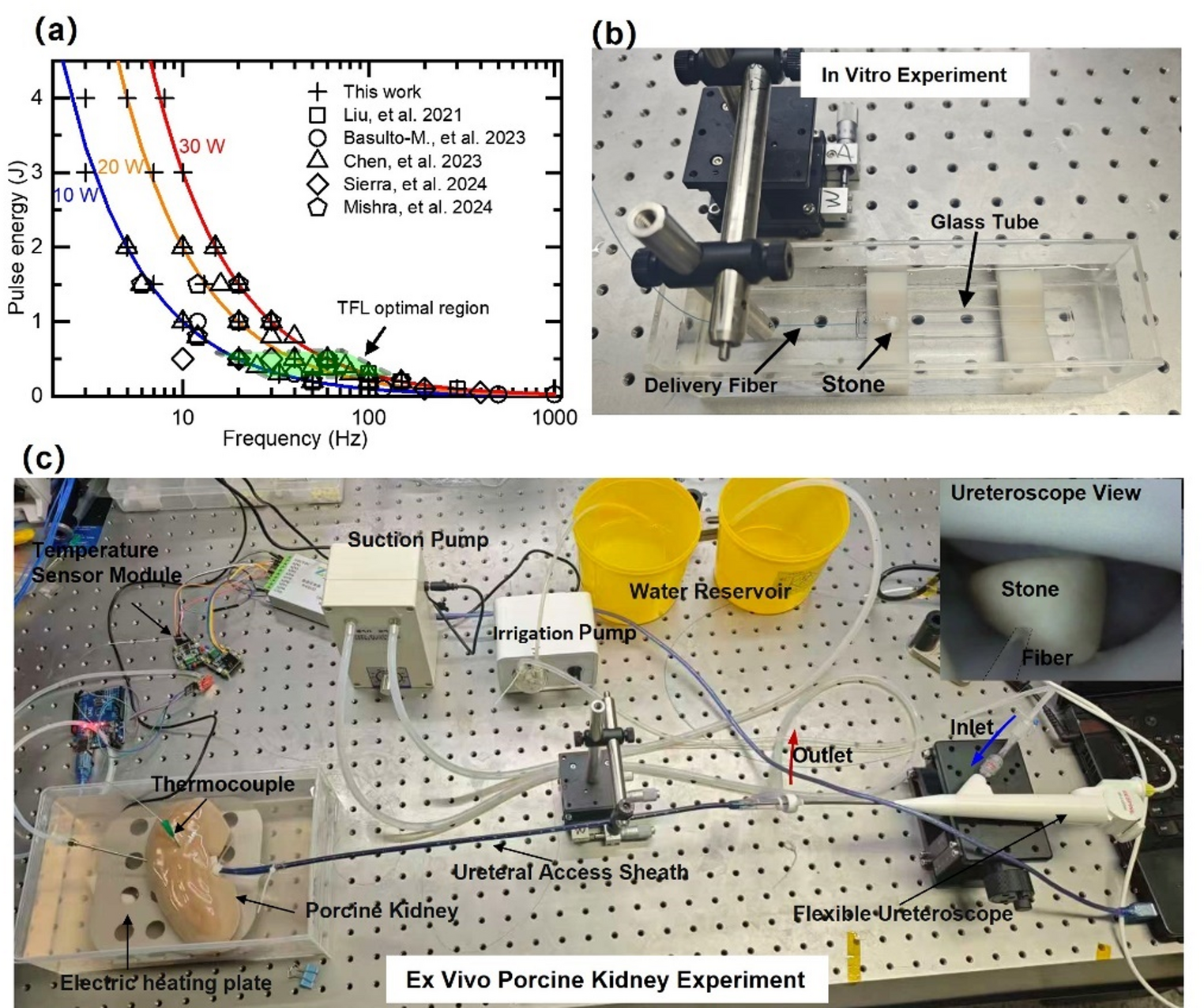
To compare outcomes of two holmium: yttrium–aluminum–garnet (Ho:YAG) laser energy–frequency protocols delivered under equal average power during retrograde intrarenal surgery (RIRS) for renal pelvis stones. We retrospectively reviewed 250 adults undergoing unilateral RIRS for a single renal pelvis stone (10–20 mm) between January 2022 and November 2025. Patients were treated with Ho:YAG lithotripsy at the same average power (~ 15 W) using either 0.3 J × 50 Hz (n = 120) or 1.5 J × 10 Hz (n = 130). All cases were performed with a digital flexible ureterorenoscope and a suction-enabled ureteral access sheath (FANS). The primary outcome was stone-free status at 4–6 weeks, defined as the absence of clinically significant residual fragments (≤ 2 mm). Secondary outcomes were laser activation time, complications, and reintervention. Subgroup analyses were performed by stone size and stone density (Hounsfield units, HU). Baseline characteristics were similar between groups. Stone-free rate was higher with 0.3 J × 50 Hz than with 1.5 J × 10 Hz (84.2% vs. 73.1%, p = 0.048), and reintervention was lower (7.5% vs. 18.5%, p = 0.018). Laser activation time was slightly longer in the 0.3 J × 50 Hz group (median 30 vs. 29 min, p = 0.038). In both protocols, stones > 15 mm and HU ≥ 1200 were associated with lower stone-free rates and longer activation times. Under equal average power, 0.3 J × 50 Hz achieved higher stone-free rates and fewer reinterventions than 1.5 J × 10 Hz for renal pelvis stones.

Comments (0)